Why Toy Story Retro Roundup Picked the PlayStation Port Over the Nintendo 64
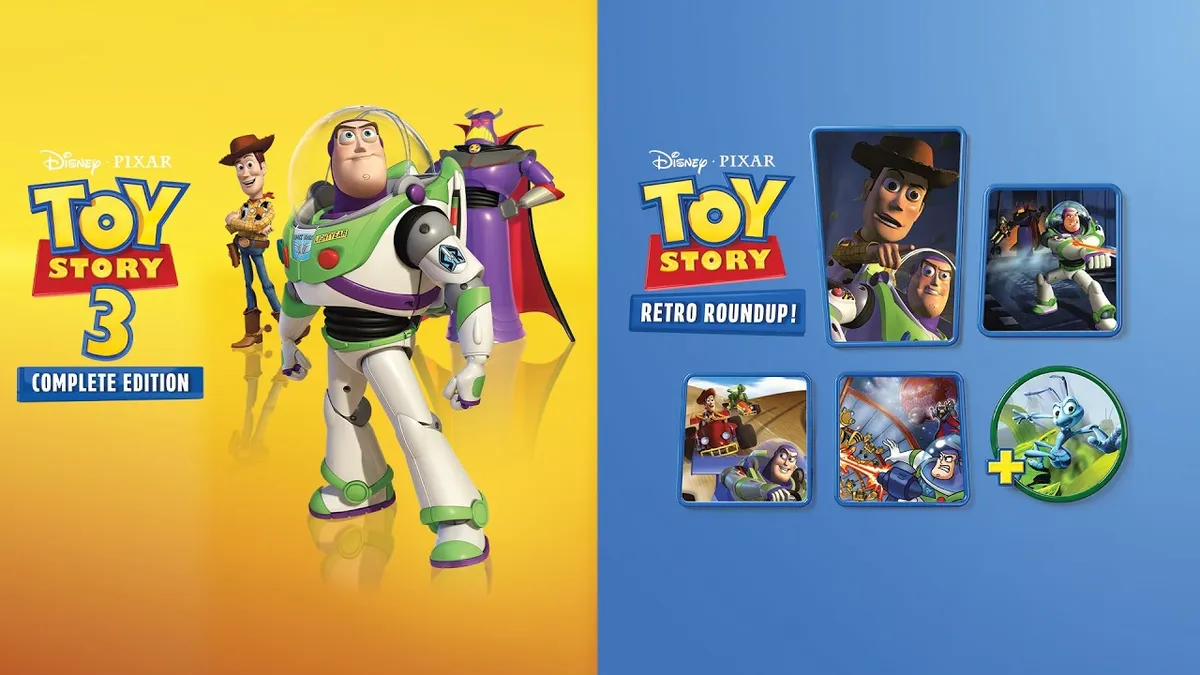
Publisher Atari and preservation studio Digital Eclipse have officially celebrated the worldwide launch of Toy Story: Retro Roundup! today, Thursday, October 15, 2026.
Arriving simultaneously across PC via Steam, Nintendo Switch, PlayStation 5, PlayStation 4, Xbox Series X|S, and Xbox One, this historical anthology gathers beloved 16-bit and 32-bit adaptations, including Toy Story on Mega Drive, SNES, and Game Boy, Toy Story 2: Buzz Lightyear to the Rescue!, Toy Story Racer, Buzz Lightyear of Star Command, and A Bug's Life.
Yet among retro enthusiasts, one technical question immediately emerged: why does Toy Story 2 rely solely on the original PlayStation release while bypassing the Nintendo 64 and Dreamcast ports?
FMV Cutscenes and Redbook Audio Over Cartridge Storage Limits
The development team at Digital Eclipse clarified the technical reasoning behind this preservation choice. When Traveller's Tales originally developed Toy Story 2 in 1999, the console platforms differed drastically.
On the Nintendo 64, the strict storage constraints of a 32 MB cartridge forced the team to cut all full-motion video sequences from the Pixar film. They were replaced with static screenshots overlaid with dialogue text boxes.
Conversely, the PlayStation CD-ROM edition preserved the complete animated cinematic sequences alongside uncompressed Redbook audio tracks. For an archival compilation dedicated to presenting the authentic cinematic experience as audiences originally remembered it, preserving the full video presentation made the PlayStation build the definitive foundation.
Find Toy Story Retro Roundup Best Deals→
Emulation Stability and Interactive Museum Archives
The second decisive factor stemmed from emulation architecture and overall stability. Incorporating the Nintendo 64 or Dreamcast iterations would have required engineering multiple custom emulation cores.
That dispersion brought potential rendering quirks, such as volumetric fog glitches or analog stick sensitivity mismatches on modern systems. By standardizing on a rock-solid, unified PlayStation core, Digital Eclipse delivered flawless performance while preserving engineering bandwidth.
This focus allowed the team to enrich its signature museum gallery with previously unreleased design documents, production art, and high-definition video interviews with Traveller's Tales founder Jon Burton and Pixar veteran Jason Katz, an exceptional retro collection we continue tracking in our game release calendar.

My Take
Digital Eclipse made the absolute right call here for anyone who lived through the format wars of the late 1990s.
While the Nintendo 64 version offered smoother framerates and crisper texture smoothing, losing the movie's iconic FMV cutscenes on cartridge completely shattered narrative immersion.
For a historical preservation collection aiming for complete cinematic and acoustic authenticity, the original PlayStation release remains the undisputed gold standard, elevated by Digital Eclipse's unmatched archival craft.

SEO consultant for over 20 years and digital entrepreneur, Charles 'Grimtag' Ronchain is the founder of Pro-Gamer.gg, Retrocharting.com, and Gamescharting.com. A competitive gamer, streamer, and retro game collector, he has worked in the video game industry for over 15 years, notably as a consultant for leading game price comparison platforms. Passionate about real-time performance data and gaming technology, he analyzes competitive esports, gaming hardware benchmarks, and creator workflows on Pro-Gamer.gg with an authentic player perspective.