Xbox Project Helix Locked for November 2027: Microsoft Sets Launch Window for 56 TFLOP Hybrid Console
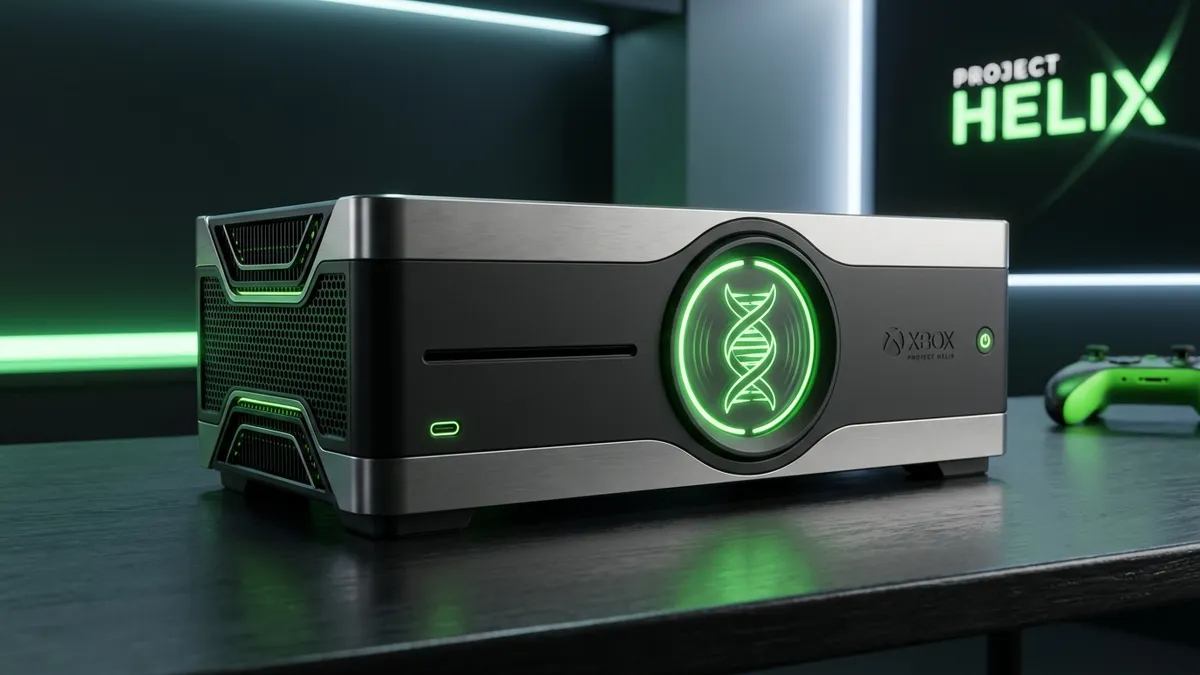
The timeline for the next console generation is accelerating rapidly. Microsoft has officially locked the worldwide launch window for its next-generation flagship, codenamed Project Helix, for November 2027.
The timing is no coincidence. Ever since the original Xbox debuted in November 2001, Microsoft has consistently favored this pre-holiday release slot. By targeting late 2027, the company strictly adheres to the seven-year hardware cycle established with the Xbox One in 2013 and continued by the Xbox Series X in 2020.
A hybrid powerhouse breaking the boundary between console and PC
Project Helix represents a fundamental overhaul of Microsoft's hardware philosophy. The overarching goal is to deliver an authentic family of devices designed to dissolve the long-standing wall separating living room consoles from desktop PC gaming.
Under the hood, the console will natively run the dedicated Xbox gaming ecosystem while granting direct access to open PC storefronts, including Steam and the Epic Games Store. For players who have juggled divided libraries and separate hardware for years, accessing their entire collection through a unified living room interface is a game changer.
This major shift already positions the machine as a central pillar of our 2027 video game release calendar, setting up what promises to be a pivotal year for the industry.
56 TFLOPs engineered at TSMC: the raw power battle against Sony
On the hardware side, manufacturing disclosures point to a massive custom SoC developed in close partnership with AMD. The silicon leverages next-generation Zen 6 CPU cores alongside RDNA 5 GPU architecture, fabricated on TSMC's cutting-edge process nodes.
Engineering targets aim for an astonishing 56 TFLOPs of compute performance. That processing muscle is backed by dedicated hardware ray tracing units and a proprietary machine learning upscaling pipeline designed to maintain native 4K fidelity at extreme framerates.
As detailed in our breakdown of the taped out chip specifications for PS6 and Xbox Helix, Microsoft is aiming for a decisive hardware advantage. The goal is straightforward: hit retail shelves ahead of the PlayStation 6 (projected for late 2027 or 2028) and capture the performance crown on day one.
Editorial Perspective: the dream of a unified machine meets real world stakes
Targeting November 2027 proves that Microsoft understands the reality of the current generation. The Xbox Series X and Series S have lost commercial momentum against the PS5. Sitting on the sidelines for another year would have been fatal, and Phil Spencer wants to recreate the aggressive market disruption achieved with the Xbox 360 in 2005.
On paper, Project Helix delivers what enthusiast gamers have spent decades asking for. Running your Steam backlog alongside console games on a 56 TFLOP living room monster is the ultimate hybrid setup.
Yet raw compute power alone has never won a console generation without masterpiece software. Microsoft spent historic sums acquiring Bethesda and Activision Blizzard. By November 2027, the hardware will be ready. From that point on, the pressure rests entirely on the first-party studios to deliver.

SEO consultant for over 20 years and digital entrepreneur, Charles 'Grimtag' Ronchain is the founder of Pro-Gamer.gg, Retrocharting.com, and Gamescharting.com. A competitive gamer, streamer, and retro game collector, he has worked in the video game industry for over 15 years, notably as a consultant for leading game price comparison platforms. Passionate about real-time performance data and gaming technology, he analyzes competitive esports, gaming hardware benchmarks, and creator workflows on Pro-Gamer.gg with an authentic player perspective.