The Training Mistakes 90% of Competitive Gamers Make (and How to Fix Them)
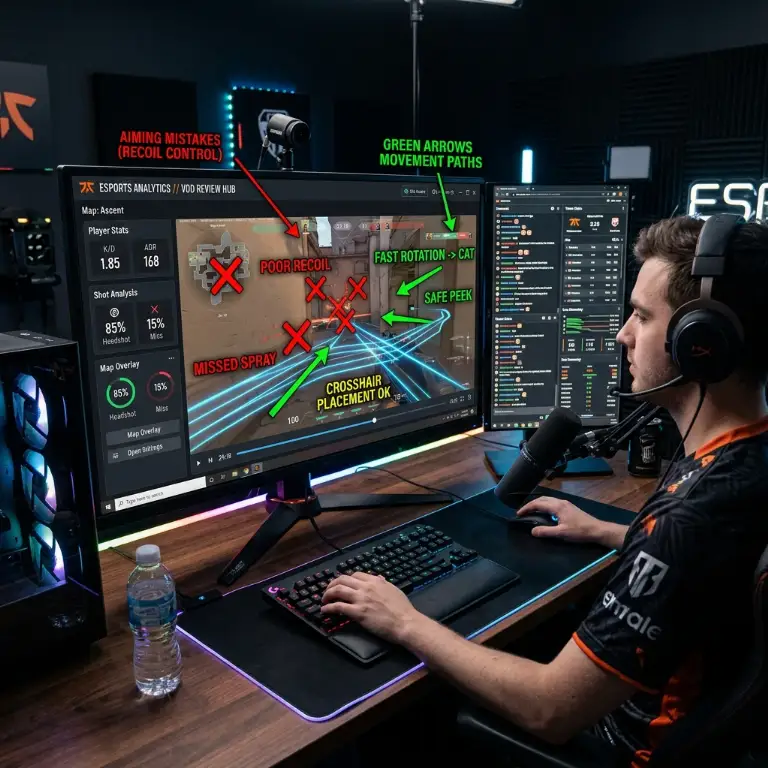
Psychologist Anders Ericsson, the groundbreaking pioneer behind expertise and skill acquisition research, coined a foundational observation: "Practice makes permanent, not perfect." The human brain is a remarkable learning machine: it automates and hardwires whatever actions you repeatedly execute. If you practice while making errors, you burn those bad habits directly into your procedural memory. That is the fatal trap entangling 90% of competitive PC gamers.
Mistake 1: Mindless Autopilot Gaming Without Separating Play from Practice
Confusing "playing for fun" with "training to improve" is the most prevalent obstacle in competitive gaming. Playing aims for immediate short-term victory (climbing rank points). Training aims to isolate and correct a specific technical flaw, even if it leads to dropped matches in the short term.
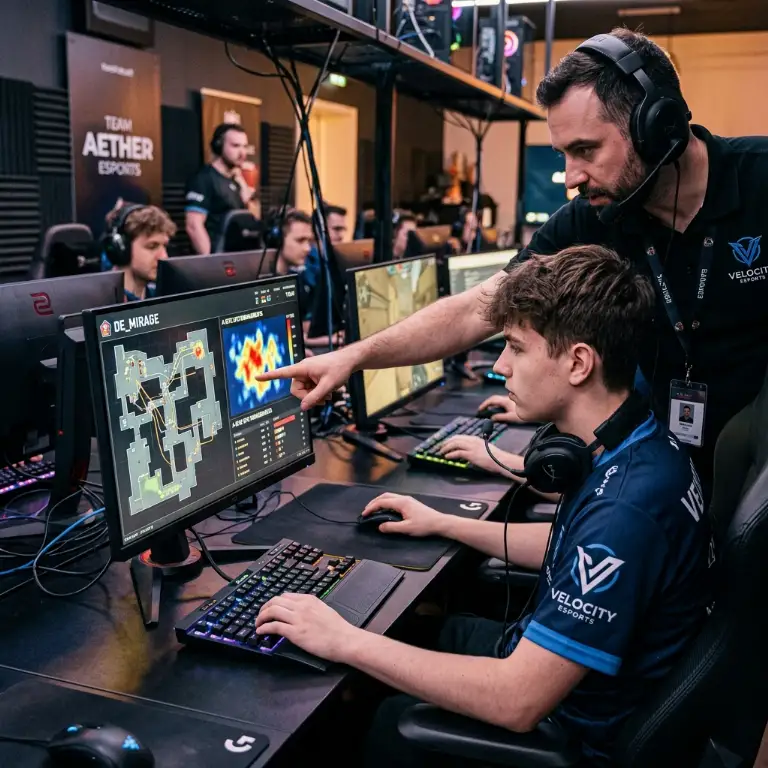
Elite esports organizations like the T1 Academy strictly decouple these two workflows. Their training sessions rest on the four cornerstones of deliberate practice: defining an explicit micro-goal, isolating the target skill, conducting immediate error analysis (VOD review), and maintaining physical and mental structure.
Queueing up for six straight hours on autopilot hoping repetition alone will make you better is wishful thinking. All it does is cement current bad habits into muscle memory.
Mistake 2: Queuing While Fatigued or Sleep-Deprived
Sleep deprivation degrades motor response time by 50 to 100 milliseconds, according to cognitive performance research from the Walter Reed Army Institute of Research. Playing exhausted guarantees compromised spatial reasoning and sluggish tactical decision-making. Worse yet, your brain consolidates these suboptimal choices as standard baseline behavior during rest. Discover why sleep is your most powerful training weapon to lock in muscle memory and cognitive gains.
Mistake 3: Skipping the Pre-Game Warmup Routine
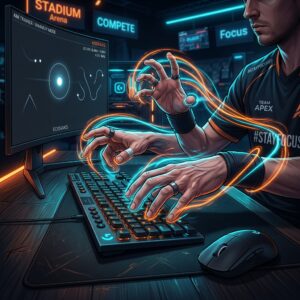
Launching directly into high-stakes ranked matches cold is a recipe for inconsistency. Hand muscles and neurological pathways need 5 to 10 minutes of targeted calibration inside aim trainers (Aimlabs, KovaaK's) or deathmatch modes to synchronize hand-eye coordination and spatial tracking before your first competitive match.
Mistake 4: Scapegoating Teammates and External Attribution Bias
Reflexively blaming teammates for lost rounds is the most destructive psychological barrier to competitive growth. In a 5v5 team tactical environment, there is mathematically always a positioning angle, crosshair placement, or comms callout you could have executed better. Fixating on errors made by random teammates blinds you to your own mechanical misplays. Learn how to manage in-game tilt and frustration to preserve tactical composure.
Mistake 5: Aimless, Unstructured VOD Reviews
Rewatching match replays without clear intent yields zero actionable insights. The methodology utilized at the G2 Esports Performance Lab involves formulating one to three hyper-specific questions before loading the replay file. For example: "Why did my flank rotations between minutes 10 and 15 arrive late?" or "How was my crosshair placement when clearing corners during defensive holds?" Without predefined questions, you watch passively without uncovering the root causes of round losses.
Mistake 6: Overlooking Hardware and Software Settings
A staggering number of ranked grinders play on unoptimized system configurations. The most widespread pitfalls include:
- Excessively High Mouse Sensitivity: Most tactical FPS pros use low sensitivity (typically 400 to 800 DPI, yielding an eDPI between 800 and 1600, requiring 35 to 75 cm of physical mousepad travel for a full 360-degree turn). This range unlocks consistent, pixel-precise micro-adjustments.
- Disabling Raw Input: Enabling raw input in game menus is mandatory so your client reads raw hardware sensor data directly without Windows OS desktop acceleration interference.
- Gaming over Wi-Fi: Connection consistency matters infinitely more than raw bandwidth in competitive gaming. Wi-Fi suffers from intermittent packet drops and buffer jitter that cause phantom bullet registration and micro-stuttering. A wired Cat6 Ethernet cable is non-negotiable.
How to Shift into True Deliberate Practice
To shatter frustrating rank plateaus and accelerate your climb, re-structure your gaming sessions around clear intent:
- Set One Objective per Session: Pick a single micro-goal, such as "today I am focusing 100% on keeping my crosshair glued to head level," or "I will stay calm and mute toxic lobby chatter immediately."
- Warm Up Systematically: Dedicate 5 to 10 focused minutes to calibration routines before entering ranked queues.
- Log Post-Match Notes: After each match, write down one tangible mistake you made in a notebook or text document, along with the adjustment needed for the next round.
Raw matchmaking hours alone will not propel you into elite tiers. The deliberate intent, discipline, and structure you bring to each session are what ultimately separate ladder grinders from true competitive champions.

SEO consultant for over 20 years and digital entrepreneur, Charles 'Grimtag' Ronchain is the founder of Pro-Gamer.gg, Retrocharting.com, and Gamescharting.com. A competitive gamer, streamer, and retro game collector, he has worked in the video game industry for over 15 years, notably as a consultant for leading game price comparison platforms. Passionate about real-time performance data and gaming technology, he analyzes competitive esports, gaming hardware benchmarks, and creator workflows on Pro-Gamer.gg with an authentic player perspective.