GALAX RTX 5060 Ti 16GB and 750W Ant eSports PSU: Inside a 180W PCIe 8-Pin Thermal Failure
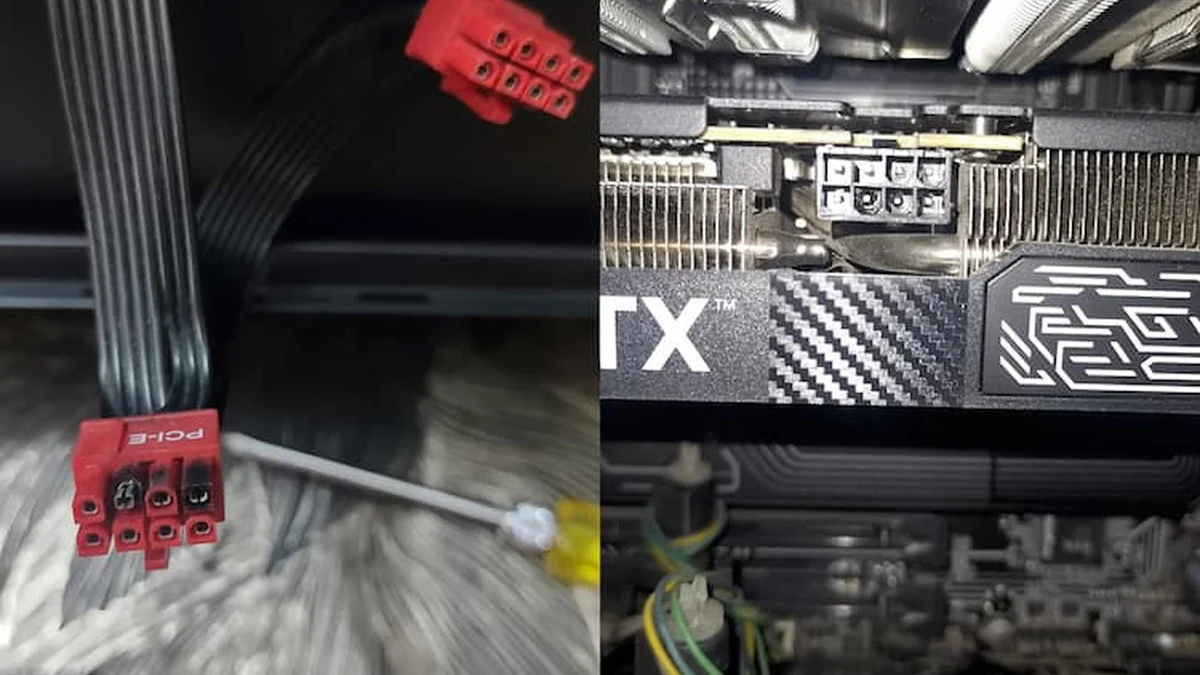
For months, the PC hardware community has treated melted power plugs as an exclusive curse of 450W to 600W flagship GPUs running on 16-pin 12V-2x6 cables, yet the latest casualty is a mainstream card with a modest power budget. On the r/pcmasterrace subreddit, user JudicialMuscle shared photographs of a GALAX GeForce RTX 5060 Ti 16GB whose traditional 8-pin PCIe power connector melted under load, fusing burnt red plastic directly inside the graphics card's onboard power receptacle.
Sudden Black Screen and Two Charred +12V Terminals on a GALAX RTX 5060 Ti 16GB
The failure occurred without dramatic smoke or an immediate system shutdown: the builder simply lost video output on their monitor while the PC remained powered on. Upon opening the chassis to inspect the GeForce RTX 5060 Ti and reseat the power line, unplugging the red 6+2-pin PCIe connector revealed severe thermal damage. Two of the three +12V power pins along the top row were blackened and deformed, with melted plastic residue left behind inside the corresponding female sockets on the GPU header.
This incident surfaces barely forty-eight hours after a 170W Sapphire Radeon RX 9060 XT Pulse suffered a melted 8-pin power connector. Rated by NVIDIA at a conservative 180W Total Graphics Power (TGP), the Blackwell GB206-based RTX 5060 Ti operates well below the electrical ceiling of the PCI-SIG 8-pin specification, which provides 150W through the cable plus up to 75W via the motherboard's PCIe x16 slot for a combined 225W budget during heavy gaming sessions in titles like Cyberpunk 2077.
Ant eSports 750W PSU, Pigtail Cable, and Contact Resistance: The Electrical Breakdown
How does a legacy 8-pin connector known for its generous safety margin melt while carrying less than 150W over the wire (roughly 12.5A split across three +12V pins)? Inspecting the user's setup highlights two critical factors. First, the graphics card was powered by an Ant eSports 750W power supply, a budget-oriented unit primarily sold in the Indian market, using a flat ribbon cable terminated with a red daisy-chained (pigtail) 6+2-pin PCIe plug.
| Technical Parameter | Nominal PCI-SIG 8-Pin Specification | GALAX RTX 5060 Ti 16GB Incident Setup |
|---|---|---|
| Total Power Rating (TGP / Capacity) | 225W total (150W cable + 75W PCIe x16 slot) | 180W official NVIDIA Blackwell TGP |
| +12V Power Delivery Terminals | 3 Mini-Fit Jr. pins (4.20 mm pitch) | 2 of the 3 +12V pins charred and melted |
| Power Supply and Cabling Used | Dedicated 16 AWG or 18 AWG PCIe cable | Ant eSports 750W PSU with red pigtail 6+2-pin cable |
| Primary Electrical Culprit | Contact resistance < 6 mΩ per terminal | High contact resistance from loose crimp or partial seating |
In direct current circuits, localized heat generation follows Joule's law (P = R x I²). Even at a modest 180W board power, if a single female terminal inside a budget cable is poorly crimped, made of thin brass alloy that loses tension, or if the detachable 6+2-pin housing is not clicked completely flush into the socket, the actual metallic contact area shrinks dramatically. Resistance (R) spikes at that pinch point, forcing current to redistribute unevenly across the neighboring +12V pins until temperatures exceed 200°C and melt the plastic housing, mirroring the physics behind the 250W GeForce RTX 5070 that recently melted its 16-pin power connector.
Because a yellow-handled screwdriver was visible next to the burnt plug in the original photo, veteran builders immediately warned the owner not to scrape the fused plastic out of the GPU socket with a metal blade or plug the secondary pigtail connector into the damaged header. Oxidized pins and deformed terminals guarantee repeat arcing under load. The only safe remedy is filing a warranty (RMA) claim for the graphics card and upgrading to a reputable ATX 3.1 / PCIe 5.1 power supply with high-grade 16 AWG wiring.
My Test Bench
When both a 170W Radeon RX 9060 XT and a 180W GeForce RTX 5060 Ti melt their 8-pin connectors within the same week looks ironic while the entire hardware world debates 12V-2x6 safety, yet the underlying physics is completely straightforward. The classic 8-pin Mini-Fit Jr. standard still offers a massive safety margin compared to 16-pin micro-terminals, provided you do not pair a $450+ graphics card with a bargain-basement power supply and low-tension pigtail cables. Cutting corners on the PSU is always a false economy. On my test bench, the rule never changes: use a dedicated cable from a Tier-A ATX 3.1 power supply and make sure the 6+2-pin retention latch clicks firmly into place before booting.

PC hardware enthusiast and competitive gamer, Arthur 'Heimdall' splits his time between France and the UK working in enterprise B2B software solutions. A business school graduate passionate about component benchmarking, he has been building, modding, and tuning PCs since childhood, optimizing every thermal degree and millisecond of display latency. An avid gamer across Assassin's Creed and sandbox titles, he forged his alliance with Grimtag and Chaya during late-night World of Warcraft raids before joining Pro-Gamer.