DLSS 5 Controversy Explained: Why War Thunder’s Art Director Blames Extreme Fan Mods Built for Views
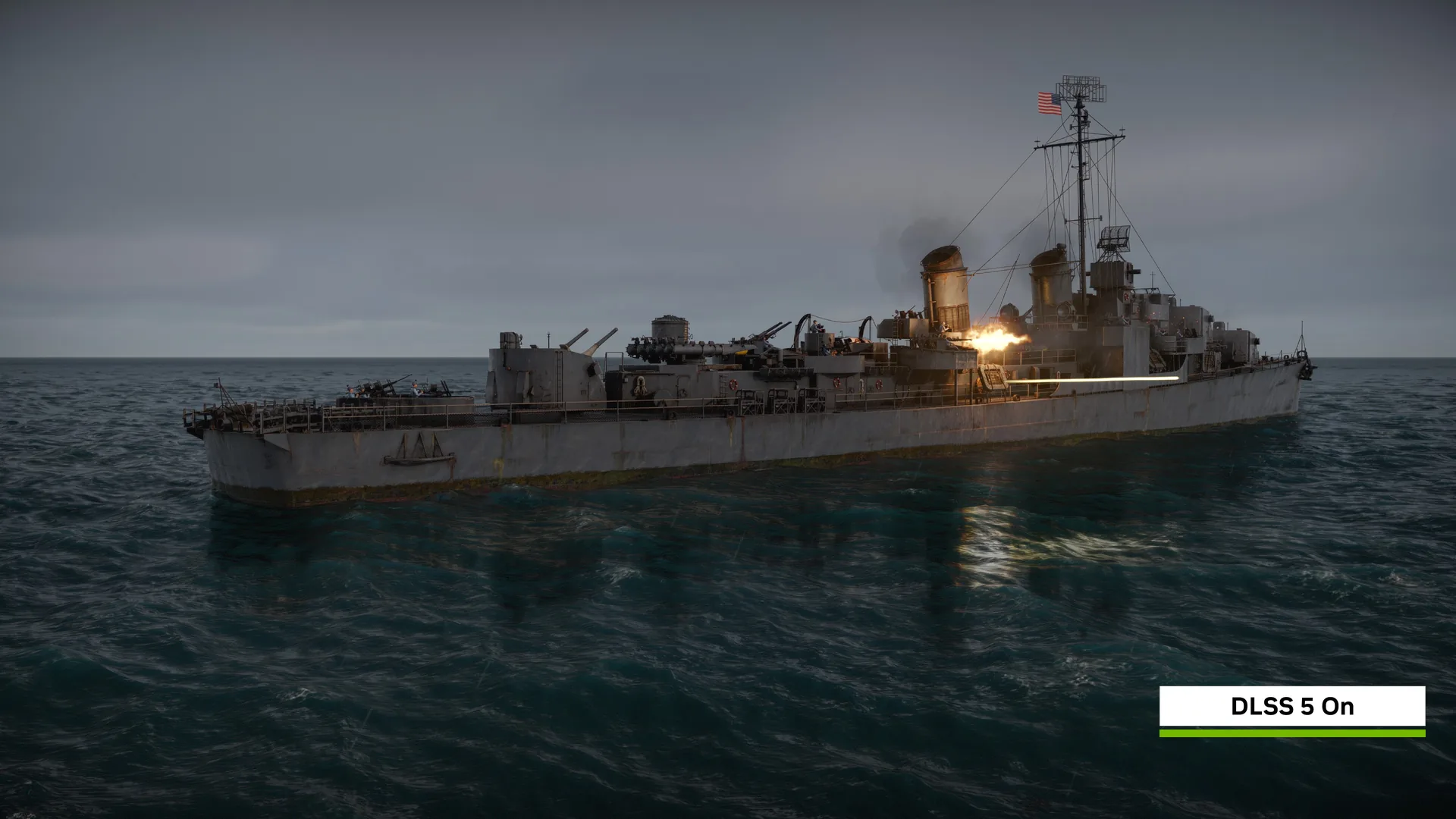
Ever since its reveal at GTC 2026 in San Jose back in March, NVIDIA DLSS 5 and its 3D-Guided Neural Rendering technology have sparked fierce debate across the PC gaming community. While many players praise its leap in microcontrast and surface realism, vocal critics on Reddit and social media routinely dismiss the feature as "AI slop" that overwrites a studio's visual identity. Following the mid-November rollout of the Eagle's Shadow major update in War Thunder, Gaijin Entertainment Art Director Kirill Stupin has stepped forward to explain what is really fueling the backlash: third-party fan mods using extreme settings to chase viral views.
Outrageous Fan-Made Modifications Built for Clicks
When asked about the hostility surrounding NVIDIA's neural rendering technology in online threads, Kirill Stupin drew a sharp line between official studio implementations and the viral clips circulating on social media. According to the Gaijin Entertainment art director, players with compatible hardware who have tested War Thunder with NVIDIA DLSS 5 on GeForce RTX 50 GPUs have responded overwhelmingly positively, describing the resulting image quality as "beautiful."
To explain why online discourse often paints a completely different picture, Stupin pointed directly at unofficial third-party presets:
"So basically, we do not have that 'controversial reception,' and that's because we implemented the technology in the game ourselves and strictly according to our vision. Many controversial videos about DLSS 5 are made using fan-made modifications with ridiculous DLSS 5 settings that deliberately mess with the original game art style to generate more views."
By stacking multiple neural rendering passes or cranking intensity sliders far beyond intended parameters, certain content creators intentionally warp a game's color grading and lighting balance into uncanny territory. Those exaggerated showcases end up damaging the reputation of a pipeline tool that behaves far more conservatively when tuned by professional environment and vehicle artists.

Hardware Appetite and the Shock of the First Tech Demo
Beyond sensationalized fan mods, Stupin acknowledged two legitimate reasons behind the community's initial skepticism. The first stems from a broader cultural unease surrounding generative AI, "which tends to arrive at the party before the technology itself does." Compounding that anxiety was NVIDIA's very first DLSS 5 demonstration, where the visual alterations looked so drastic that onlookers protested the artist's original vision was being erased in favor of synthetic imagery nobody had actually painted. "As an artist, I can hardly blame them for asking the question," Stupin noted.
The second friction point is the technology's demanding hardware footprint: "Nobody enjoys being told that beauty has a cover charge." Although NVIDIA introduced a lighter neural model in October 2026 that significantly reduced performance overhead ahead of planned RTX 40 Series support, running DLSS 5 at full fidelity still demands serious GPU horsepower, much like the recent Hogwarts Legacy DLSS 5 rollout on PC and RTX 50 Series cards.
Check Availability for GeForce RTX 5080 on Amazon→
Solving the sRGB vs. Linear HDR Paradox in the Dagor Engine
Because War Thunder revolves around thousands of historically accurate tanks, aircraft, and warships, Gaijin Entertainment could not afford to let neural rendering distort authentic squadron markings, armor wear, or surface materials. Integrating DLSS 5 into the studio's proprietary Dagor Engine presented a classic chicken-and-egg engineering challenge: while modern rendering engines operate in linear HDR color space, DLSS 5 processes frames in sRGB.
For clean results, DLSS 5 must evaluate the frame prior to user interface overlays and cinematic post-processing effects such as bloom, motion blur, and chromatic aberration, yet it simultaneously requires an sRGB input that mirrors the final look the player will actually see. Gaijin solved this by making its color management pipeline fully invertible, generating a "semi-final" sRGB image for DLSS 5 to enrich with microcontrast and soft contact shadows before mapping those neural adjustments back into linear HDR, delivering standout improvements in overcast and rainy combat scenarios.
My Test Bench
Reading Kirill Stupin's breakdown immediately reminded me of the exact same phenomenon PC gamers have witnessed for years with third-party ReShade presets. Whenever a powerful post-processing or neural reconstruction tool is handed over to modders chasing viral engagement on YouTube or social feeds, restraint goes out the window in favor of cranked sharpness, mirror-like puddles on bone-dry concrete, and blown-out contrast. The core issue with DLSS 5 isn't its ability to refine diffuse lighting or wet armor plating in a thunderstorm, it's what happens when users stack multiple neural passes outside a studio's color pipeline. When locked to an invertible HDR workflow and tuned by the original art team, 3D-Guided Neural Rendering acts as a subtle material enhancer rather than an artistic override.

PC hardware enthusiast and competitive gamer, Arthur 'Heimdall' splits his time between France and the UK working in enterprise B2B software solutions. A business school graduate passionate about component benchmarking, he has been building, modding, and tuning PCs since childhood, optimizing every thermal degree and millisecond of display latency. An avid gamer across Assassin's Creed and sandbox titles, he forged his alliance with Grimtag and Chaya during late-night World of Warcraft raids before joining Pro-Gamer.