Xbox Project Helix: Native PC Games and AMD GPU Neural Rendering as Microsoft Rejects a 'PC in Disguise'

During the Xbox FanFest celebrations held in Seattle to mark the brand's 25th anniversary, Microsoft distributed an official commemorative magazine looking back at a quarter-century of hardware engineering and outlining what comes next. At the center of the publication sits an exclusive feature titled "The Soul of Project Helix," dedicated to the 10th-generation Xbox Project Helix hardware family co-developed with AMD. While the feature stops short of naming a retail price or launch date, Xbox's next-generation hardware leadership lays out a clear architectural philosophy: the upcoming living-room machine is built from the ground up as a true console capable of running PC games, rather than a Windows 11 desktop PC disguised inside a console shell.
A Dedicated Console That Runs PC Games, Not a PC in Disguise
Ever since Asha Sharma confirmed that a fifth Xbox console generation was in active development, speculation has swirled around whether Microsoft would simply ship a pre-built Windows PC running a controller-friendly wrapper. "The Soul of Project Helix" directly addresses and dismisses that theory. Xbox's next-generation hardware team explains that its core mandate is to build "the ultimate gaming machine" by tearing down the arbitrary walls that have historically divided console and PC ecosystems.
From a systems engineering standpoint, the distinction between a console running PC games and a PC pretending to be a console is massive. Instead of forcing living-room players to deal with desktop OS overhead, background driver conflicts, and Windows maintenance, Project Helix retains the instant-on reliability and fixed-hardware optimization of a native Xbox console while opening its execution layer to PC titles. As Xbox leadership has emphasized across official Xbox Wire updates, the goal is to unite both worlds without sacrificing the plug-and-play simplicity that defines a dedicated console.

Full Backward Compatibility Across Four Xbox Generations
Opening the door to PC libraries will not come at the expense of legacy console catalogs. In the Xbox FanFest commemorative magazine, Microsoft guarantees that players will bring their entire existing library, progression history, and profile data forward into the Project Helix era. Backward compatibility will natively span all four previous console generations: the original 2001 Xbox, Xbox 360, Xbox One, and Xbox Series X|S.
Cloud saves, Achievements, and cross-generational entitlements will carry over seamlessly, ensuring that investments made in the current Xbox hardware ecosystem remain intact when transitioning to the next-generation AMD platform.
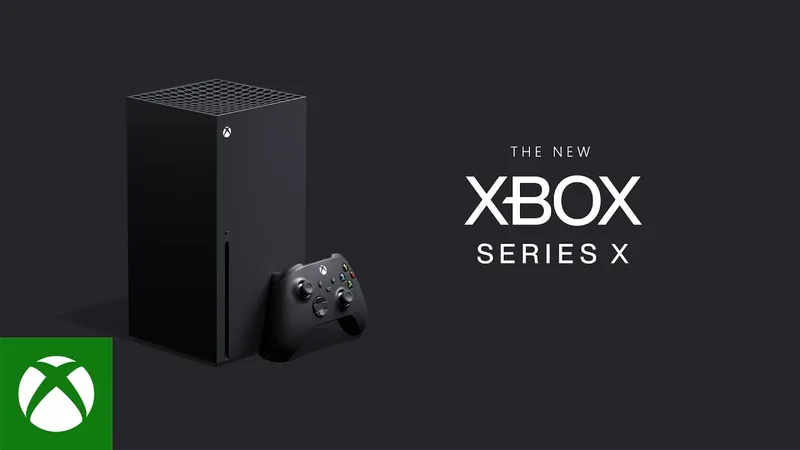
Microsoft Xbox Series X Console (1TB)
- Backward compatibility across 4 generations of Xbox libraries
- 12 TFLOPS RDNA 2 architecture with 1TB Velocity NVMe SSD
- HDMI 2.1 output up to 4K at 120Hz with VRR support
- Full digital library continuity ready for Project Helix
Check Xbox Series X Availability on Amazon→
AMD Silicon and Neural Rendering Over 8K or 240Hz Marketing Hype
On the silicon front, "The Soul of Project Helix" signals a deliberate pivot away from traditional spec-sheet marketing wars. Microsoft notes that the 10th generation will not be defined by chasing raw display buzzwords such as 8K resolution or 240Hz refresh rates, nor by relying solely on brute-force teraflop counts. Instead, the engineering focus centers on neural rendering deeply integrated into the custom AMD system-on-chip.
By pairing dedicated AI matrix accelerators with next-generation graphics compute, aligned with the RDNA 5 silicon architecture engineered for the Xbox Helix lineup, Microsoft aims to dramatically improve processing efficiency, frame-time stability, and visual fidelity while unlocking new gameplay possibilities. Tight integration between the custom AMD chip, system hardware, and platform software is designed to bypass traditional rasterization and ray-tracing bottlenecks.
| Architectural Pillar | Direction Confirmed in "The Soul of Project Helix" | Expected Hardware & Player Impact |
|---|---|---|
| System Philosophy | Dedicated console architecture capable of running PC games (not a disguised Windows PC) | Instant-on console UX, low-level silicon access, and zero desktop OS friction |
| Xbox Backward Compatibility | Native support across all 4 previous Xbox generations (OG Xbox, 360, One, Series X|S) | Full preservation of digital libraries, cloud saves, Achievements, and progression |
| PC Ecosystem Access | Console hardware opened up to execute PC game libraries | Eliminates arbitrary platform barriers between living-room and desktop catalogs |
| Graphics & AI Pipeline | Custom AMD silicon built around neural rendering rather than 8K / 240Hz buzzwords | Higher compute efficiency, AI-driven upscaling, and rock-solid frame pacing |
Third-Party PC Storefronts and Memory Costs Remain the Big Unknowns
While the FanFest feature clarifies the core hardware identity of Project Helix, crucial execution details remain unanswered. Microsoft has not yet specified whether PC game support will include open access to third-party storefronts such as Steam, the Epic Games Store, and GOG, or how that openness will balance against the economic equation behind Xbox Project Helix and Steam store commissions.
At the same time, component economics loom large over the 10th generation. With NAND flash storage and high-speed graphics memory facing steep price surges compared to 2025 levels, delivering a custom neural-rendering AMD console at an accessible retail price will be Microsoft's defining hardware challenge over the next two years.
My Take on the Spec Sheet
Drawing a hard line between a true console that runs PC games and a Windows 11 desktop stuffed into a living-room box is the exact engineering reassurance I wanted to hear from Microsoft. Anyone who builds PCs knows that shader compilation stutter and Windows background overhead remain the biggest enemies of smooth frame pacing. By keeping a fixed custom AMD silicon target and a low-level console OS while opening the execution layer to PC titles, Project Helix can deliver pre-compiled shader consistency alongside neural rendering efficiency instead of chasing pointless 8K marketing numbers. The decisive question now is whether Steam will run natively without heavy wrapper friction. We have not yet had a physical unit on our desk, and when Microsoft is ready to send over a review sample to put this custom AMD architecture through our full real-world testing protocol, our lab doors are wide open.

PC hardware enthusiast and competitive gamer, Arthur 'Heimdall' splits his time between France and the UK working in enterprise B2B software solutions. A business school graduate passionate about component benchmarking, he has been building, modding, and tuning PCs since childhood, optimizing every thermal degree and millisecond of display latency. An avid gamer across Assassin's Creed and sandbox titles, he forged his alliance with Grimtag and Chaya during late-night World of Warcraft raids before joining Pro-Gamer.