6,144 Blackwell Cores on Arm and a 360Hz OLED Panel: Lenovo Unveils the Yoga 9n 2-in-1 (NVIDIA N1X) and a TCL CSOT Legion Prototype

The 16-inch laptop form factor is getting a major dual hardware push from Lenovo. On one front, the manufacturer has officially unveiled the Lenovo Yoga 9n 2-in-1 Gen 11 (model 16N1X11) in Japan, a flagship convertible powered by the new Arm-based NVIDIA RTX Spark N1X platform with 64GB of unified memory. On the gaming side, Lenovo has teamed up with display maker TCL CSOT at the DTC 2026 conference to showcase a Lenovo Legion laptop prototype equipped with a 16-inch 360Hz inkjet-printed OLED panel.
Lenovo Yoga 9n 2-in-1 Gen 11: 6,144 Blackwell CUDA Cores and 64GB of Unified Memory on Arm
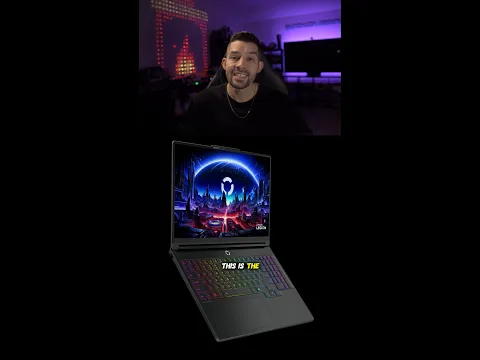
Following the 15-inch Yoga Pro 9n Gen 11 clamshell, Lenovo is bringing the NVIDIA RTX Spark N1X system-on-chip to a 360-degree convertible chassis finished in Cosmic Blue. Designed for Windows 11 on Arm, the N1X platform pairs an Arm-based NVIDIA Grace CPU (up to 20 cores, with performance cores reaching up to 4.0 GHz and efficiency cores at 2.8 GHz) with an integrated NVIDIA RTX Blackwell GPU packing up to 6,144 CUDA cores.
To feed that integrated graphics cluster without memory bottlenecks, the machine is configured with up to 64GB of soldered LPDDR5X-9400 unified memory. Much like what we saw when the Lenovo Yoga Pro 7 15ASH11 with AMD's Radeon 8060S challenged discrete laptop GPUs, sharing a high-bandwidth memory pool between the CPU and the Blackwell GPU allows creators and developers to run large local AI models, heavy 3D assets, and high-resolution video timelines without redundant data transfers, though the full 64GB is dynamically shared rather than permanently locked to graphics tasks.
Visuals are handled by a 16-inch PureSight Pro OLED touchscreen featuring a 2.8K resolution (2880 x 1800 pixels), a variable refresh rate ranging from 30Hz to 120Hz, 100% DCI-P3 color coverage, Dolby Vision, and VESA DisplayHDR True Black 1000 certification with peak HDR brightness rated at 1,100 nits. Bundled in the box, the Lenovo Yoga Pen Gen 2 supports 8,192 pressure levels, tilt and hover detection, and a 480Hz sampling rate, working directly on the main OLED display as well as on the haptic touchpad, which houses its own built-in digitizer.
Full Port Selection, Falcon 3.0 Cooling, and a Steep Japanese Launch Price
Measuring 17.5 mm at its thinnest point and weighing approximately 1.94 kg, the Yoga 9n 2-in-1 Gen 11 avoids the port sacrifices often seen on thin convertibles. Connectivity includes two 40Gbps USB4 Type-C ports (with Power Delivery and DisplayPort 2.1), two 10Gbps USB-A ports, an HDMI 2.1 output, a full SD card reader, a 3.5mm audio jack, Wi-Fi 7, Bluetooth 5.4, dual M.2 2242 PCIe Gen4 NVMe SSD slots, and a six-speaker Dolby Atmos sound system. Thermal dissipation relies on Lenovo Falcon 3.0 cooling, utilizing heat pipes and a unified thermal plate covering both the N1X processor and the LPDDR5X memory modules.
Lenovo has scheduled the Japanese retail release for November 27, 2026, priced at 912,780 yen including tax (roughly $5,747 USD at current exchange rates). Pricing and availability for North America and Europe have not yet been announced.
Lenovo Legion Prototype: TCL CSOT Showcases a 16-Inch 360Hz Inkjet-Printed OLED Display
Meanwhile, at its annual DTC 2026 (Global Display Tech-ecosystem Conference) showcase, panel manufacturer TCL CSOT demonstrated the fastest laptop OLED screen revealed to date, fitted inside a 16-inch Lenovo Legion gaming laptop prototype. The panel combines a 2560 x 1440 (QHD) resolution with a blistering 360Hz refresh rate, 100% coverage of the DCI-P3 color space, and up to 500 nits of peak brightness.
What sets this screen apart is its IJP OLED (Inkjet-Printed OLED) manufacturing process. Instead of evaporating organic materials through fine metal masks in a vacuum chamber, TCL CSOT uses precision nozzles to deposit liquid organic compounds directly into sub-pixel cavities. As we detailed in our breakdown of how TCL is preparing 700Hz OLED gaming displays using inkjet printing, this approach reduces manufacturing waste and cost while delivering a cleaner RGB stripe sub-pixel layout that eliminates color fringing around desktop text. Having already supplied a 240Hz IJP OLED display for Lenovo's Legion R9000P earlier this year, TCL CSOT now edges past Samsung Display's recently unveiled 300Hz 2.5K laptop OLED panel, though neither Lenovo nor TCL CSOT has confirmed a retail release window or price for a 360Hz Legion model.
My Take on the Spec Sheet
While we will have to wait until both machines reach our test bench before judging sustained thermals and real-world battery life, these two 16-inch reveals show just how aggressively Lenovo is pushing laptop silicon and display engineering. Packing 6,144 Blackwell CUDA cores and 64GB of LPDDR5X-9400 unified memory into a 1.94 kg convertible makes the Yoga 9n 2-in-1 Gen 11 a fascinating workstation for local AI models and 3D viewport work. Still, at a converted Japanese price north of $5,700, software compatibility under Windows 11 on Arm is the elephant in the room: buyers spending that kind of money cannot afford x86 translation hiccups, missing peripheral drivers, or aggressive thermal throttling inside a 17.5 mm chassis. We have not yet had a physical unit on our desk,if the manufacturer's team would like to send over a review sample so we can put it through our full real-world testing protocol, our lab doors are wide open.
As for the 360Hz 1440p IJP OLED prototype on the Lenovo Legion, let's keep expectations grounded: no current laptop GPU is going to push 360 native frames per second at QHD in heavy modern AAA titles without multi-frame generation. Where this panel truly shines is competitive shooters and esports titles, where pairing near-instantaneous OLED pixel response times with 360Hz motion clarity and crisp inkjet-printed sub-pixels removes the display as a bottleneck,a combination our esports specialist Maëlle "Kaelen" is already eager to put through its paces.

PC hardware enthusiast and competitive gamer, Arthur 'Heimdall' splits his time between France and the UK working in enterprise B2B software solutions. A business school graduate passionate about component benchmarking, he has been building, modding, and tuning PCs since childhood, optimizing every thermal degree and millisecond of display latency. An avid gamer across Assassin's Creed and sandbox titles, he forged his alliance with Grimtag and Chaya during late-night World of Warcraft raids before joining Pro-Gamer.