Targeted Ads or Massive Game Price Hikes: Why Xbox Media Solutions Sees Advertising as the Antidote to Ballooning AAA Budgets
The financial pressure of modern blockbuster development is pushing platform holders to look for new economic safety valves. With production budgets for major AAA releases routinely crossing hundreds of millions of dollars, Jonathan Stringfield, Vice President and General Manager of Xbox Media Solutions at Microsoft Advertising, has laid out Redmond's long-term rationale: scaling targeted, non-intrusive advertising and recurring revenue streams to avoid hitting players with another wave of retail game price hikes.
A former Activision Blizzard executive in charge of global business research and advertising measurement before joining Microsoft's ad division, Stringfield frames the industry's current crossroads as a stark binary choice. Faced with ballooning development costs, publishers and platform holders must either "dramatically increase the price of games" or "find other mechanisms",such as subscriptions and adjacent advertising models,to subsidize player access and keep the ecosystem financially viable.
"No Scenario Where We Have a Desire to Make the Gaming Experience Worse"
After the contentious industry-wide jump from $60 to $70,and even $80 on select flagship titles,any mention of console advertising immediately sparks concern that commercial breaks could invade full-priced games. Addressing that anxiety head-on, Jonathan Stringfield categorically ruled out forcing ads into active gameplay across the catalog.
"I personally believe interrupting the gameplay experience would be bad," the Xbox Media Solutions chief explained. He pushed back firmly against the idea of a blanket rollout: "There is zero world where there is intention, written, explicit, implicit, or otherwise, that ads will be an option in all games, and no scenario where we have an explicit or implicit desire to make the gaming experience worse."
Rather than brute-forcing ad placements across the Xbox Series X|S dashboard or interrupting single-player campaigns, Microsoft compares its approach to the ad-supported tiers popularized by video streaming platforms like Netflix and Disney+. The goal is to introduce advertising only where it unlocks a clear, lower-cost or free entry point for the player.
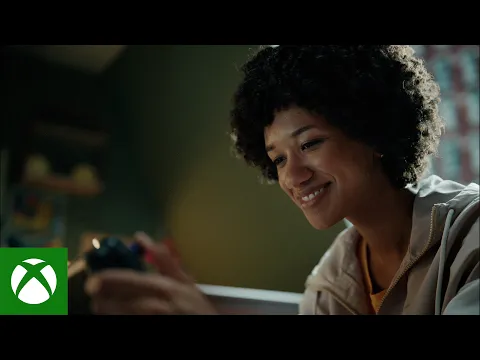
From Free 30-Minute Cloud Gaming Sessions to Take-Two's Contractual Guardrails
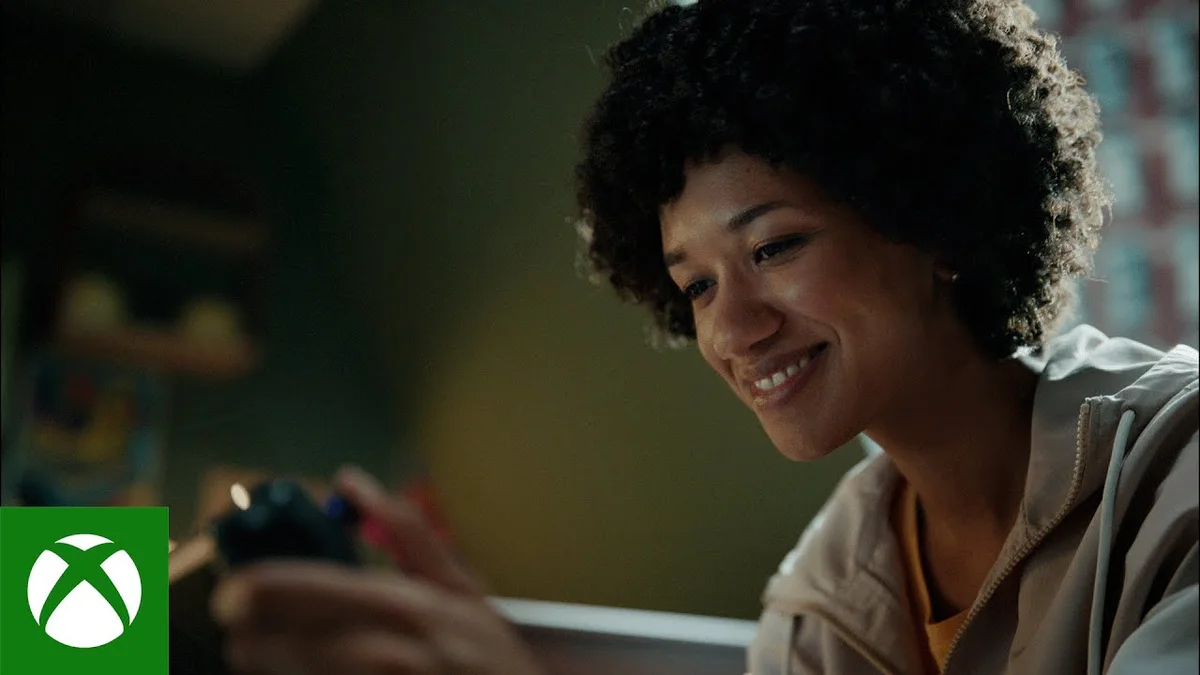
That framework is no longer theoretical inside the Xbox ecosystem. It went live at scale this week on the official Xbox Cloud Gaming platform with the general availability rollout of free ad-supported 30-minute Cloud Gaming sessions alongside paid Playtime packs starting at $3.99.
Under this model, players without a Game Pass subscription can stream select digitally owned titles (Stream Your Own Game) and eligible free-to-play games by watching pre-roll video ads in the waiting queue before the stream launches, with zero commercial interruptions during the 30-minute gameplay window itself.
| Xbox Revenue Mechanism | How It Works | Gameplay Impact |
|---|---|---|
| Free Ad-Supported Cloud Gaming | 30-minute streaming sessions funded by pre-roll video ads | Zero mid-game interruptions; new ad queue required after 30 minutes |
| Cloud Playtime Top-Up Packs | Prepaid hourly bundles ($3.99 for 10h up to $11.99 for 50h) | Ad-free streaming and priority queue access without a subscription |
| Xbox Game Pass Tiers | Recurring monthly subscriptions (Essential, Premium, Ultimate) | Ad-free gameplay with dedicated monthly Cloud streaming allowances |
Check Xbox Game Pass Ultimate deals on Allkeyshop→
Check Availability Xbox Wireless Controller on Amazon→
Those strict boundaries between platform ad inventory and third-party games are also baked directly into Microsoft's legal agreements with major publishers. As detailed in the 29-page SEC contract between Xbox and Take-Two ahead of GTA 6, Microsoft is permitted to run general platform ads before or after a cloud streaming session, but is contractually barred from placing advertisements directly adjacent to a publisher's game content without explicit approval.
My Field Notes
Jonathan Stringfield deserves credit for stating the industry's math plainly: nobody wants to see standard editions climb to $90 or $100 just to cover bloated AAA production budgets. Comparing notes with Grimtag this morning, we landed on the exact same takeaway: as long as advertising stays strictly confined to a pre-roll waiting room on free Xbox Cloud Gaming sessions, the value trade-off is completely fair. You pay nothing for the remote server blade, you sit through a brief spot before booting your save on a phone or smart TV, and your actual gameplay remains untouched. The red line, however, is non-negotiable: the moment a sponsored banner creeps into a $70 purchase or a paid monthly subscription, the excuse of subsidizing development costs will immediately fall flat with players.

Based on the outskirts of New York City, Chaya 'Chayane' spent five years studying software engineering in Montreal before returning to her home state. A Full-Stack developer and Deep Learning AI architecture researcher, she explores neural networks and algorithmic optimization while engineering data pipelines for Retrocharting and Gamescharting alongside Grimtag. A gamer for over 20 years and an avid collector of Nintendo history and The Legend of Zelda, she explored World of Warcraft's Azeroth before bringing her deep technical background to video game analysis.