AMD Drops Below 30% Desktop CPU Share as Intel Rebounds to 70.1%: How Data Center Priority and GPU Shortages Hit Ryzen
It is one of the sharpest paradoxes in the PC hardware market right now: even as Ryzen 3D V-Cache processors continue to dominate gaming benchmarks across the board, AMD just lost five full percentage points of desktop CPU market share in a single quarter. According to third-quarter 2026 x86 shipment figures compiled by lead analyst Dean McCarron at Mercury Research, AMD's share of desktop processors dropped from 34.9% in Q2 2026 down to 29.9% in Q3 2026 (compared to 33.6% a year earlier in Q3 2025). On the other side of the ledger, Intel rebounded to 70.1% of desktop shipments, pushing Ryzen desktop volume below the symbolic 30% threshold for the first time since early 2025.
Q3 2026 x86 Market Share Breakdown: Desktop Pullback vs. Server Record
Far from signaling a sudden shift in gamer preference away from Socket AM5, the five-point swing reflects a calculated foundry and supply-chain reallocation by both chipmakers. Mercury Research's quarterly report highlights a stark divergence between consumer desktop shipments and AMD's relentless climb in enterprise data centers.
| x86 Segment (Mercury Research) | AMD Share (Q3 2026) | AMD Share (Q2 2026) | Intel Share (Q3 2026) | Quarter-over-Quarter Shift |
|---|---|---|---|---|
| Desktop CPUs | 29.9% | 34.9% | 70.1% | -5.0 pts for AMD (+5.0 pts Intel) |
| Server CPUs (Data Center) | 35.5% (Record) | 34.5% | 64.5% | +1.0 pt for AMD (-1.0 pt Intel) |
| Mobile CPUs (Laptops) | Total unit shipments declined by more than 10% across both AMD and Intel | Industry-wide Q3 laptop pullback | ||
How a 10% Laptop Slowdown Helped Intel Reclaim 5 Points on Desktop
The first major driver identified by Dean McCarron comes down to Intel's internal fab allocation. During the third quarter of 2026, global mobile CPU shipments contracted by more than 10% for both Intel and AMD. Because Intel had been grappling with tight supply constraints throughout the first half of the year and under-shipping relative to customer orders, that sudden cooldown in laptop demand freed up vital manufacturing capacity.
Intel quickly redirected its fab output toward desktop processors, particularly for commercial OEM systems from Dell, HP, and Lenovo. That supply shift allowed Intel to fulfill backlogged orders and capture the full third-quarter seasonal surge on desktop, mechanically clawing back five percentage points of market share in just ninety days.

Lisa Su's "Data Center First" Priority and the Gaming GPU Bottleneck
So why did AMD fail to record its usual seasonal Q3 uptick in desktop Ryzen shipments? The explanation ties directly into Lisa Su's explicit pivot making AMD a "Data Center First" company ahead of its gaming division. With enterprise server demand outstripping available supply, AMD has been steering its TSMC wafer allocation toward high-margin EPYC server processors rather than mid-range consumer desktop chips.
Because EPYC server chiplets and Ryzen desktop CCDs compete for the same advanced TSMC silicon wafers, every wafer dedicated to cloud hyperscalers yields dramatically higher operating margins. That deliberate trade-off propelled AMD to a new all-time high of 35.5% server CPU unit share in Q3 2026 (up a full point from 34.5% in Q2), even as desktop shipments were kept on a tighter leash ahead of AMD's upcoming Zen 6 blueprint packing 12 cores per CCD and up to 144MB of 3D V-Cache on Socket AM5.
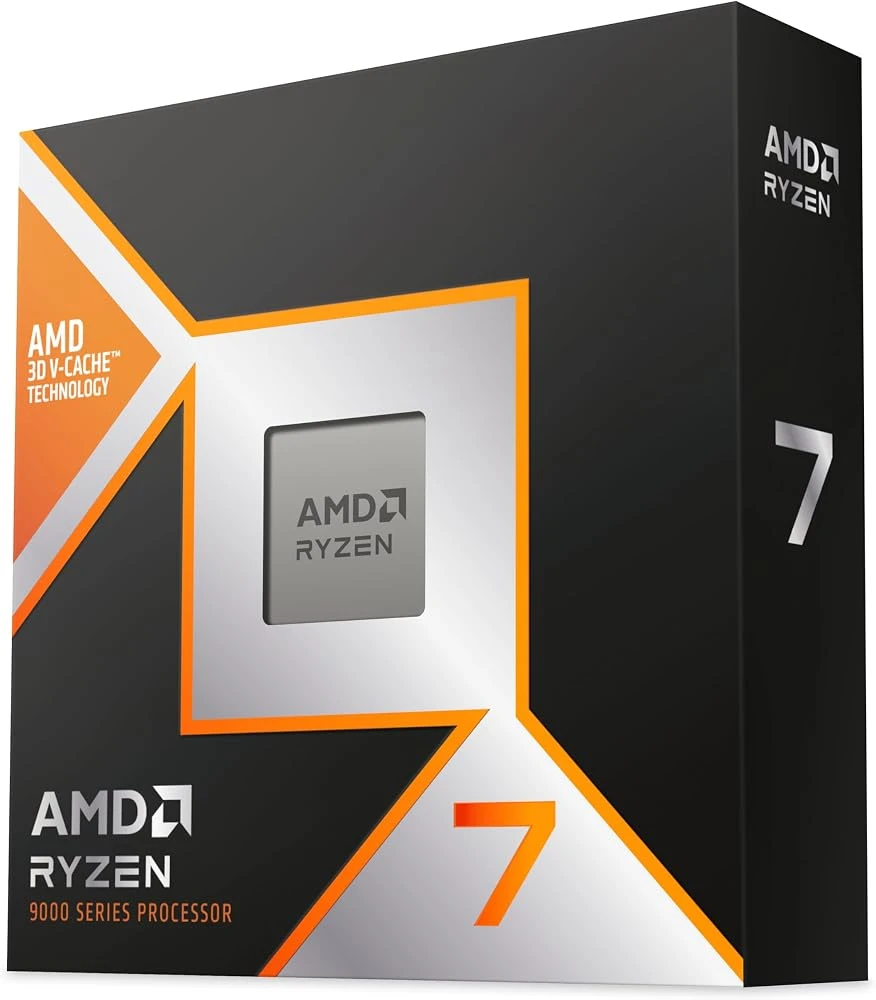
AMD Ryzen 7 9800X3D (Socket AM5, 96MB 3D V-Cache Gaming CPU)
- 8-core / 16-thread Zen 5 architecture with 96MB total L3 3D V-Cache
- Up to 5.2 GHz boost clock and unlocked for overclocking
- Socket AM5 platform supported beyond 2029
Finally, Mercury Research points out a structural headwind specific to PC gaming builds. Unlike Intel, which leans heavily on corporate office desktops that do not require discrete graphics cards, AMD's desktop CPU volume is heavily tied to the DIY gaming PC market. Throughout the third quarter, tight supply and elevated pricing across gaming GPUs and DDR5 memory caused many PC gamers to postpone full system builds, directly dampening retail demand for standalone Ryzen processors.
My Take on the Spec Sheet
When you line up Dean McCarron's shipment tables next to Lisa Su's recent earnings call remarks, the picture is crystal clear: AMD did not lose five points of desktop share because PC gamers suddenly stopped buying X3D chips, but because every TSMC wafer routed into an EPYC server rack prints far more money than a consumer CPU box. As our hardware tester Bastien "Orion" pointed out from his AM5 test bench this week, the Ryzen 7 9800X3D still runs circles around Intel's Core Ultra lineup in pure gaming workloads, yet skyrocketing GPU and memory prices are freezing complete DIY builds at checkout. Until graphics card pricing cools down and wafer capacity expands, AMD seems more than happy to trade desktop volume for record data center margins.

PC hardware enthusiast and competitive gamer, Arthur 'Heimdall' splits his time between France and the UK working in enterprise B2B software solutions. A business school graduate passionate about component benchmarking, he has been building, modding, and tuning PCs since childhood, optimizing every thermal degree and millisecond of display latency. An avid gamer across Assassin's Creed and sandbox titles, he forged his alliance with Grimtag and Chaya during late-night World of Warcraft raids before joining Pro-Gamer.