“Gameplay First, Features Second”: How Nintendo Is Secretly Testing New Ways to Play on Switch 2
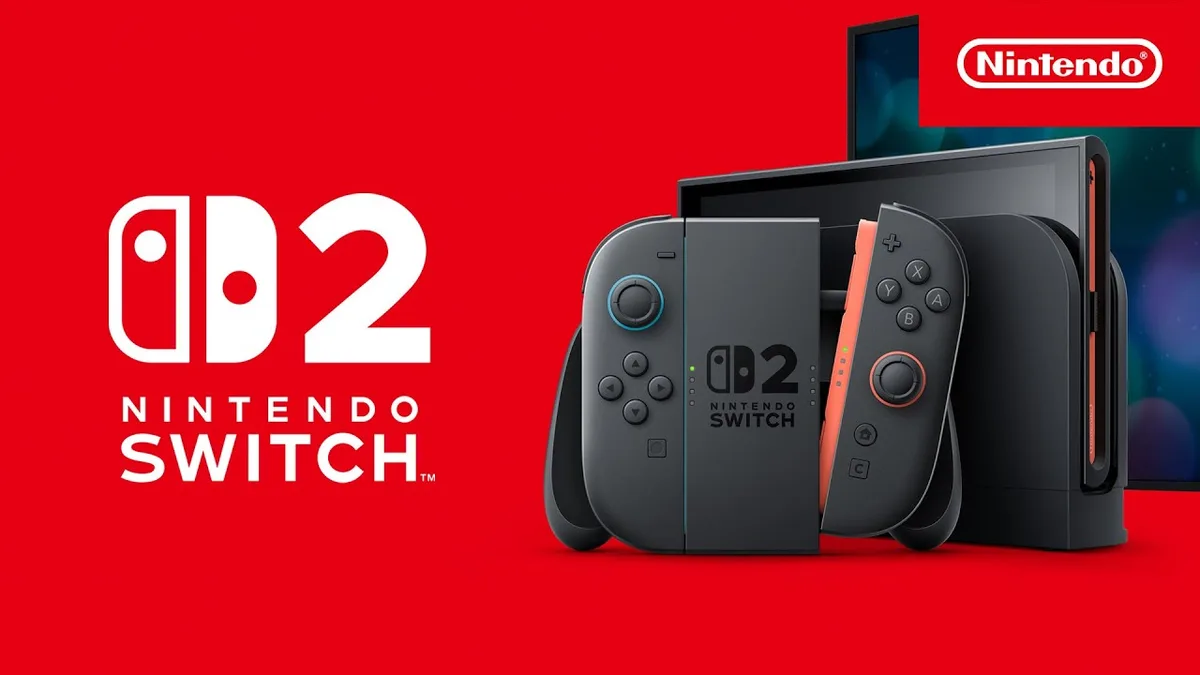
Since its launch in June 2025, the Nintendo Switch 2 has already surpassed 25 million units sold through to consumers worldwide. Yet during the official Q&A session held on November 6, 2026 following the company's first-half financial briefing, an investor asked executives a blunt question: with no recent structural gameplay revolution on the scale of the Wii Remote, has inventing new ways to play become a lower priority at Nintendo?
Published on Nintendo's official Investor Relations portal, the full Q&A transcript brings together President Shuntaro Furukawa, software development head Shinya Takahashi, technology engineering chief Ko Shiota, and corporate planning executive Yusuke Beppu. Note that Representative Director and Fellow Shigeru Miyamoto was unexpectedly absent from the briefing due to a sudden illness, though Nintendo noted his condition is stable and expects him to recover within a few days to a week.
Forty Years of Hardware-Software Integration as Nintendo's "Lifeline"
Addressing concerns over whether experimental design had taken a back seat, Shuntaro Furukawa flatly rejected any notion that management has lowered its priority on gameplay innovation. According to the Nintendo president, delivering unique entertainment that no rival can replicate remains the company's very "lifeline."
For roughly forty years, that identity has relied on developing hardware and software together under one roof. While Furukawa acknowledged that future entertainment formats could evolve over the long run, he emphasized that integrated hardware-software development remains the best way to maximize Nintendo's strengths right now, even as Shuntaro Furukawa rules out another Nintendo Switch 2 price hike beyond $499.99 despite the RAM crunch.
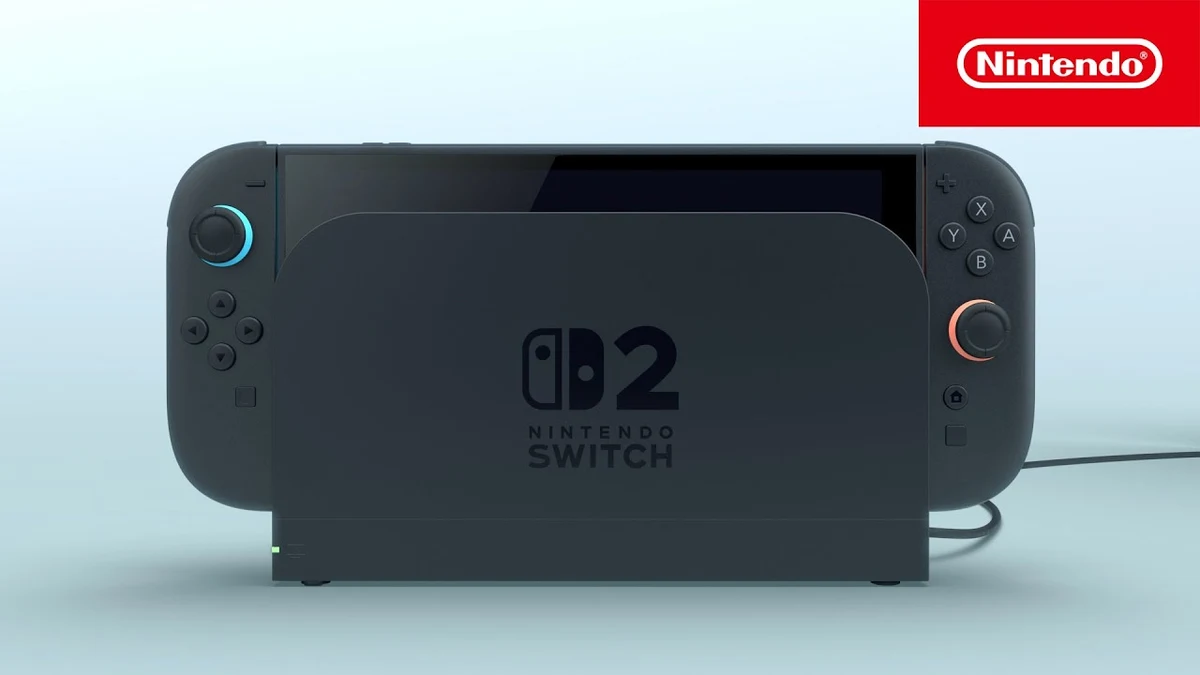
Nintendo Switch 2 Console
- 1080p 120Hz HDR handheld display and up to 4K 60 FPS docked TV output
- Magnetic Joy-Con 2 controllers featuring optical sensors for tabletop mouse controls
- Dedicated C Button for GameChat voice, video, and GameShare local multiplayer
- Backwards compatible with physical and digital Nintendo Switch games
Shinya Takahashi's Golden Rule: Never Start With the Hardware Feature
Senior Managing Executive Officer Shinya Takahashi, who leads Nintendo's Entertainment Planning & Development (EPD) division, then explained how internal studios actually approach next-generation concepts. Contrary to popular belief, Nintendo's designers never make using a new hardware feature an end in itself.
Instead, the creative pipeline works the other way around: developers first brainstorm an entertaining gameplay idea, and only then figure out what new hardware functions or technical capabilities are needed to bring that idea to life and push it to the limit. Takahashi confirmed that integrated hardware and software teams are actively going through trial and error on Nintendo Switch 2 to realize brand-new ways to play, asking fans to look forward to the day Nintendo is ready to announce them.

Only "a Handful of Ideas" Survive Internal Prototyping, Says Ko Shiota
On the engineering side, Senior Executive Officer Ko Shiota (head of Platform Technology Development) stressed that having hardware engineers and software creators brainstorm side by side through constant trial and error is a decades-old cultural pillar at Nintendo. Having worked in development since joining the company, Shiota noted that while the underlying technologies and product shapes change, that developer mindset has never wavered.
Shiota candidly admitted that out of all those internal experiments, only "a handful of ideas" ever make it into commercial products. Even so, the entire executive board continues to fund and back those trials, while refusing to chase high-end technical specifications for their own sake and trimming non-essential specs whenever the core entertainment experience does not require them.

A 121 Billion Yen Kyoto R&D Hub and the Legacy of Four N64 Controller Ports
Addressing how Nintendo balances longer development cycles with rising costs in an era flooded by free digital content and AI-generated media, Senior Executive Officer Yusuke Beppu pointed to the power of distinct ideas and shared local play. Referencing Nintendo's decision to build four controller ports directly into the Nintendo 64, Beppu revealed that audience satisfaction surveys for The Super Mario Galaxy Movie also scored significantly higher among groups of four viewers than among solo moviegoers.
That willingness to back quirky concepts has already paid off with Tomodachi Life: Living the Dream reaching 8.83 million copies sold by the end of September 2026, setting the stage as Nintendo bets Switch 2's third year on Pokémon Winds and Waves in 2027. To give its teams the breathing room to refine prototypes without bowing to short-term earnings pressure, Nintendo is also investing 121 billion yen to construct its new Technology Development Center in Kyoto for completion in March 2029.
My Perspective
I am thrilled to hear Shinya Takahashi and Ko Shiota confirm that experimental prototypes are actively brewing behind closed doors in Kyoto, because the Nintendo Switch 2 still has hardware tricks that barely feel tapped yet. Between the optical mouse sensor built into the Joy-Con 2 controllers, camera integration, and single-copy GameShare sessions, we have mostly seen clever tech demos like Drag x Drive or party mini-games rather than a true genre-defining flagship.
Nintendo is always at its best when its hardware and software teams stop playing it safe and cook up weird, tactile contraptions in the spirit of Ring Fit Adventure or Nintendo Labo that get four people laughing on the living room rug. Knowing the executive board is happily funding wild R&D prototypes even if most never leave the lab makes me genuinely excited to see which oddball survivor takes center stage at a future Nintendo Direct.
Based on the outskirts of New York City, Chaya 'Chayane' spent five years studying software engineering in Montreal before returning to her home state. A Full-Stack developer and Deep Learning AI architecture researcher, she explores neural networks and algorithmic optimization while engineering data pipelines for Retrocharting and Gamescharting alongside Grimtag. A gamer for over 20 years and an avid collector of Nintendo history and The Legend of Zelda, she explored World of Warcraft's Azeroth before bringing her deep technical background to video game analysis.