48 Hours Before Skyrim Turns 15: Lead Designer Bruce Nesmith Explains How Keeping the Oblivion Team Built a Masterpiece
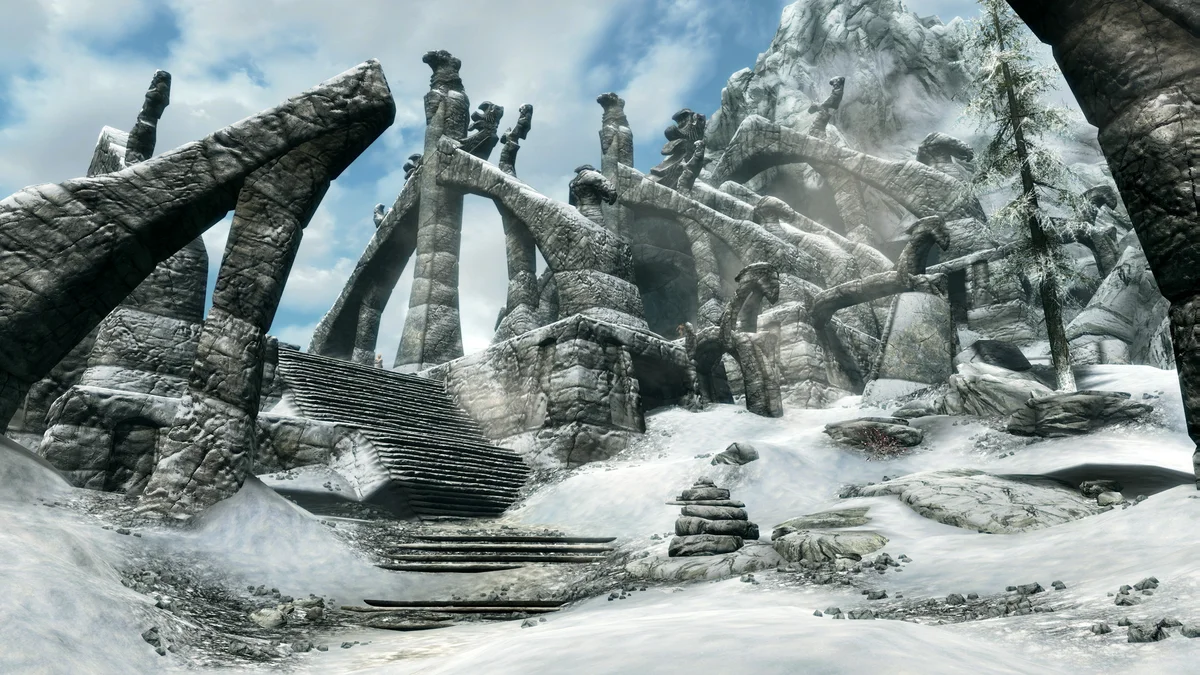
On November 11, 2011, The Elder Scrolls V: Skyrim launched worldwide and permanently reshaped the blueprint for open-world role-playing games. Fifteen years later, just 48 hours ahead of that milestone anniversary, Bruce Nesmith, the game's Lead Designer and a longtime Bethesda Game Studios veteran who retired in 2022, sat down with host Steven Lake on The Examined Game podcast. His reflection offers a pointed lesson for the modern video game industry: Skyrim's historic triumph was only possible because Bethesda kept its The Elder Scrolls IV: Oblivion development team intact rather than gutting staff between projects.
Institutional Knowledge From Oblivion Versus AAA Layoff Culture
When asked how The Elder Scrolls V: Skyrim managed to balance deep RPG systems with mainstream accessibility for tens of millions of players, Nesmith dismissed the idea of a secret design formula. Instead, he pointed directly to team continuity across Oblivion (2006), Fallout 3 (2008), and Skyrim (2011).
"If I had an actual blueprint on how to do it, I would be one rich son of a bitch. A lot of it comes down to we had the same team that had worked on Oblivion. The studio had not really changed dramatically. So we were able to deal with institutional knowledge at a high level that had been retained, which allows us to not make mistakes and build on successes. That was definitely key to it," Nesmith explained.
While many modern AAA publishers routinely lay off huge portions of a studio's workforce the moment a flagship title ships, Bethesda Game Studios retained its core team of roughly 150 internal developers. That stability allowed the studio to accelerate environmental storytelling and world density from day one, much like the handcrafted design approach we recently saw behind Skyrim's 7,000 Steps to High Hrothgar.
"That depth was made possible by having people who knew what they were doing and could hit the ground running. You didn't have to train people in what it meant to make an Elder Scrolls game. If you look at the history of AAA studios that do sequels, you'll see that repeated. You'll see the best game in a sequence frequently was able to maintain a particular percentage of the staff and was able to maintain a vision," Nesmith added.
Why It Takes a Full Year to Train a Developer on a Complex RPG
To illustrate why staff retention matters so much, Nesmith shared a benchmark from his decades in production: at any studio building complex, systemic open-world games, it takes at least one full year before a newly hired developer can work unsupervised to the studio's quality standard.
Between mastering proprietary tools, understanding quest scripting pipelines, and internalizing how environmental vignettes are placed across the map, the onboarding curve is steep. Laying off experienced developers after launch effectively throws away years of accumulated training. Nesmith also credited Bethesda's internal culture during his tenure, which operated on a strict mutual-respect policy where every piece of cross-discipline feedback had to be delivered constructively so designers could act on it without ego clashes.
Detect Life, Level 81, and Skill Constellations: Three Real Production Clashes With Todd Howard
Having veterans who trusted one another allowed Bethesda to fix lingering design flaws from Oblivion while challenging each other's blind spots. During the interview, Nesmith highlighted three concrete examples of how that dynamic shaped Skyrim:
- Fixing the Detect Life Spell For the Art Team: In Oblivion, the Detect Life spell stayed active for long stretches, turning detailed NPCs and creatures into glowing purple blobs. One of Bethesda's lead artists objected, pointing out that the spell ruined hundreds of hours of painstaking character art. Listening to that critique, the design team reworked Detect Life in Skyrim into a channeled spell with a high magicka drain: players pulse it for a second or two to spot enemies, then let go so the visual artistry remains intact.
- Losing the Argument Over Todd Howard's Skill Constellations: Nesmith admitted he fought studio director Todd Howard throughout production over the night-sky constellation menus, arguing that a plain text list would be far more functional and less confusing. "I held that all the way through production. And the game gets out there, and people loved the constellations. They thought they were fantastic. So I was clearly wrong. I was dead dog wrong on that. Fortunately, Todd being the studio director, he got to make that call," Nesmith recalled, praising Howard's ability to step out of the "developer ivory tower" and think like an everyday player.
- The Level 81 Cap Blind Spot: Because raising every skill to 100 mathematically resulted in a character level cap of 81, and Bethesda designed most of its content around level 50, Nesmith assumed nobody would care about hitting a ceiling. He underestimated how deeply players bonded with their characters and refused to start over, prompting Bethesda to introduce Legendary skills post-launch to remove the cap.

Better Mounts and Functional Ladders: Nesmith's Wishlist for The Elder Scrolls VI
Looking back at why players still return to Tamriel fifteen years later, Nesmith summed up Bethesda's philosophy in a single sentence: "You're not playing my game, I'm making your game." Whether someone charges into battle with a two-handed warhammer or inevitably gravitates back to the iconic Stealth Archer build immortalized by comedy troupe Viva La Dirt League, the studio built systems to validate every playstyle without forcing checklists on the screen.
Now enjoying retirement and looking forward to playing The Elder Scrolls VI: Sentinel with fresh eyes, Nesmith shared two seemingly simple features he hopes his former colleagues finally tackle: far more dynamic mounts that go beyond basic riding, and fully climbable ladders instead of instant teleport transitions, a deceptively complex AI pathfinding and animation hurdle that Bethesda programmers sidestepped for decades.
My Take
Hearing Bruce Nesmith break down the human reality of game development is a breath of fresh air, and I know our resident Tamriel lore hound Bastien "Orion" feels the exact same way. In an era where corporate boards lay off hundreds of developers the week after a game ships just to pad quarterly margins, only to wonder why the sequel takes eight years and stumbles out of the gate, Skyrim stands as the ultimate counter-argument. You cannot build generational RPGs with disposable teams: Skyrim became timeless because 150 craftspeople were allowed to stay together, learn from Oblivion, and master their craft without looking over their shoulders.

SEO consultant for over 20 years and digital entrepreneur, Charles "Grimtag" is the founder of Pro-Gamer.gg, Retrocharting.com, and Gamescharting.com. A competitive gamer, streamer, and retro game collector, he has worked in the video game industry for over 15 years, notably as a consultant for leading game price comparison platforms. Passionate about real-time performance data and gaming technology, he analyzes competitive esports, gaming hardware benchmarks, and creator workflows on Pro-Gamer.gg with an authentic player perspective.