Data Center Backlash and a $150 Billion Valuation: Why NYU Analyst Joost van Dreunen Says Microsoft Is Closer Than Ever to Spinning Off Xbox
Could the mounting political and financial cost of Microsoft's artificial intelligence build-out ultimately trigger a spin-off of its gaming empire? In a new analysis titled "The election that could break up Xbox" published on November 6, 2026 via his SuperJoost Playlist newsletter, NYU Stern School of Business professor and former SuperData Research founder Joost van Dreunen argues that the Democratic sweep of both chambers of the U.S. Congress in this week's midterm elections moves Xbox closer than ever to being divested by Microsoft.
40 U.S. Towns Vote on Data Center Measures as AI Infrastructure Costs Bite
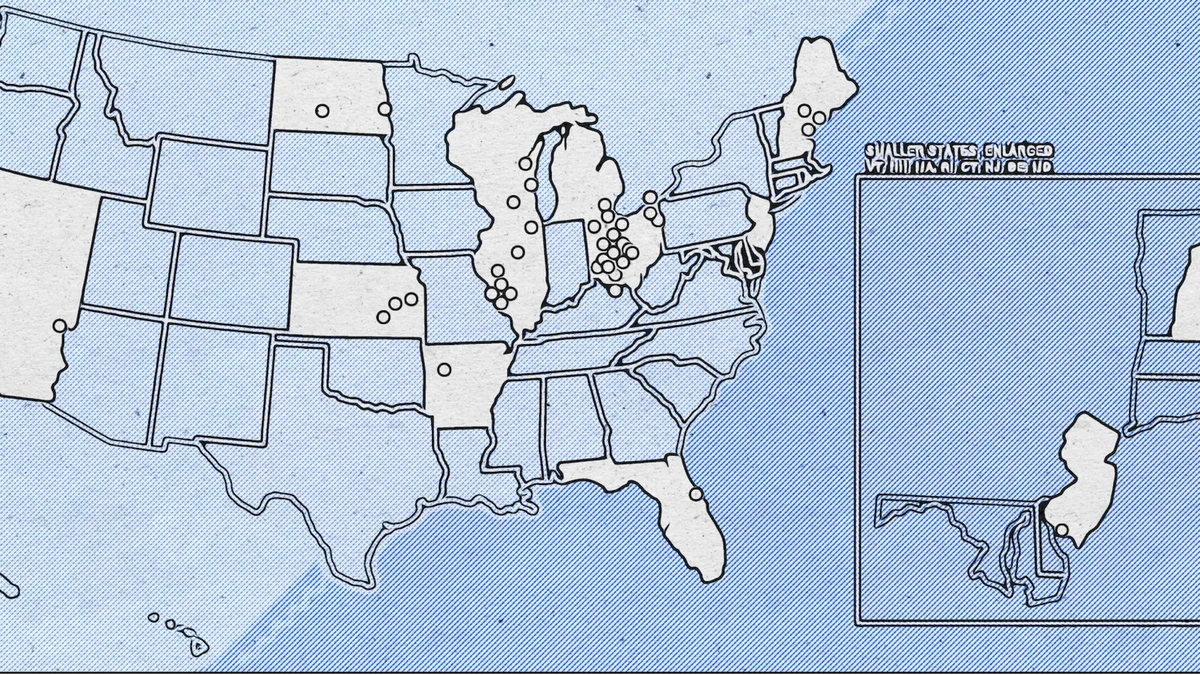
At first glance, congressional midterm results and console hardware strategy might seem worlds apart. However, van Dreunen connects the political shift directly to Microsoft's single largest capital priority: expanding its AI and Azure data center footprint. During this week's ballot cycles across the United States, voters in more than 40 towns and counties weighed in on local data center measures, with at least 10 jurisdictions approving strict limits or outright construction bans.
Furthermore, a nationwide survey of more than 79,000 registered voters revealed that candidates' stances on AI and data center expansion served as a "major" deciding factor for 56% of participants. With newly elected Democratic governors already pledging to freeze construction permits and strip away tax incentives for hyperscale server farms, Microsoft faces a significantly steeper bill to sustain its AI ambitions,just as its gaming division struggles to match enterprise margins.
A $100B-$150B Valuation, Private Equity Interest, and Asha Sharma's 'XP' Division
Microsoft's aggressive capital reallocation toward AI has already exacted a heavy toll on its gaming workforce through studio closures and recurring layoff waves following the $68.7 billion acquisition of Activision Blizzard, even as flagship development timelines stretch further out,highlighted by Xbox's internal target pushing The Elder Scrolls VI: Sentinel past 2028. Inside Redmond's balance sheet, van Dreunen points out that Xbox revenue continues to contract while Microsoft's Search and Advertising business grew by 10% in 2026, making gaming look increasingly like a sacrificial asset if capital constraints tighten.
| Strategic / Financial Factor | Key Figures (SuperJoost Analysis) | Impact on Xbox's Future at Microsoft |
|---|---|---|
| U.S. Data Center Backlash | 40+ towns/counties voted on measures; at least 10 passed bans/restrictions (major issue for 56% of 79,000 voters) | Raises Microsoft's AI infrastructure costs as governors move to halt permits and end tax breaks |
| Internal Revenue Gap (2026) | Search & Advertising grew +10% in 2026 while Xbox division revenue continued to decline | Increases executive pressure to prioritize high-margin enterprise and AI divisions over gaming |
| Private Equity Valuation | Prospective buyers have modeled an Xbox acquisition at $100 billion to $150 billion | Microsoft officially states "Xbox is not for sale," but external buyout appetite is already priced in |
| Asha Sharma's 'XP' Department | Dedicated multimedia unit adapting Xbox IP for film and television | Packages Xbox as a self-contained entertainment conglomerate for a cleaner spin-off or sale |
While Xbox engineers continue to refine the platform experience,such as the recent update delivering up to 60% faster startup times on the Windows PC Xbox app,Wall Street has already begun running the numbers on a standalone gaming spin-off. Recent financial reporting indicated that private equity firms have explored a potential buyout of Xbox valued between $100 billion and $150 billion. Although a Microsoft spokesperson reiterated that Xbox is not for sale, van Dreunen notes that CEO Asha Sharma's move to establish a dedicated "XP" department to adapt Xbox franchises for film and television neatly positions the division as a traditional media and entertainment company,making it far more attractive to outside buyers.

My Take
The moment Microsoft signed a $68.7 billion check for Activision Blizzard, Xbox stopped being a passion project tucked inside a trillion-dollar software giant and became a line item judged against Azure and AI returns. Today, with Satya Nadella pouring every available dollar into data centers while Xbox ships flagship franchises day-and-date on PlayStation 5, subsidizing low-margin console hardware looks increasingly out of place in Redmond's corporate playbook. Whether it happens through a private equity spin-off or a standalone public listing at $120 billion, Joost van Dreunen is saying out loud what Wall Street has been modeling for months.

SEO consultant for over 20 years and digital entrepreneur, Charles "Grimtag" is the founder of Pro-Gamer.gg, Retrocharting.com, and Gamescharting.com. A competitive gamer, streamer, and retro game collector, he has worked in the video game industry for over 15 years, notably as a consultant for leading game price comparison platforms. Passionate about real-time performance data and gaming technology, he analyzes competitive esports, gaming hardware benchmarks, and creator workflows on Pro-Gamer.gg with an authentic player perspective.