After Its TMR Pad, HORI Launches the $49.99 Electric Ocarina (NSX-261): How It Controls Link by Sound on Switch 2
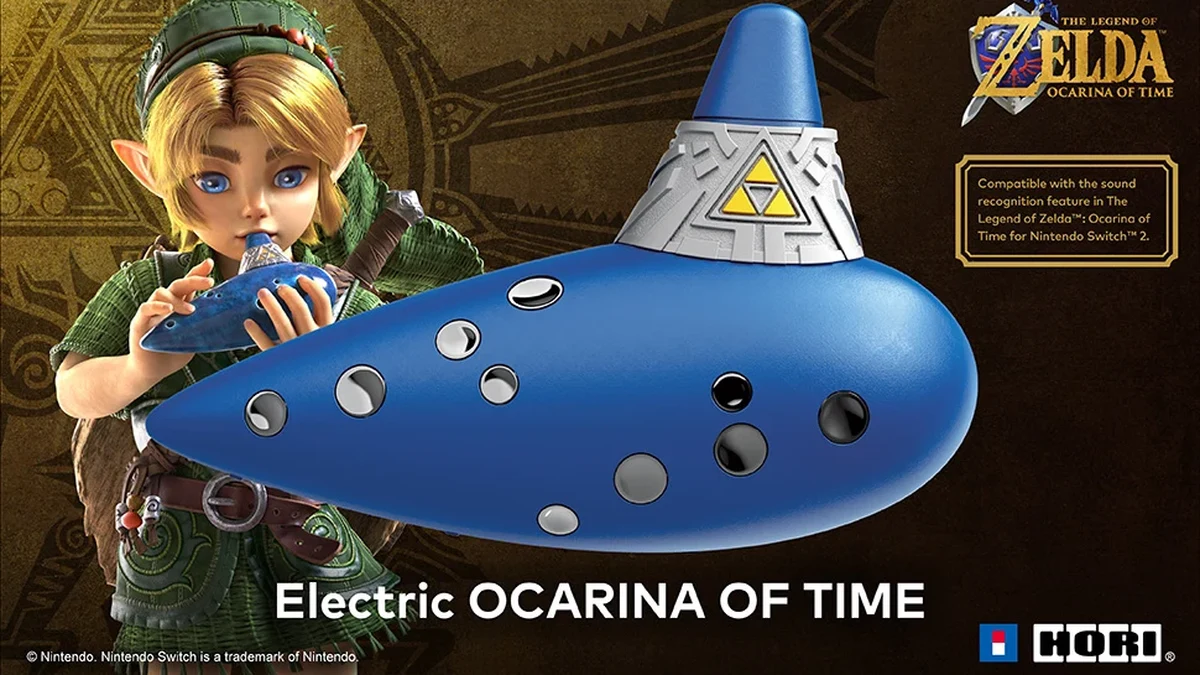
To accompany the launch of the The Legend of Zelda: Ocarina of Time remake on Nintendo Switch 2 this November 2026, officially licensed Japanese peripheral manufacturer HORI is rolling out its most unconventional hardware piece of the year: the Electric Ocarina of Time (model NSX-261 in Japan, NSX-261U in North America, and NSX-261E in Europe). Priced at 7,980 yen in Japan and $49.99 / €49.99 / £44.99 in Western markets, with its European retail release slated for November 27, 2026, this interactive replica uses neither Bluetooth nor USB-C to talk to the console. Instead, it communicates entirely through sound waves picked up by the system's built-in microphone.
Tactile Finger Buttons and a Built-In Speaker: Why You Never Blow Into HORI's Ocarina
The defining hardware distinction outlined on HORI's official NSX-261 product page lies in its internal electronics. Unlike the authentic 12-hole acoustic Ocarina of Time co-developed with Japanese instrument maker Otsuka and sold for 5,500 yen at Nintendo's flagship stores in Japan, the Electric Ocarina of Time is not a wind instrument: you do not blow into the mouthpiece to produce a note.
In place of open air holes, the royal-blue shell crowned with the silver Triforce band features flush physical finger buttons paired with an activation switch near the mouthpiece. Notes are synthesized electronically through a built-in speaker housed on the rear of the shell. From an engineering standpoint, this design solves a major gameplay hurdle: whereas a real acoustic ocarina requires steady breath control and exact finger sealing to avoid off-pitch notes that the game's audio parser might reject, HORI's electronic tone generator outputs pitch-perfect frequencies on every single press.
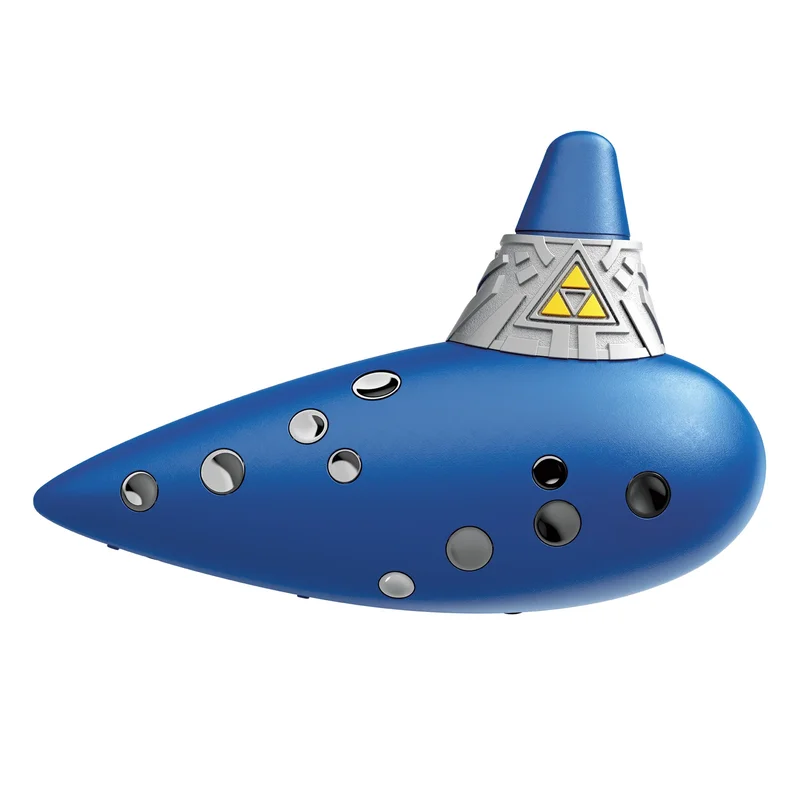
HORI Electric Ocarina of Time (NSX-261) - Nintendo Switch 2
- Direct sound-recognition interaction with the Nintendo Switch 2 microphone
- Two play modes: Free Play Mode (note by note) and Auto-Play (12 songs)
- Volume control dial, 3.5mm headphone jack, and Hyrule Crest stand included
Microphone Sound Recognition, Free Play Mode, and 12 Auto-Play Melodies
The entire premise of the peripheral is built around the sound recognition feature integrated into The Legend of Zelda: Ocarina of Time on Nintendo Switch 2. Whenever you play a melody on the Electric Ocarina of Time, the console's built-in microphone captures the acoustic output from the accessory's speaker and triggers the matching in-game action on screen, whether summoning Epona, warping across Hyrule, or shifting day into night. Because there is no wireless pairing or USB handshake involved, the device is completely region-free and works out of the box with any Nintendo Switch 2 unit worldwide.
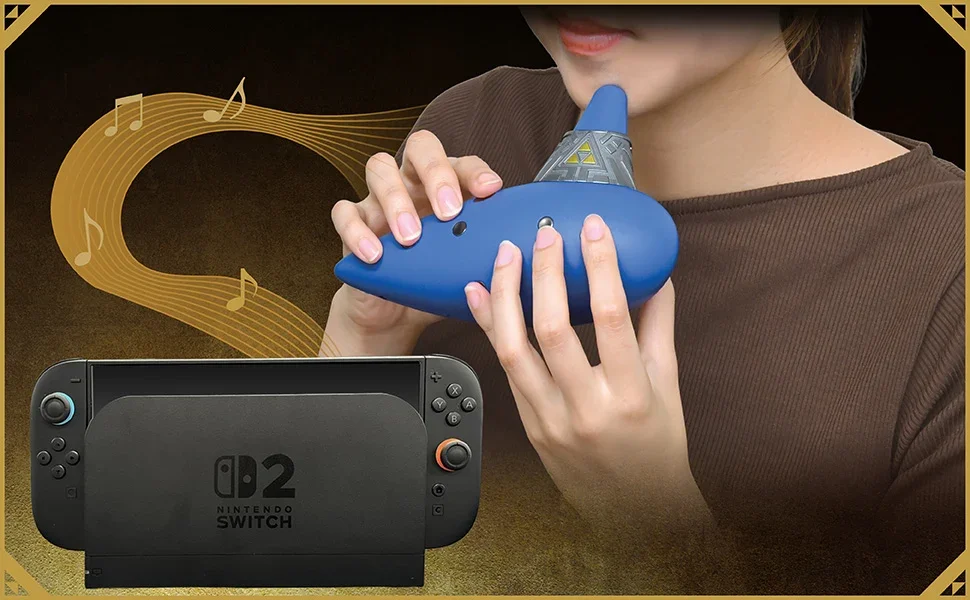
To accommodate both hands-on melody players and adventurers looking for instant activation during a dungeon run, HORI equipped the unit with two selectable operating modes:
- Free Play Mode: lets you play individual notes and custom melodies freely by pressing the finger-hole buttons in sequence, mimicking traditional ocarina fingering.
- Auto-Play Mode: plays 12 iconic in-game songs from Ocarina of Time automatically at the press of a single button, ensuring flawless recognition by the Switch 2 microphone every time.
Volume Control Dial, 3.5mm Audio Jack, Display Stand, and Physical Specs
According to the hardware specifications published on HORI's Japanese portal, the shell incorporates a physical Volume Control Dial. Beyond simple listening comfort, this dial serves a practical calibration purpose: players can boost the output volume when the Nintendo Switch 2 is seated across the living room in its TV dock, or dial it down when playing in handheld mode inches away from the console's mic. A built-in 3.5mm headphone jack also allows you to plug in headphones for quiet practice sessions or route the audio to an external speaker.
Measuring approximately 17.5 cm wide, 6 cm deep, and 11.5 cm high (6.88 x 2.36 x 4.52 inches) and weighing 145 grams without batteries, the replica carries a full-scale presence designed to sit alongside HORI's white-and-gold Zelda 40th Anniversary Switch 2 accessory lineup. It ships with a dedicated display stand (12 x 5 x 2.3 cm, weighing 23 g) emblazoned with the Hyrule Royal Crest. Power is supplied by three AA alkaline batteries (sold separately), which require a #2 Phillips screwdriver to open the rear battery compartment.
HORI Electric Ocarina of Time (NSX-261) Full Specifications
| Feature | Official Specification (HORI NSX-261 / NSX-261U / NSX-261E) |
|---|---|
| Software Compatibility | Sound recognition feature in The Legend of Zelda: Ocarina of Time on Nintendo Switch 2 |
| Operating Mechanism | Electronic button-operated ocarina with built-in speaker (no blowing required) |
| Play Modes | Free Play Mode (manual note-by-note buttons) and Auto-Play Mode (12 built-in game songs) |
| Audio Controls & I/O | Built-in Volume Control Dial + 3.5mm stereo headphone/external speaker jack |
| Dimensions & Weight (Ocarina) | Approx. 17.5 cm (W) x 6 cm (D) x 11.5 cm (H) / Approx. 145 g (without batteries) |
| Dimensions & Weight (Stand) | Approx. 12 cm (W) x 5 cm (D) x 2.3 cm (H) / Approx. 23 g |
| Power Supply | 3x AA alkaline batteries (not included; requires a #2 Phillips screwdriver) |
| Box Contents | Electric Ocarina of Time x1, dedicated display stand x1, quick start guide x1 |
| Price & Release Dates | 7,980 yen / $49.99 / €49.99 / £44.99 (November 2026 in Japan; November 27, 2026 in Europe) |
My Perspective on the Spec Sheet
Swapping out the air column of a traditional wind instrument for tactile finger buttons and a calibrated internal speaker might make classical musicians raise an eyebrow, but from a pure hardware usability standpoint, HORI made a very smart call here. By feeding pitch-locked electronic notes directly into the Nintendo Switch 2's microphone with a 12-track Auto-Play Mode and an onboard volume dial, the NSX-261 ensures that the Song of Storms or Bolero of Fire registers on the first try even from across the living room, with zero risk of a breathy sour note failing the prompt. My only real gripes on paper are the reliance on three AA batteries behind a screwed-down cover instead of USB-C rechargeable power, and the three-week gap between the game's November 5 launch and the November 27 European shipping window. In the interest of full transparency, we have not yet had this HORI accessory in our hands at the office: if the teams at HORI would like to send a review unit over to our lab so we can test the acoustic pickup range in docked mode and button responsiveness first-hand, our test bench is wide open.

PC hardware enthusiast and competitive gamer, Arthur 'Heimdall' splits his time between France and the UK working in enterprise B2B software solutions. A business school graduate passionate about component benchmarking, he has been building, modding, and tuning PCs since childhood, optimizing every thermal degree and millisecond of display latency. An avid gamer across Assassin's Creed and sandbox titles, he forged his alliance with Grimtag and Chaya during late-night World of Warcraft raids before joining Pro-Gamer.