From Over 1 GB to 290 MB of RAM: Discord Is Finally Ditching Electron for a Native Rust and GPUI Desktop App
It is the technical overhaul PC players have been begging for over nearly a decade: Discord is officially preparing to leave Electron behind. Co-founder and Chief Technology Officer (CTO) Stanislav Vishnevskiy confirmed that the company is rewriting its desktop client from the ground up in Rust, powered by the GPU-accelerated GPUI framework. In an early internal build running on Windows 11, memory consumption drops to just 290.2 MB of RAM.
From Chromium Bloat to "Discord Phoenix": Weighing In at 290.2 MB
Since its launch, the Discord desktop application has relied on Electron, a cross-platform framework that bundles its own full instance of the Chromium browser and Node.js. While Electron allowed developers to ship web features rapidly across operating systems, it came with a notorious hardware penalty: once you join a dozen active servers packed with voice channels, animated emojis, and game streams, memory usage routinely balloons from 1 GB to over 4 GB of RAM.
The revelation started during a conversation on X with developer Theo Browne. After Stanislav Vishnevskiy teased that the engineering team was busy working on a massive behind-the-scenes update, a user joked that Discord would "finally start two Chromium instances instead of one." The CTO replied with just two words: "Or 0." When another commenter doubted that a rewrite could genuinely cure the app's memory appetite, Vishnevskiy shared a direct screenshot of his Windows 11 Task Manager.
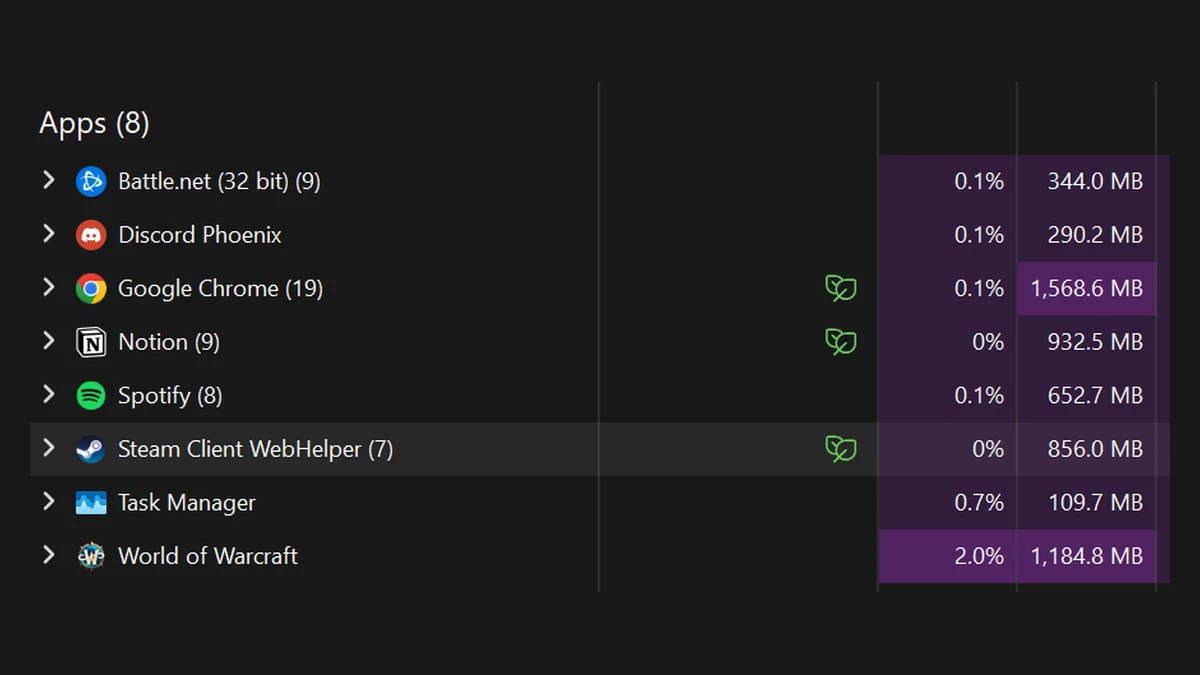
Captured while World of Warcraft was running in the background (1,184.8 MB of RAM), the new client listed under the internal name Discord Phoenix sits at just 290.2 MB of RAM and 0.1% CPU usage, even with two accounts logged in at the same time. Comparing it against the other desktop apps open on the CTO's machine highlights the leap forward: Discord Phoenix uses less memory than the Battle.net launcher (344.0 MB across 9 processes), less than half of Spotify (652.7 MB across 8 processes), roughly a third of the Steam Client WebHelper (856.0 MB) and Notion (932.5 MB), and less than a fifth of Google Chrome (1,568.6 MB across 19 processes).
| Feature | Legacy Discord Client | New Client ("Discord Phoenix") |
|---|---|---|
| Desktop Stack (Windows / macOS / Linux) | Electron (Bundled Chromium + Node.js) | 100% Native Rust + GPUI Framework |
| Mobile Stack (iOS / Android) | React Native | Native Mobile UI + Shared Rust App Core |
| Typical RAM Footprint | 1 GB to 4+ GB depending on active servers | 290.2 MB on Windows 11 (multi-account active) |
| UI Rendering Pipeline | HTML / CSS DOM via Chromium sub-processes | Direct GPU-accelerated rendering (GPUI) |
Why Discord Picked Rust and GPUI Over Tauri
When rumors of an Electron exit first surfaced, many developers assumed Discord would migrate to Tauri, a lightweight alternative that swaps bundled Chromium for the operating system's native webview (such as WebView2 on Windows). Vishnevskiy quickly ruled that out: "And it's not Tauri, it's GPUI, so good guess everyone."
Originally created by the team behind the high-speed Zed code editor, GPUI is a hybrid immediate-and-retained mode UI framework written entirely in Rust and accelerated directly by the GPU. Instead of translating chat channels, member lists, and voice overlays into heavy HTML DOM nodes inside a browser engine, GPUI renders the interface much like a 2D video game engine, dispatching drawing primitives straight to the graphics card with minimal overhead.

For the San Mateo engineering team, reaching a full client rewrite is what Vishnevskiy calls "the holy grail." As previously detailed on the official Discord engineering blog when the company migrated its critical Read States service from Go to Rust, the language's lack of a garbage collector eliminates unpredictable latency spikes and memory overhead. Having used Rust since 2018 for backend infrastructure, voice tech, and Go Live video encoding, Discord is now unifying its entire codebase: Electron is going away on desktop, and React Native is also being phased out on mobile. Both iOS and Android apps will retain pure native UIs while sharing core application code with the desktop client through Rust.
A Vital Relief for Gaming PCs Amid Soaring DDR5 RAM Prices
This architectural shift arrives at a critical moment for PC players. Just a few weeks ago, the company began testing an automated Discord Game Mode designed to throttle background interface animations and free up CPU and GPU cycles during active gameplay. Yet as long as Electron remained underneath, the gigabytes of system memory locked up by Chromium could not be reclaimed.
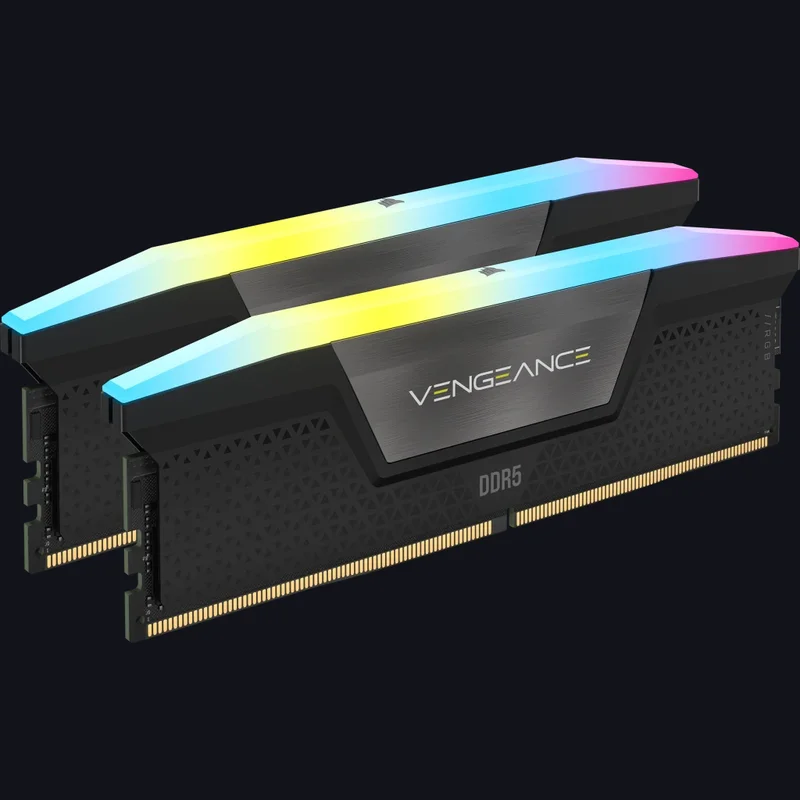
Corsair Vengeance RGB DDR5 32GB (2x16GB) 6000MT/s CL30
- 32GB (2x16GB) Dual-Channel DDR5 Capacity
- 6000MT/s CL30 Low-Latency Timing
- Intel XMP 3.0 & AMD EXPO Certified Profiles
In late 2026, with AI datacenter demand for HBM4 memory driving up consumer DRAM prices across the board, every megabyte saved matters. Much like Microsoft's recent overhaul of Windows 11 26H2 memory compression aimed at keeping 8 GB and 16 GB systems responsive, reclaiming 800 MB to 2 GB of RAM during a competitive match or an OBS broadcast can be the difference between locked frame times and frustrating micro-stutters.

While Vishnevskiy has not locked in a final public release date for the stable channel, he confirmed that Discord hopes to get the new Rust and GPUI client into user testing soon through its test builds.
My Take
It is about time. As a desktop player who keeps Discord running on a second monitor across twenty active servers, I have lost count of how many times I had to restart the client between ranked matches because its Chromium sub-processes crept past 2.5 GB of RAM after a few 1080p 60 FPS screen shares. What excites me most about Stanislav Vishnevskiy's announcement is that the team refused to take the easy shortcut: instead of wrapping the old web app in a system webview, committing to a native Rust and GPUI rewrite proves Discord is finally treating its desktop client like high-performance gaming software rather than a disguised browser tab.

SEO consultant for over 20 years and digital entrepreneur, Charles "Grimtag" is the founder of Pro-Gamer.gg, Retrocharting.com, and Gamescharting.com. A competitive gamer, streamer, and retro game collector, he has worked in the video game industry for over 15 years, notably as a consultant for leading game price comparison platforms. Passionate about real-time performance data and gaming technology, he analyzes competitive esports, gaming hardware benchmarks, and creator workflows on Pro-Gamer.gg with an authentic player perspective.