PlayStation 6 Development on Schedule and 2027 Memory Supply Locked In: Sony's Official Next-Gen Update
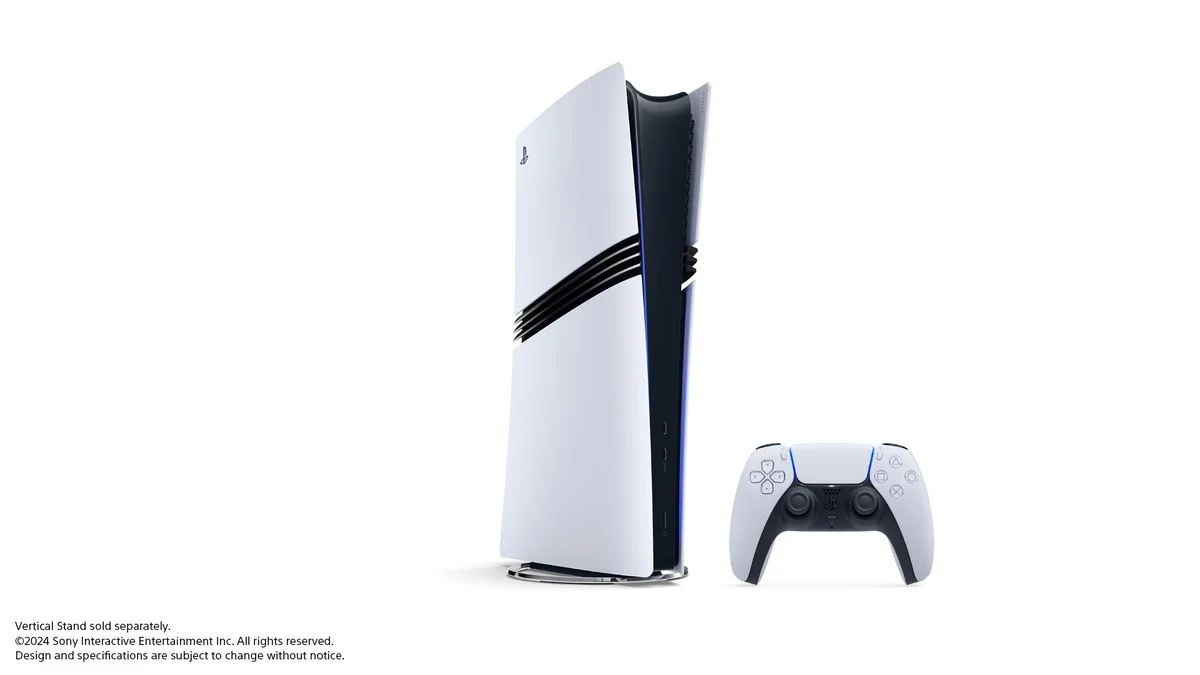
During the official question-and-answer session accompanying its consolidated financial results for the second quarter of fiscal year 2026 (ended September 30, 2026), Sony Group Corporation delivered a critical update on its hardware roadmap. While global semiconductor constraints had fueled speculation of a major next-gen delay, Sony Chief Financial Officer Lin Tao officially confirmed on Thursday, November 5, 2026, that development on the upcoming PlayStation 6 is "progressing as scheduled" and that the company has already locked in its memory component allocations for fiscal year 2027.
"Solid Progress" Starting April 2027: PlayStation 6 R&D Stays on Track
Addressing investor questions regarding the transition between the current PlayStation 5 lifecycle and the tenth generation of console hardware, Lin Tao moved to dispel doubts surrounding engineering milestones at Sony Interactive Entertainment. Acknowledging the natural tapering of current-gen hardware unit shipments six years after launch, the CFO outlined a clear objective for the upcoming business year (FY2027, which begins on April 1, 2027):
"Although new PS5 unit sales are gradually declining as expected at this stage of the console life cycle, the PlayStation platform continues to expand and grow in a stable manner. Looking ahead to the next fiscal year, we aim to continue to enhance user engagement and further strengthen monetization through the release of strong titles and the expansion of our service. We also intend to make solid progress in preparing for the next-generation platform."
By confirming that research and development on the next PlayStation platform is "progressing as scheduled" and set to make "solid progress" between April 2027 and March 2028, Sony directly counters the most pessimistic market forecasts. Earlier this year, MST Financial senior analyst David Gibson suggested that Sony would significantly extend the PS5 lifecycle and push the PlayStation 6 launch well beyond initial industry projections.
While corporate leadership understandably keeps its commercial timing flexible, echoing CEO Hiroki Totoki's cautious stance on locking in an exact release date and retail price too early, internal silicon engineering remains right on track. Hardware milestones developed in partnership with AMD under Project Amethyst (focused on dedicated machine-learning upscaling and advanced ray-tracing architectures) continue to align with a broader 2028 launch window, coinciding with PlayStation's planned phase-out of recordable optical disc manufacturing.
DRAM and GDDR Shortages: How Sony Locked In Its 2027 Memory Supply
The second major hardware takeaway from the Q2 FY2026 earnings call centers on memory supply chain management. For several quarters, major fabs including Samsung, SK Hynix, and Micron have shifted wafer capacity toward High Bandwidth Memory (HBM) for AI data centers, triggering steep price hikes across DRAM and GDDR modules. That supply crunch has put unprecedented pressure on PlayStation 6 GDDR7 RAM and NVMe SSD component costs as well as current-generation hardware margins.
On this critical manufacturing front, Sony revealed that it has already finalized supplier agreements to protect its production lines throughout fiscal year 2027 (April 1, 2027 to March 31, 2028):
"Regarding memory procurement for the next fiscal year, based on discussions held so far with various suppliers, we have aligned on the quantity of memory needed for our projected unit sales."
For the current fiscal year, the hardware maker noted that it successfully offset rising memory chip prices on the PlayStation 5 "through adjustments to promotions and pricing, as well as additional cost reductions." As a result, Sony expects full-year hardware profitability to remain on par with the previous fiscal year while keeping PlayStation 5 Slim and PlayStation 5 Pro assembly lines fully supplied.
97.9 Million PS5 Consoles and 89% Profit Surge: Funding the Next-Gen Leap
Sony's confidence on the R&D front is backed by surging software and network profitability. With 2.6 million PlayStation 5 consoles shipped between July and September 2026, cumulative lifetime shipments have reached 97.9 million units worldwide. Even more importantly, the Game & Network Services (G&NS) division generated record operating margins that directly fund next-generation silicon development:
| Official Sony Metric (Q2 FY2026 Ended September 30, 2026) | Reported Performance | Year-on-Year Trend & Key Milestone |
|---|---|---|
| Cumulative PlayStation 5 Shipments | 97.9 million units | +2.6 million shipped in Q2 FY2026 |
| Game & Network Services Revenue | 1,208.5 billion yen | +9% YoY (full-year forecast revised upward) |
| Game & Network Services Operating Income | 220.1 billion yen | +89% surge YoY |
| Monthly Active Users (PlayStation Network) | 127 million accounts | All-time high for the month of September |
| Marvel's Wolverine Sales (PS5) | Over 2.4 million copies | First-party standout ahead of GTA 6 launch |
Driven by more than 2.4 million copies sold for Marvel's Wolverine, a September record of 127 million monthly active users on PSN, and the imminent launch of Grand Theft Auto VI on November 19, 2026, Sony revised its full-year gaming sales and operating income forecasts upward. That massive software revenue stream gives PlayStation's hardware engineers the exact financial cushion needed to execute a smooth generational transition in 2027 and 2028.
My Take on the Spec Sheet
When you look closely at the semiconductor supply chain, the real bombshell from Lin Tao today comes down to two facts: PlayStation 6 hardware engineering is moving right on schedule, and Sony has already locked in its memory chip allocations with suppliers for the entire April 2027 to March 2028 fiscal year. In a market where AI data centers are swallowing up every available DRAM and GDDR7 wafer for billions of dollars, securing memory volume eighteen months ahead of time is the most concrete industrial indicator we could ask for as next-gen prototypes move toward validation.
Of course, we do not have PlayStation 6 development kits or final silicon on our lab bench yet to measure clock speeds, GDDR7 memory bandwidth, or the real-world frame-time gains of Project Amethyst's dedicated AI blocks compared to the PS5 Pro. Still, as soon as Sony PlayStation opens the doors to its technical briefings or sends out the first test units to our editorial lab, count on me to hook up our thermal probes, power meters, and frame-time analyzers to see how this architecture performs under load.

PC hardware enthusiast and competitive gamer, Arthur 'Heimdall' splits his time between France and the UK working in enterprise B2B software solutions. A business school graduate passionate about component benchmarking, he has been building, modding, and tuning PCs since childhood, optimizing every thermal degree and millisecond of display latency. An avid gamer across Assassin's Creed and sandbox titles, he forged his alliance with Grimtag and Chaya during late-night World of Warcraft raids before joining Pro-Gamer.