"Far More Hot-Headed Than Geralt": How Ciri's Impulsive Temperament Reshapes Quest Design in The Witcher 4
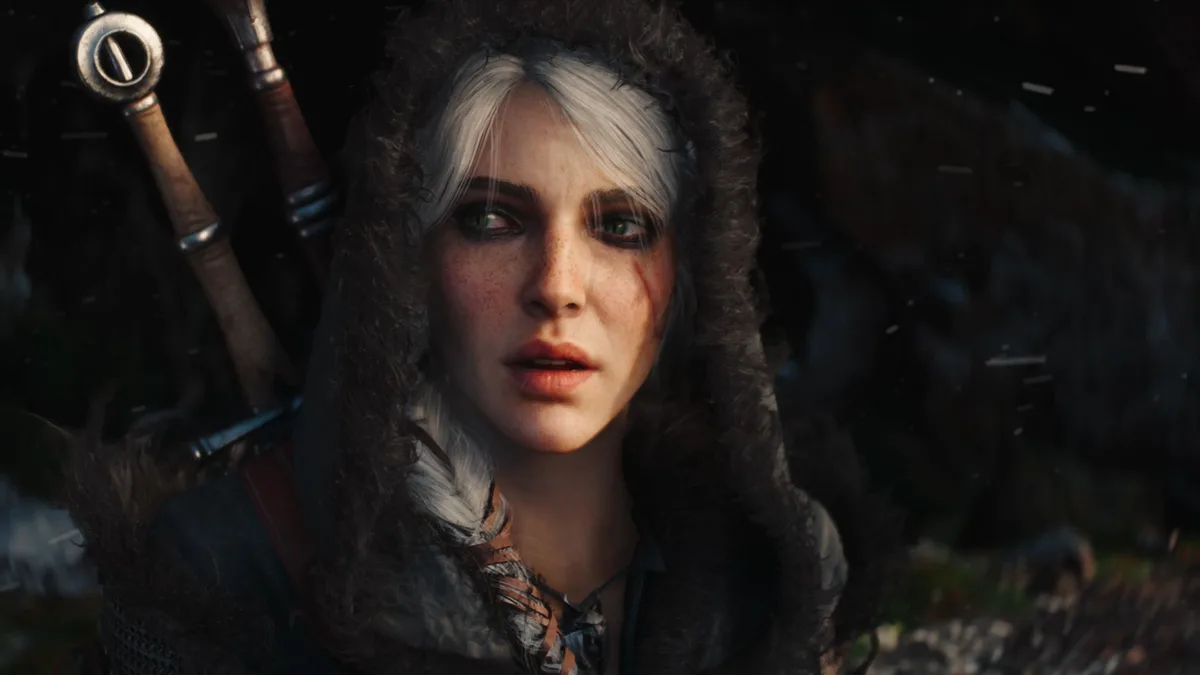
After three mainline entries anchored by the weathered stoicism of Geralt of Rivia, passing the torch to Ciri in The Witcher 4 involves far more than a new lead character model. Speaking during the G-CON conference at South Korea's G-STAR 2026 exhibition in Busan, CD Projekt Red Vice President of Story Marcin Blacha and Narrative Director Philipp Weber sat down with South Korean outlet Inven Global to detail how the young witcher's fiery temperament fundamentally alters the way quests and moral dilemmas are built.
From Detached Arbiter to Personal Investment: Why Ciri Changes the Shape of Player Choice
For nearly two decades, CD Projekt Red's writers framed their signature moral grey areas through the eyes of a centuries-old mutant trained to suppress his emotions. Putting Ciri at the center of a new trilogy shifts that narrative gravity entirely. According to Marcin Blacha, her impulsive streak directly transforms the player's relationship with every conflict across the Continent:
"From a writer's perspective, changing the protagonist is a huge factor. Ciri isn't calm and composed like Geralt, nor does she hide her emotions easily. She is far more hot-headed and tends to be emotional when making decisions. That difference changes a lot of things. When playing as Geralt, players acted more like an arbiter judging how to resolve a situation. When playing as Ciri, you are much more deeply involved in the story through her personal perspective. It's no longer just about deciding which choice is morally right; how emotionally invested you are in the character will also shape your decisions. Because Ciri is a different person from Geralt, the quests in The Witcher 4 will take on a different shape compared to The Witcher 3."
Philipp Weber noted that while the studio's veteran writers grew older alongside Geralt over the past twenty years, stepping into Ciri's boots forces the team to view the world through the eyes of a young woman forging her own code. Where Geralt's reactions had become second nature to the writing room, Ciri opens up a sharper emotional spectrum: in certain flashpoints, she may make choices that are noticeably harsher than Geralt's, while in others she will step up far more actively to intervene and help someone in need.
Bringing Cyberpunk 2077's Non-Linear Gameplay Freedom Into The Witcher 4
Beyond character psychology, The Witcher 4 is drawing heavily on design lessons learned across CD Projekt Red's recent catalog. While The Witcher 3: Wild Hunt taught the studio how to translate tight, story-driven quests into a massive open world, Weber explained that Cyberpunk 2077 unlocked a new standard for weaving gameplay builds and player agency directly into quest outcomes:
"In Cyberpunk 2077, players can build and play their characters in much more varied ways. You could be a netrunner or a cyber ninja air-dashing into a scene with a double jump. We had to account for all those possibilities available to the player. Beyond simply selecting choices in dialogue, how you play the game also opens up new solutions and non-linear paths. We want to make a similar leap in The Witcher 4."
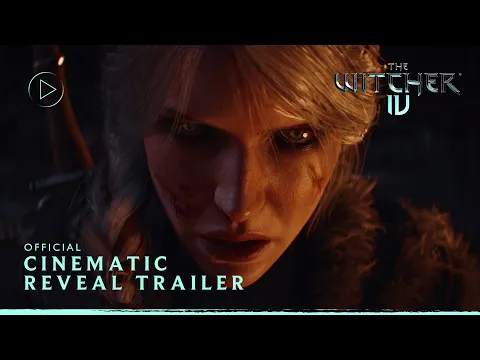
To execute that vision, CD Projekt Red structures its narrative department around an internal "trifecta" combining three disciplines working side by side: writers (many with backgrounds in novel writing), quest or open-world designers, and cinematic designers. By leaning on cinematic blocking, body posture, and subtle facial micro-expressions, the team aims to deliver heavy emotional beats without uttering a single line of dialogue. Blacha also emphasized that the studio relies on ruthless iteration: even when a quest concept looks brilliant on paper, the team is never afraid to cut or replace it entirely once implemented in the build if it fails to meet their bar, a commitment to craftsmanship bolstered by the return of Bloody Baron writer Karolina Stachyra to The Witcher 4 narrative team.
The 15-Minute Side Quest Rule and "Rollercoaster" Open-World Pacing
With eleven years having passed since The Witcher 3 launched in 2015, and millions of newcomers discovering the IP through Netflix adaptations, comic books, and tabletop games, both leads made it clear that CD Projekt Red will not water down its dark, mature edge to chase a broader audience. Treating players as adults, Weber stressed, means posing difficult human questions without offering easy answers, even as the studio prepares for the long road ahead following CD Projekt Red's commitment to a physical boxed edition for The Witcher 4 in 2028.
To ensure every side quest lives up to the franchise's legacy, the narrative team enforces two core design pillars:
- Uniqueness even in 15-minute quests: whether designing a sprawling main story arc or a minor 15-minute side quest featuring an NPC who appears for just 10 minutes, developers must answer one mandatory question: "What does this quest offer that no other quest in the game can?" Any mission that merely repeats a formula or wastes the player's time is scrapped.
- "Rollercoaster" pacing and the witcher's day job: to solve the classic open-world dissonance where players wander off to pick herbs during a life-or-death crisis, Weber designs main story tension like a rollercoaster. After intense emotional climaxes where players stay glued to the main plot, the narrative deliberately introduces natural lulls, such as an ally needing time before the next step, encouraging players to head into the woods and perform Ciri's literal "day job" as a professional monster hunter.
Above all, Blacha underscored a philosophy that sets the Warsaw studio apart in modern AAA development: "We are not a data-driven company." Rather than letting focus groups or telemetry dictate story beats, CD Projekt Red filters every quest through subjective passion: if the creators do not personally love a story, even an objectively well-constructed one will not make the final cut.
My Perspective
This is the exact creative direction I was hoping to hear from Marcin Blacha and Philipp Weber. The biggest trap for The Witcher 4 would have been writing Ciri as a reskinned Geralt, forcing her into that weary, detached neutrality that never fit her character in Sapkowski's books or Wild Hunt. By leaning into her hot-headed impulsiveness and her refusal to sit on the sidelines as an impartial judge, CD Projekt Red is forcing itself to rethink how moral choices actually feel in the moment. If the studio truly pairs that raw emotional stake with the non-linear gameplay agency they honed on Cyberpunk 2077, Ciri's contracts on the Path are going to feel far more personal and volatile than anything we experienced before.

Based on the outskirts of New York City, Chaya 'Chayane' spent five years studying software engineering in Montreal before returning to her home state. A Full-Stack developer and Deep Learning AI architecture researcher, she explores neural networks and algorithmic optimization while engineering data pipelines for Retrocharting and Gamescharting alongside Grimtag. A gamer for over 20 years and an avid collector of Nintendo history and The Legend of Zelda, she explored World of Warcraft's Azeroth before bringing her deep technical background to video game analysis.