Dedicated Graphics Button on the PS6 Gamepad: How Sony's Frame-Delta Engine Scales Visuals Every Single Frame (US 2026/0364447 A1)
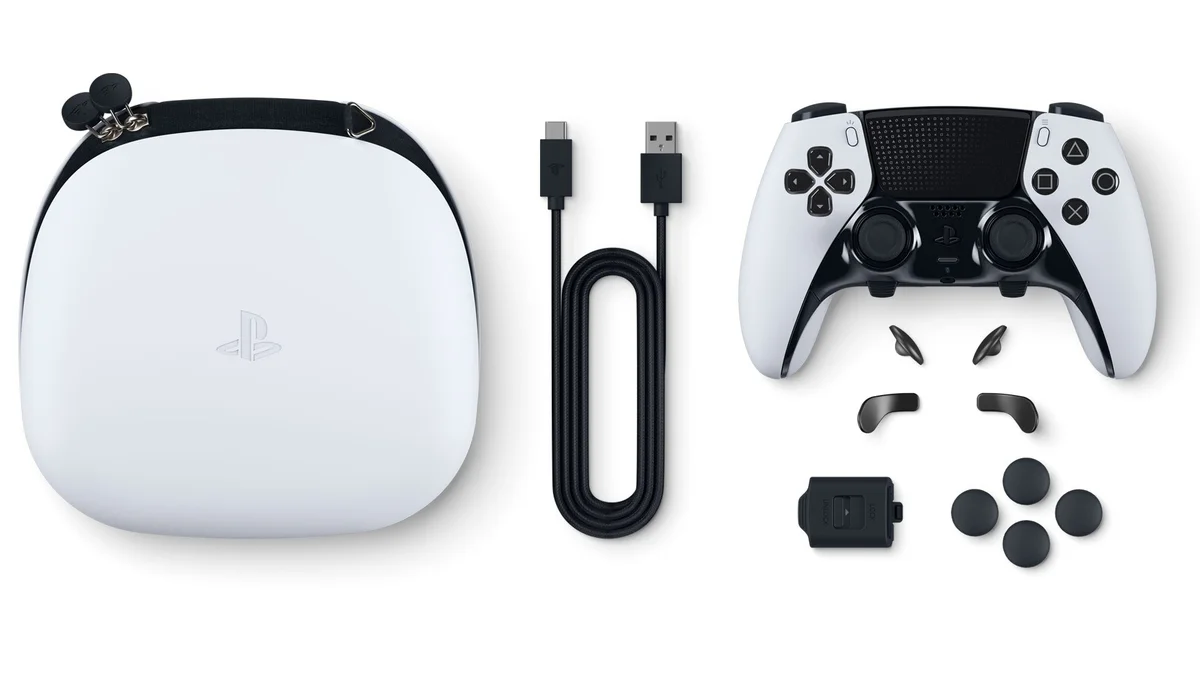
Digging through three layers of pause menus just to toggle between Fidelity and Performance modes could soon become a relic of the current console generation. In official patent publication US 2026/0364447 A1, released by the United States Patent and Trademark Office (USPTO) on November 19, 2026, Sony Interactive Entertainment LLC outlines a dual hardware-software architecture built around frame-by-frame Adaptive Visual Quality scaling and a dedicated physical graphics button mounted directly on the controller.
Pixel-by-Pixel Frame Delta Calculation Instead of Pure GPU Load Triggers
Filed on July 22, 2026 by inventor Alex Zvenigorodsky on behalf of Sony Interactive Entertainment (as a continuation of parent application 18/220,406 originally submitted on July 11, 2023), the 20-claim document targets a well-known flaw in traditional Dynamic Resolution Scaling (DRS). Conventional dynamic scaling reacts strictly to GPU render times and hardware workload. When a player pauses a game in the middle of a heavy particle explosion, the frozen screen often looks blurry and soft because the engine just dropped internal resolution on the preceding frame.
Claim 1 of Sony's filing replaces workload-only triggers with a continuous frame delta calculation. The application renderer compares pixel values (specifically brightness and color shifts) between two consecutive image frames and aggregates the differences into a normalized score ranging from 0.0 (zero pixel movement across the screen) to 1.0 (a complete scene transformation).
- Score near 0.0 (pause menus, inventory screens, or static camera angles): Because almost no pixels are changing from one frame to the next, the renderer automatically pushes visual parameters to their highest ceiling, locking in native 4K resolution (3840x2160), full texture filtering, higher shader detail levels, and 8x anti-aliasing.
- Score near 1.0 (fast combat, rapid camera sweeps, or heavy alpha effects): When motion dominates the entire display and the human eye prioritizes temporal fluidity over static pixel count, the engine scales back texture resolution toward 1080p (1920x1080), trims shader complexity, and reduces anti-aliasing passes to protect the target frame rate.
Rather than relying on a rigid global rule, the 0.0 to 1.0 delta score is checked against a per-game weighted threshold table. Studios can fine-tune these thresholds manually or let a trained neural network calibrate them against specific frame-time budgets. This pixel-analysis pipeline complements Sony's broader research into latency reduction, including the company's Generation Super Sampling patent that reads DualSense stick inputs to predict upcoming frames.
A Dedicated Controller Graphics Button With 120-Frame Temporal Interpolation
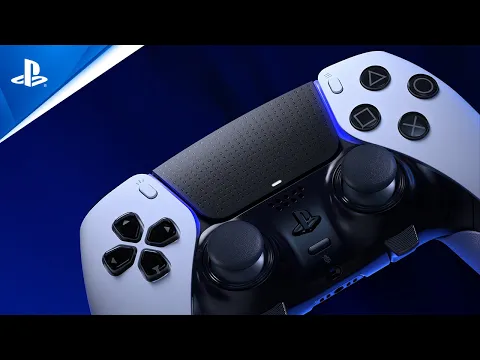
Alongside automated frame-delta scaling, Claim 17 details a manual hardware override: a dedicated button on the game controller configured to transmit a direct mode-switch signal to the application renderer. While the function keys on the current official DualSense Edge wireless controller let players swap stick sensitivity curves or chat audio balance, this patented control switches the rendering pipeline between quality presets on the fly.
Crucially, the filing addresses the jarring visual pop or screen hitch that typically occurs when changing graphics settings mid-game. Instead of jumping abruptly from a first quality mode to a second quality mode, the renderer interpolates across intermediate values over a set time window. In one specific engineering example from the patent drawings, stepping down from 8x anti-aliasing to 2x anti-aliasing transitions through an intermediate 6x state held for two seconds at 60 frames per second, spreading the visual shift across 120 consecutive frames so the transition remains virtually invisible to the player.
Built for PSSR Upscaling, 4K 120 FPS Targets, and Cloud Streaming
The specification also extends frame-delta scaling to cloud gaming environments, where the server weighs real-time network bandwidth alongside screen motion scores. That ensures static HUD elements and readable menus remain razor-sharp while fast-moving gameplay sequences avoid compression artifacts and frame drops.
For local console hardware, pairing pixel-delta scaling with PlayStation Spectral Super Resolution (PSSR) fits directly into Sony's next-generation hardware goals, following the company's confirmation that PlayStation 6 development remains on schedule with memory supplies locked in. By shedding unnecessary shader and anti-aliasing overhead during chaotic motion frames, the GPU can maintain stable 120 Hz output without sacrificing 4K clarity when the camera settles.
My Test Bench
Looking at the technical claims in US 2026/0364447 A1 from a hardware testing perspective, the smartest piece of engineering here isn't just putting a graphics toggle button on the controller, it is the 120-frame interpolation combined with pixel-delta detection. Anyone who measures console frame times knows that reactive DRS always lags one frame behind a GPU spike, leaving pause menus and photo-mode transitions looking unexpectedly soft right after a heavy firefight.
Having a physical button on a future PS6 controller to flip between a locked high-refresh competitive profile and a full-fidelity preset without opening a single menu would be a genuine quality-of-life upgrade. The one engineering question I will be watching closely is hardware overhead: calculating a full-screen pixel delta every single frame at 4K 120 Hz must happen inside a dedicated display block or the PSSR media engine so the comparison itself never adds a microsecond of render latency.

PC hardware enthusiast and competitive gamer, Arthur 'Heimdall' splits his time between France and the UK working in enterprise B2B software solutions. A business school graduate passionate about component benchmarking, he has been building, modding, and tuning PCs since childhood, optimizing every thermal degree and millisecond of display latency. An avid gamer across Assassin's Creed and sandbox titles, he forged his alliance with Grimtag and Chaya during late-night World of Warcraft raids before joining Pro-Gamer.