Soneium, Native Token, and Tokenized IP: What Sony's New Blockchain Incubator Actually Means for PlayStation Games and Anime
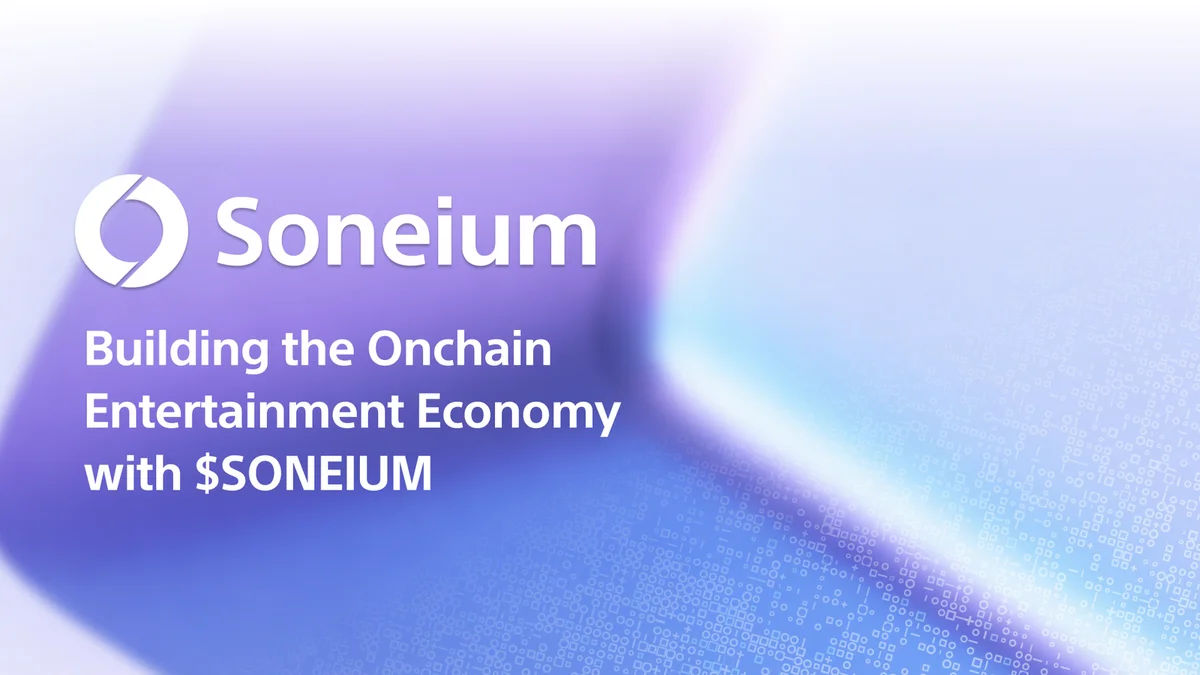
Sony Group Corporation is accelerating its push into decentralized entertainment infrastructure. On Thursday, October 29, 2026, the Japanese conglomerate officially launched the Sony Onchain Entertainment Incubation Program, a global initiative designed to back startups, studios, and creators building commercial entertainment products on Soneium, its Ethereum Layer-2 blockchain network developed by Sony Block Solutions Labs in partnership with Startale Group.
While the announcement immediately sparked speculation across the gaming and anime communities, a close reading of Sony's official roadmap reveals a calculated corporate divide: rather than forcing speculative crypto mechanics into core console blockbusters, Sony is positioning Soneium as a back-end licensing, crowdfunding, and royalty engine for its broader entertainment ecosystem.
Sony Onchain Entertainment Incubation Program: Schedule and Direct Sony Group Collaboration
Following two earlier Web3 incubation waves launched since 2024 (including the Soneium For All gaming incubator introduced in June 2025) that collectively supported 43 projects worldwide, this third iteration shifts focus from technical experiments to commercial products capable of engaging mainstream gaming, anime, and music audiences.
According to Sony Group Corporation, the global rollout follows a strict schedule:
- Application Window: Open from October 29 through December 2026 for creators and startups worldwide whose entertainment services are live on Soneium or scheduled to launch on the network.
- Screening and Selection: Conducted from November 2026 through March 2027, evaluating entries on entertainment originality, intellectual property execution, community building, and market scalability.
- Ecosystem Support: Selected teams gain direct access to Soneium's technical infrastructure, marketing and business development guidance, investor networking, and co-creation opportunities with Sony Group operating companies.
Tokenized IP (ERC-8432) and the SONEIUM Token: Protecting Creators in the AI Era
The incubation program arrives alongside a major architectural expansion led by Yuji Kumagai, Head of Soneium Protocol. Now home to more than 250 applications spanning games, anime, music, film, and digital collectibles, the network is transitioning into an onchain entertainment economy built around Tokenized IP and a planned native ecosystem token, SONEIUM, accessible through the Soneium Portal and Startale App.
To address copyright verification at a time when AI-generated content is flooding creative industries, Sony Block Solutions Labs has adopted the open Ethereum standard ERC-8432 across a three-layer architecture:
- IP Registry: A permanent, timestamped onchain record establishing the origin, metadata, and legal ownership of creative works.
- IP Graph: A transparent map tracking how original properties connect to spin-offs, studio collaborations, fan creations, and AI-assisted derivatives.
- IP Execution Layer: Smart-contract infrastructure that automates licensing payments, revenue splits, and royalty distributions according to rules set by IP holders.
Early commercial deployments highlight how this model targets Asian entertainment verticals first: Tokyo-based Super State Holdings is launching the network's first IP Token around the popular character franchise Moriusa to co-fund animated shorts and physical merchandise with fans, while K-pop entertainment company DayOneDream is bringing international concert royalties onchain through Tokenized IP Bonds.
What Does This Actually Mean for PlayStation 5 Players and Sony Interactive Entertainment?
For console players wondering whether SONEIUM tokens or mandatory crypto wallets are about to invade the PlayStation 5 dashboard, the factual answer is no. Sony Interactive Entertainment (SIE) continues to maintain a clear separation between its core console hardware ecosystem and the experimental Web3 infrastructure operated by Sony Block Solutions Labs.
While SIE focuses on its traditional hardware roadmap with the new Prism Collection of transparent DualSense controllers and PS5 covers and backs blockbuster single-player productions such as Insomniac Games' upcoming flagship PS5 productions, Soneium acts as an external sandbox. Any crossover with gaming and anime centers on transmedia incubation, fan-backed licensing, and automated back-end royalties rather than altering how traditional PlayStation games are bought or played.
My Take
Let us be brutally honest: whenever a major publisher puts the words "blockchain" and "native token" anywhere near video games, my industry veteran alarm bells start ringing immediately. We watched enough publishers embarrass themselves between 2021 and 2024 trying to shoehorn speculative tokenomics into soulless games. Looking closely at what Sony Group Corporation is actually doing with Soneium, however, shows a far more pragmatic play. By keeping Sony Interactive Entertainment and our PS5 consoles completely insulated from forced crypto gimmicks, and instead using the ERC-8432 standard as an automated notary for anime rights, music royalties, and IP provenance in the age of AI scraping, Sony is putting blockchain technology where it actually belongs: in the back-office legal and royalty plumbing, not inside our pause menus.

SEO consultant for over 20 years and digital entrepreneur, Charles 'Grimtag' Ronchain is the founder of Pro-Gamer.gg, Retrocharting.com, and Gamescharting.com. A competitive gamer, streamer, and retro game collector, he has worked in the video game industry for over 15 years, notably as a consultant for leading game price comparison platforms. Passionate about real-time performance data and gaming technology, he analyzes competitive esports, gaming hardware benchmarks, and creator workflows on Pro-Gamer.gg with an authentic player perspective.