1.7 Million Copies Sold and Player Data to Prove It: Why Capcom Stands By Onimusha: Way of the Sword's Difficulty
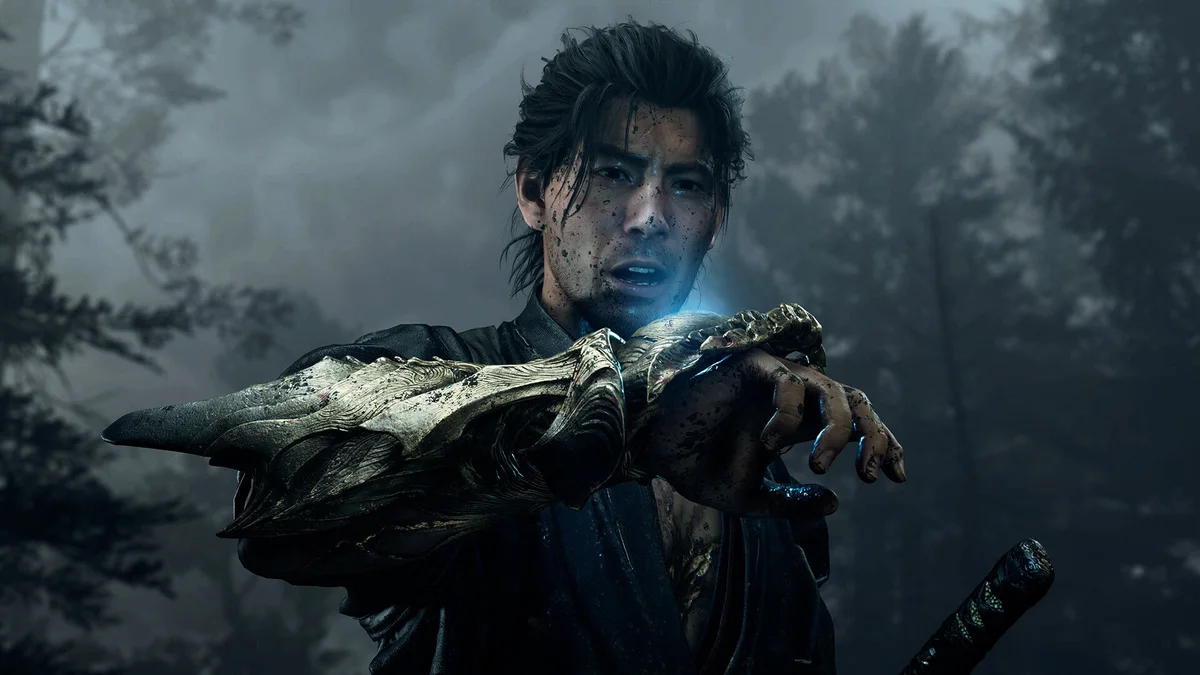
Even before Onimusha: Way of the Sword launched in September across PS5, Xbox Series X|S, PC, and Nintendo Switch 2, its combat difficulty was a major point of debate among action fans. Viral clips from the pre-release demo showing relatively passive early-game Genma soldiers, combined with the decision to lock the harder difficulty mode behind a first campaign clear, raised concerns that the long-awaited revival might be too forgiving. More than a month after release, Capcom is backing up its design philosophy with internal player telemetry and strong first-half financial results.
While players weighed its swordplay against the year's biggest action releases in our Onimusha: Way of the Sword action RPG showdown, game director Satoru Nihei has now explained why the development team deliberately avoided turning Musashi Miyamoto's journey into a punishing Soulslike gauntlet.
What Capcom's In-Game Player Telemetry Reveals
On PC, hardcore action veterans quickly flocked to mods designed to ramp up enemy aggression across Kyoto's streets. Across the broader player base, however, Capcom's internal tracking paints a very different picture. According to Satoru Nihei, the studio has been closely monitoring completion trends and failure rates since launch day:
"We've been looking at the data that comes back from people playing, so we can see where people are struggling and how they're progressing through the game. What we've seen in the trends in the data is that it's close to what we set out to achieve, in terms of difficulty."
Nihei emphasized that while basic fodder enemies are meant to let players flow through sword combinations and Issen critical counters, key encounters still provide meaningful friction without halting story momentum:
"There are points where players do stumble, they do die, they do get defeated. But they're able to overcome that and progress. That was what we set out to achieve in terms of pitching the difficulty for the game: we wanted players to be able to progress through the story, but also have some challenge to it, so they get a sense of satisfaction from defeating enemies. It was never an intention for this game to be a particularly difficult game. We think it's hit the right spot in terms of the difficulty, in terms of where we wanted to place it."
1.7 Million Units for Onimusha and 2.7 Million for Pragmata
Pitching the game as an accessible yet razor-sharp samurai action adventure has paid off commercially. In its consolidated financial report for the first half of fiscal year 2026 (covering April through September 2026), published on October 27, Capcom confirmed that Onimusha: Way of the Sword has surpassed 1.7 million units sold worldwide. Having already crossed the one-million mark on day one, the franchise's first new mainline entry in over two decades has now pushed cumulative Onimusha series sales past 11 million copies.
The financial briefing also highlighted the breakout performance of Capcom's brand-new sci-fi IP, Pragmata, which has sold more than 2.7 million units across PS5, Xbox Series X|S, PC, and Nintendo Switch 2 since its April 2026 debut. Overall, Capcom moved 36.86 million game units between April and September 2026 (up sharply from 23.85 million during the same period last year). New releases accounted for 4.68 million units, while back-catalogue titles delivered 32.18 million sales, continuing the momentum seen when Monster Hunter Rise crossed the 20 million sales milestone, alongside Resident Evil Requiem topping 8 million units and Devil May Cry 5 surpassing 14 million worldwide.
Why Capcom Targeted a 20-Hour Campaign and Recurring Boss Duels
Beyond combat tuning, Satoru Nihei also addressed two other recurring pieces of community feedback: the campaign's runtime and the repeated showdowns against major Genma bosses such as Byakue and the winged demon Dohatsu-ten.
Regarding the game's scope, Nihei noted that the team wanted a focused structure rather than bloated open-world padding:
"We really wanted to have a game that was around the 20-hour mark. We didn't want to have a title that would be too small, but also looking at open-world games that are 40 hours-plus, we didn't want to drag it out to that extent. So from the beginning there was this clear goal of a mostly linear experience, and then we have the exploration elements for people who want to engage with them."
As for crossing blades multiple times with Byakue and Dohatsu-ten, Nihei acknowledged that facing repeat bosses can feel draining for some players and admitted the team would have loved to build an even wider roster of bosses. However, he explained that Capcom's combat designers prioritized crafting deeply mechanical encounters that remain thrilling to fight and master across multiple clashes.
My Take
I find Satoru Nihei's candor refreshing in an era where almost every dark fantasy sword-fighting game feels pressured to imitate the punishing stamina management and brick-wall bosses of a Soulslike. By keeping basic street skirmishes brisk and empowering while saving the real mechanical tests for major duels, Onimusha: Way of the Sword stays true to the fast, theatrical parry rhythm that made the classic PS2 entries so satisfying. I still wish Capcom had unlocked hard mode right from the start menu for veterans and trimmed one or two repeat bouts with Dohatsu-ten, but with 1.7 million copies sold in its opening weeks, the telemetry clearly backs up Capcom's vision.

SEO consultant for over 20 years and digital entrepreneur, Charles 'Grimtag' Ronchain is the founder of Pro-Gamer.gg, Retrocharting.com, and Gamescharting.com. A competitive gamer, streamer, and retro game collector, he has worked in the video game industry for over 15 years, notably as a consultant for leading game price comparison platforms. Passionate about real-time performance data and gaming technology, he analyzes competitive esports, gaming hardware benchmarks, and creator workflows on Pro-Gamer.gg with an authentic player perspective.