130 FPS at 1440p on an RTX 3080 Without Ray Tracing: How a Handwritten Forest Engine Outclasses Unreal Engine 5
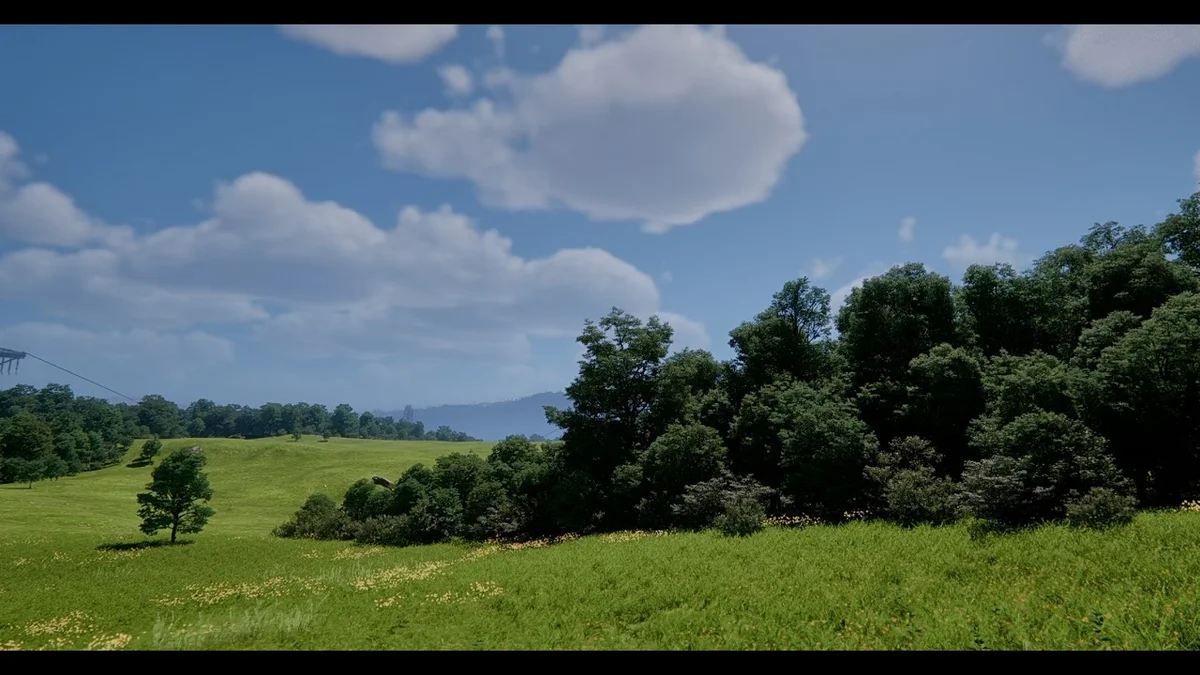
While modern AAA releases built on Unreal Engine 5 routinely struggle to hold 60 frames per second in dense woodland scenes without leaning heavily on aggressive upscaling, independent developer and modder Toni Macaroni has unveiled a striking technical showcase. Built almost entirely by hand over the past eight months, this custom 3D forest engine delivers an average of 130 FPS at native 1440p on a 2020 NVIDIA GeForce RTX 3080 without relying on hardware ray tracing.
Why Leave Godot to Build a Custom Forest Engine From Scratch?
Well known in the PC modding community for his work on Sons of the Forest, the developer shared the technical breakdown on his official Toni Macaroni YouTube channel. Before committing to a ground-up custom engine, he spent months implementing global illumination, virtual textures, and foliage systems inside the open-source Godot Engine.
However, bolting ultra-dense vegetation rendering onto a general-purpose engine designed to accommodate every genre inevitably introduces architectural overhead. By starting from scratch eight months ago, Toni Macaroni designed a rendering pipeline dictated strictly by what his upcoming game requires: drawing massive instance counts and heavy triangle budgets smoothly while supporting expressive, ground-up weather systems.
CLODs, Voxels, and Hybrid GI: The Secret Behind 130 FPS Without RT Cores
To render photorealistic undergrowth without choking memory bandwidth or requiring dedicated ray-tracing cores on an Ampere-generation GPU, the custom engine relies on three core rendering pillars:
- CLODs (Clustered Levels of Detail) with Voxel Representations: Instead of falling back on flat 2D billboard impostors that break visual immersion at mid-to-far distances, the engine combines virtual geometry clusters with volumetric voxel representations.
- Instance-Less Distant Proxies: For extreme draw distances across the horizon, the renderer groups faraway canopy geometry into lightweight proxies stripped of individual instance data, drastically cutting draw call overhead.
- Screen-Space and Voxel Hybrid Global Illumination: Indirect sunlight bouncing through the canopy and deep undergrowth ambient occlusion are computed using a hybrid screen-space and voxel GI solution, requiring zero hardware ray tracing.
Running at 2560 x 1440 resolution on an NVIDIA GeForce RTX 3080 (10GB GDDR6X), frame rates scale from around 80 FPS inside the thickest ground foliage up to 200 FPS in sweeping aerial views, averaging 130 FPS while pushing roughly one million instances and four million triangles on screen.
Technical Comparison: Custom Forest Engine vs. General-Purpose AAA Engines
| Feature | Custom Forest Engine (Toni Macaroni) | General-Purpose AAA Engines (UE5 Nanite / Lumen) |
|---|---|---|
| Development Timeline | Roughly 8 months (handwritten by a solo developer) | Multi-year cycles (hundreds of engine programmers) |
| Geometry Pipeline | CLODs (virtual geometry), distant voxels, instance-less proxies | Nanite microtriangle meshes or traditional LODs + 2D impostors |
| Global Illumination | Screen-Space + Voxel Hybrid GI (100% software, no ray tracing) | Lumen (heavy software or hardware ray tracing overhead) |
| 1440p Performance (RTX 3080) | 130 FPS average (80 FPS in dense undergrowth to 200 FPS aerial) | Often 40 to 60 FPS in dense foliage without DLSS or Frame Gen |
| Weather & Wind Physics | Engineered into the low-level architecture from day one | Typically layered on top with noticeable CPU/GPU cost |
Purpose-Built Optimization vs. The Modern GPU Upgrade Treadmill
This showcase highlights just how much raw performance is left on the table when studios rely on unoptimized, catch-all rendering pipelines. At a time when PC gamers are forced to squeeze every drop of GPU budget using driver-level tools like the hidden GPU prioritization controls in NVIDIA App 11.0.9.585, watching a six-year-old RTX 3080 breeze through dense forest geometry at 130 FPS is a breath of fresh air.
For players who still need brute-force horsepower to tackle demanding commercial Unreal Engine 5 titles at 1440p and 4K, NVIDIA's Blackwell lineup remains the primary hardware upgrade path on the US market:
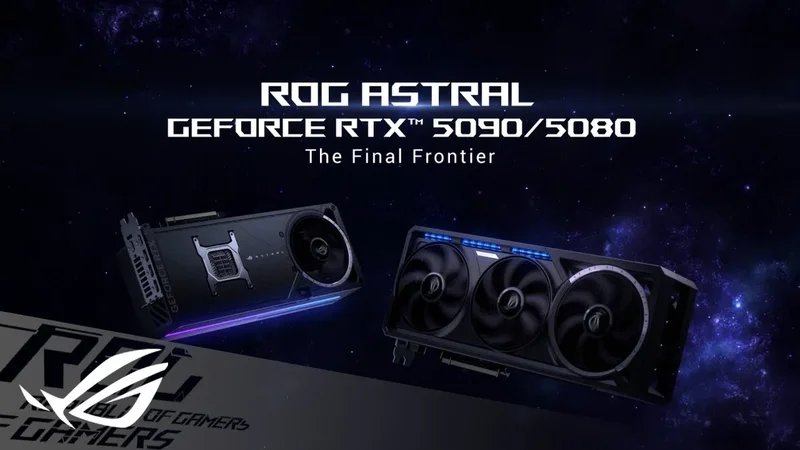
NVIDIA GeForce RTX 5070 Ti (16GB GDDR7)
- NVIDIA Blackwell Architecture (GB203)
- 16GB GDDR7 (256-bit Memory Bus)
- DLSS 5 & Multi Frame Generation
- Built for High-Refresh 1440p and 4K Gaming
Check Availability for GeForce RTX 5070 on Amazon→
My Take on the Spec Sheet
Looking closely at Toni Macaroni's rendering architecture, this is the exact kind of focused systems engineering that modern AAA development desperately misses. Of course, a specialized forest renderer does not yet carry the full weight of complex AI pathfinding, quest scripting, or networked physics found in a commercial open-world RPG. Even so, pairing CLOD virtual geometry with voxel transitions and instance-free horizon proxies proves that developers can eliminate ugly foliage pop-in without burning half their frame budget on hardware ray tracing. Holding 80 FPS deep inside thick ferns and averaging 130 FPS at native 1440p on a six-year-old RTX 3080 shows just how much untapped silicon potential our GPUs still have when software is written close to the metal. We have not yet had a physical unit on our desk,if the manufacturer's team would like to send over a review sample so we can put it through our full real-world testing protocol, our lab doors are wide open.

PC hardware enthusiast and competitive gamer, Arthur 'Heimdall' splits his time between France and the UK working in enterprise B2B software solutions. A business school graduate passionate about component benchmarking, he has been building, modding, and tuning PCs since childhood, optimizing every thermal degree and millisecond of display latency. An avid gamer across Assassin's Creed and sandbox titles, he forged his alliance with Grimtag and Chaya during late-night World of Warcraft raids before joining Pro-Gamer.