CD Projekt CEO Reveals How BioWare Helped Bring the First Witcher Game to Life Twenty Years Ago
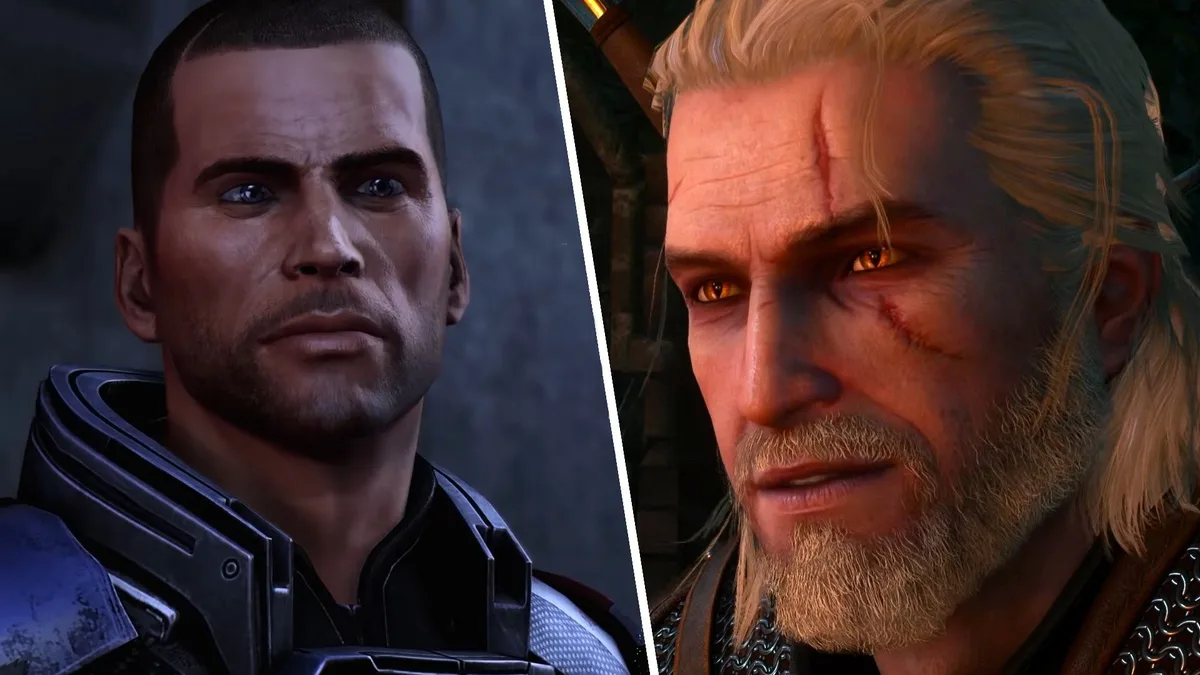
The shockwaves from Electronic Arts shutting down BioWare and canceling the next Mass Effect are being felt far beyond the studio's fanbase. Across the industry, the developers now carrying the torch for Western role-playing games have stepped forward to honor the Canadian pioneer. Among the most moving tributes, CD Projekt joint CEO Michał Nowakowski revealed just how much the birth of The Witcher franchise owed to the generosity of the Edmonton team more than twenty years ago.
From the Aurora Engine to an E3 2004 Booth: How BioWare Helped Launch The Witcher
Long before becoming the European powerhouse behind The Witcher 3: Wild Hunt and Cyberpunk 2077, CD Projekt got its start in the late 1990s localizing and distributing PC classics in Central Europe. Posting on X, Michał Nowakowski looked back on the foundational bond his company forged with BioWare during the original Baldur's Gate era:
"Bioware has been a massive part of CDPR history. We befriended them when localizing and selling Baldur's Gate games in Poland, Czech, and Slovakia. And later they were great help when lending us their engine for Witcher 1, sharing their wisdom and even giving us a spot at their booth at E3. I had a pleasure to visit them a few times in Edmonton and also host them in our Warsaw office. Very sad for the people affected, but also sad to see a legendary brand go down. Not a great day in the games industry."
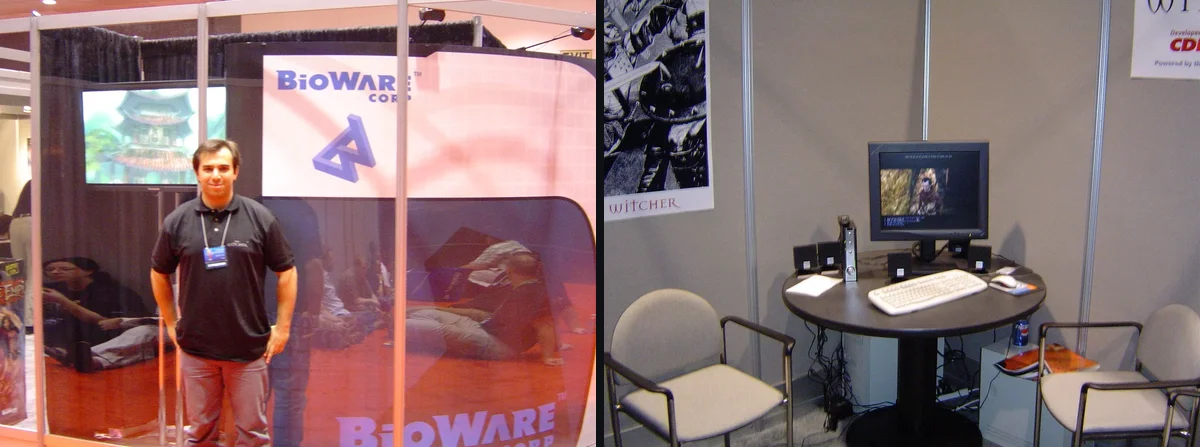
That early technical and personal support altered the course of RPG history. To build the original The Witcher, released in 2007, CD Projekt RED licensed BioWare's Aurora Engine, the technology first created for Neverwinter Nights. Even more remarkably, at E3 2004 in Los Angeles, BioWare gave the fledgling Polish team a corner of its own show floor booth so they could demonstrate their debut RPG to international press.
Ryszard Chojnowski, who localized Baldur's Gate 2 before serving as localization project manager on the original The Witcher, shared two archival photographs from E3 2004 on X. The images show a small space partitioned off by a simple curtain right next to BioWare's Jade Empire showcase, where an early Aurora-powered demo of Geralt of Rivia's first adventure was running on a single PC. Meanwhile, Paweł Sasko, associate game director on the Cyberpunk 2077 sequel at a studio now deep into full production on The Witcher 4, noted that playing Baldur's Gate 1 and 2 shaped his imagination and sparked his desire to make video games in the first place.
Larian Studios CEO Swen Vincke Mourns the Studio That Paved the Way
The loss hit just as hard at Larian Studios, whose global triumph with Baldur's Gate 3 directly continued the legacy BioWare began in 1998. Larian founder and CEO Swen Vincke shared a heartfelt message honoring the Edmonton team's three-decade run:
"Not something I ever expected to see happen. Larian and Bioware started their trajectories in the games industry at the same time and BioWare led the way in making RPGs big. It's almost unimaginable that we're now entering an era where the name BioWare won't show up anymore when discussing upcoming RPGs. What a loss for all of us. Thank you for all the games. Thank you for the many hours of play. Thank you for all the stories. You can be damn proud of what you achieved. Hope you all land on your feet."
From Interplay and Owlcat Games to Remedy: A Generation of RPG Creators Pays Respects
Tributes quickly poured in from veterans and narrative-driven studios across the globe. Brian Fargo, founder of Interplay and current head of inXile Entertainment (Wasteland, Clockwork Revolution), recalled giving BioWare founders Ray Muzyka and Greg Zeschuk their very first publishing contract in 1996: "I remember when BioWare was a small studio that developed Shattered Steel for us at Interplay. We saw their potential, and they went on to create Baldur's Gate 1 and 2 to become true legends. A sad day indeed."
CRPG developer Owlcat Games (Pathfinder, Warhammer 40,000: Rogue Trader, The Expanse: Osiris Reborn) saluted its inspirations by quoting the Grey Warden motto from Dragon Age: Origins: "In war, victory. In peace, vigilance. In death, sacrifice." Over at Remedy Entertainment, communications director Thomas Puha lamented how risk-averse major publishers have become toward mid-sized single-player games and new IP, while Bungie product manager Josh Deane summed up the feelings of countless developers with a simple "N7 forever." Finally, Michael Gamble, a 17-year BioWare veteran who served as project director on the canceled Mass Effect sequel, thanked fans for standing by the team for nearly two decades.
My Take
Michał Nowakowski's story and those archival photos of a curtained-off PC at E3 2004 capture everything the industry just lost. Without BioWare's willingness to lend its Aurora Engine and share floor space in Los Angeles with an unproven group of Polish developers, The Witcher might never have gotten off the ground. Likewise, without the foundation BioWare laid with Baldur's Gate in 1998, Larian Studios would never have had the chance to craft Baldur's Gate 3 twenty-five years later. Watching the two biggest RPG studios in the world tip their hats to their fallen mentor proves one thing: even if Electronic Arts has closed the book on BioWare, its DNA lives on in every great Western role-playing game we play today.

SEO consultant for over 20 years and digital entrepreneur, Charles 'Grimtag' Ronchain is the founder of Pro-Gamer.gg, Retrocharting.com, and Gamescharting.com. A competitive gamer, streamer, and retro game collector, he has worked in the video game industry for over 15 years, notably as a consultant for leading game price comparison platforms. Passionate about real-time performance data and gaming technology, he analyzes competitive esports, gaming hardware benchmarks, and creator workflows on Pro-Gamer.gg with an authentic player perspective.