'AMD Loves Gamers': Amid Pricier Radeon GPUs, AMD Japan Gets Hit With a Community Note Over $8.55B Server Revenue
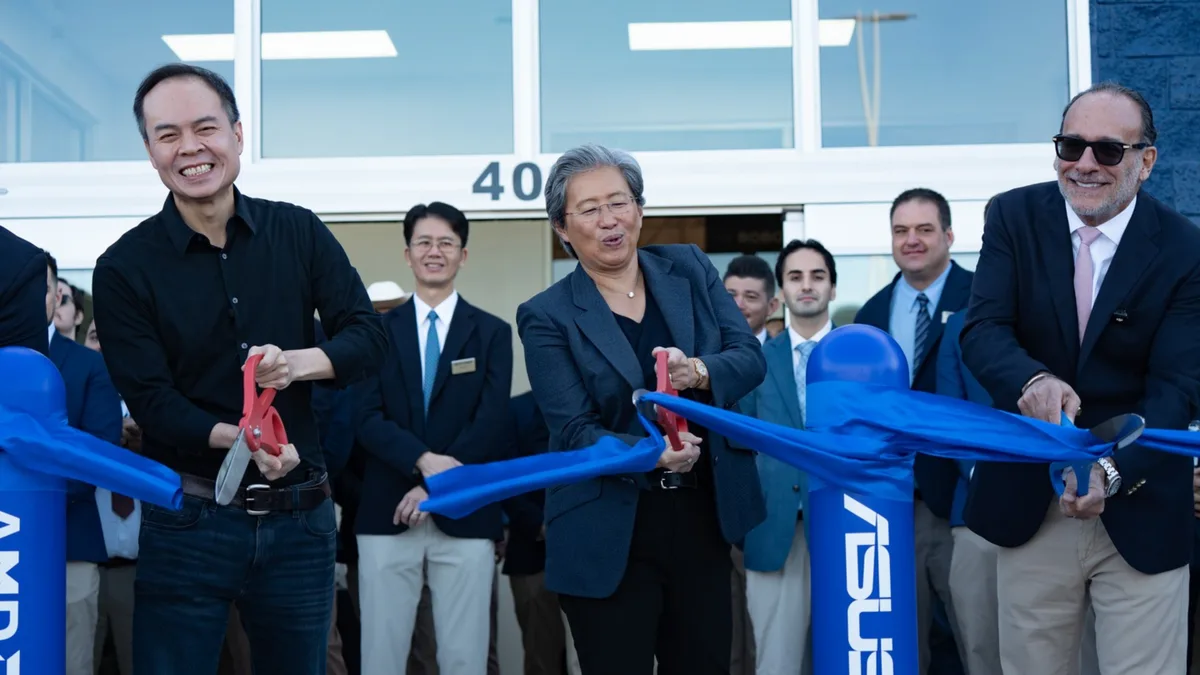
An attempt by AMD's regional marketing team in Japan to smooth over recent corporate remarks has triggered a fresh wave of pushback from PC builders. Days after CEO Lisa Su and Senior Vice President Jack Huynh attended the grand opening of the new Micro Center store in Austin, Texas, the official @AMD_Japan account on X shared photos from the event highlighting how much the company values face-to-face contact and feedback from PC enthusiasts, concluding with the statement: "AMD loves gamers" ("AMDはゲーマーを愛しています"). Within hours, X users attached a Community Note directly underneath the post, contrasting the slogan with the company's own financial disclosures and executive commentary.
Austin Micro Center PR Meets Third-Quarter Financial Reality
Throughout mid-November 2026, AMD's public relations channels have worked overtime to reassure DIY PC builders that consumer hardware still matters to the company. Following the backlash over @AMDGaming's beach meme while Radeon RX 9070 XT cards sit above $830 at retail, AMD's leadership leaned into grassroots visibility on November 13 in Austin, home to one of the chipmaker's largest corporate campuses. Lisa Su and Jack Huynh cut the ceremonial ribbon, handed out 300 AMD swag bags to fans waiting in line, and autographed a customer's GIGABYTE Radeon RX 9070 XT graphics card.
When AMD Japan amplified those moments to tell local followers that "AMD loves gamers," users quickly appended a fact-check via X's Community Notes system. The note points readers straight back to Lisa Su's November 5, 2026 interview on Yahoo Finance, where the chief executive explicitly defined the company's strategic identity: "We are a data center-first company, that is our profile, and people need more compute to power all of these applications."
| Key Metric (Q3 2026 / November 2026) | Data Center Segment (AI & Server) | Gaming Segment (Radeon & Semi-Custom) |
|---|---|---|
| Quarterly Revenue (Q3 2026) | $8.55 Billion | $773 Million |
| Year-over-Year Change (YoY) | +97% | -40% |
| Share of Total AMD Revenue ($13.4B) | 63.8% | 5.8% |
| TSMC Wafer Allocation Priority | Top priority (EPYC & Instinct AI GPUs) | Secondary to enterprise margins |
The figures published on AMD's Investor Relations portal explain why the Community Note resonated so strongly with hardware enthusiasts. Out of AMD's record $13.4 billion in third-quarter 2026 revenue, the Data Center division generated $8.55 billion (up 97% year-over-year), accounting for nearly 64% of the company's entire business. Over the same period, the Gaming segment fell 40% year-over-year to $773 million, shrinking to just 5.8% of total revenue.
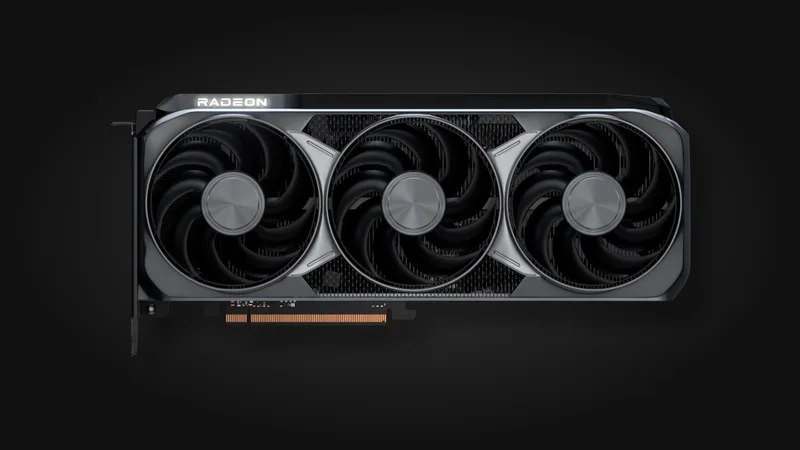
AMD Radeon RX 9070 XT (16GB GDDR6)
- AMD RDNA 4 architecture (Navi 48, 64 CUs) with FSR 4 and AFMF 3 support
- 16GB GDDR6 memory across a 256-bit interface
- Custom AIB models from GIGABYTE, Sapphire, PowerColor, XFX, and ASUS
Why Highlighting Micro Center Frustrates International Builders
Beyond the earnings gap between enterprise AI accelerators and consumer graphics cards, replies under the @AMD_Japan post pointed out the irony of using an American Micro Center opening to reassure Japanese and global PC gamers. Because Micro Center operates exclusively in select U.S. metropolitan areas, international builders have zero access to the chain's in-store doorbuster bundles or localized MSRP allocations.
Outside of promotional store openings, everyday DIY buyers continue to face inflated street prices driven by GDDR6 memory hikes and tight silicon supply. That same wafer prioritization toward high-margin server processors also explains why AMD dropped below 30% desktop CPU market share in Q3 2026 as Intel rebounded to 70.1%, even as Ryzen 3D V-Cache chips remain the undisputed performance leaders for gaming rigs.
My Test Bench
For the second time in less than a week, AMD's social media messaging has collided head-on with its own quarterly balance sheet. Watching Lisa Su and Jack Huynh sign Radeon RX 9070 XT boxes at Micro Center Austin is great for local Texas builders who scored a swag bag, but it is easy to see why Japanese and international gamers slapped a Community Note on AMD Japan's post. On a hardware test bench, loving gamers is not measured by feel-good slogans on X; it is measured by wafer allocation, steady retail stock, and keeping graphics cards near MSRP outside of one-off U.S. store openings. As long as Gaming accounts for 5.8% of AMD's revenue while Data Center brings in $8.55 billion, actions at retail will speak much louder than PR posts.

PC hardware enthusiast and competitive gamer, Arthur 'Heimdall' splits his time between France and the UK working in enterprise B2B software solutions. A business school graduate passionate about component benchmarking, he has been building, modding, and tuning PCs since childhood, optimizing every thermal degree and millisecond of display latency. An avid gamer across Assassin's Creed and sandbox titles, he forged his alliance with Grimtag and Chaya during late-night World of Warcraft raids before joining Pro-Gamer.