800 MB/s for Nintendo Switch 2: Samsung's 512GB P9 microSD Express Card Drops Nearly 50% to $95 Despite the Memory Crunch
Update (October 28, 2026 at 2:30 PM CET): Amazon's automatic regional redirection was initially active, routing international readers to local storefronts where this promotion is not available. The link below now points directly to Amazon.com so you can access the US pricing detailed in this article.
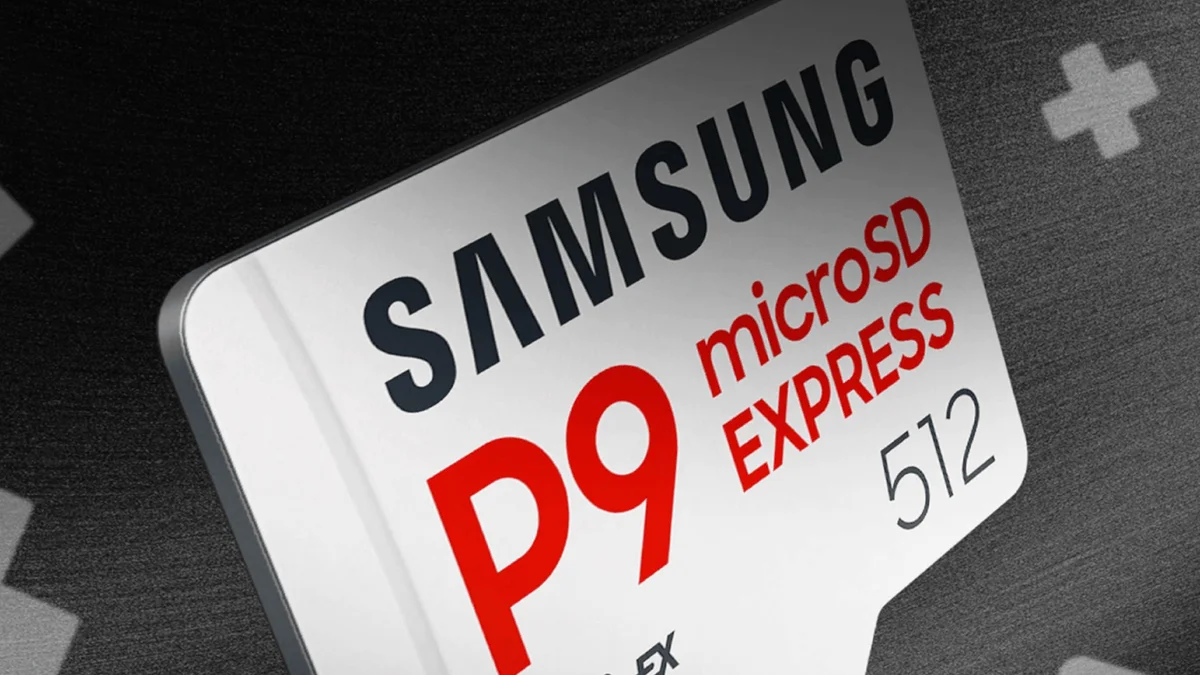
Even as global NAND flash and DRAM supply constraints keep storage pricing elevated throughout late 2026, Nintendo Switch 2 owners finally have a rare pricing window to expand their console storage without overpaying. The Samsung 512GB P9 microSD Express card (model MB-MK512T/WW), engineered to deliver up to 800 MB/s sequential read speeds over PCIe and NVMe, has dropped to $94.99, marking its lowest tracked price since industry-wide memory hikes pushed retail listings nearly twice as high.
Nearly 50% Off Recent Post-Hike Rates for 512GB and 256GB Models
Originally introduced at a $99.99 MSRP, the 512GB Samsung P9 Express was caught directly in the crossfire of the ongoing memory shortage projected to last until 2030, climbing as high as $200 before settling around the $185 to $190 mark in recent months. Following a brief dip to $99.99 at Amazon last week, a new automatic checkout discount at major US retailers brings the 512GB card down to $94.99, saving buyers roughly $90 compared to its recent going rate.
Players who simply want to double their handheld's factory capacity for under fifty dollars can also pick up the 256GB Samsung P9 Express for $48.00, down from its recent $80 street price (and below its original $54.99 launch MSRP). Because microSD Express production lines remain tightly allocated across the industry, sub-$100 windows on half-terabyte PCIe cards have become increasingly rare this autumn.
Why Nintendo Switch 2 Strictly Requires microSD Express for Games
The surge in demand for the P9 Express comes down to a strict hardware rule built into the Nintendo Switch 2. While the system ships with 256GB of internal UFS 3.1 flash storage (leaving roughly 249GB of usable space after operating system overhead), modern 4K texture packs, third-party AAA ports, and the biggest free-to-play Nintendo Switch 2 games can fill that internal drive in just a few downloads.
Unlike the original 2017 Switch, which ran games off standard UHS-I microSD cards topping out near 100 MB/s, the Nintendo Switch 2 will not install or boot Switch 2 games from legacy UHS-I or UHS-II microSD cards. If you insert an older UHS-I card into the console, the system restricts it strictly to storing screenshots and video captures. Running actual game software off removable media requires a certified microSD Express card bearing the EX badge.
Check Availability Nintendo Switch 2 Availability on Amazon→
PCIe Gen 3.0 x1, NVMe 1.3, and Thermal Control Under the Hood
Beneath its fingernail-sized shell, the Samsung P9 Express operates like a miniature NVMe solid-state drive. Built on the SD 7.1 specification, it uses a second row of contact pins wired to a PCIe Gen 3.0 x1 lane and the NVMe 1.3 protocol. That architecture enables sequential speeds up to 800 MB/s read and 200 MB/s write, making it four to eight times faster than standard UHS-I media (while remaining backward compatible with legacy UHS-I slots in older handhelds, cameras, and drones).

To keep those PCIe speeds stable inside a compact handheld chassis, Samsung pairs its NAND controller with three hardware safeguards:
- Host Memory Buffer (HMB): Uses a small fraction of the host device's system memory to cache address lookup tables, maintaining snappy random access times for asset streaming without the power draw of an onboard DRAM chip.
- Dynamic Thermal Guard (DTG): Monitors controller temperatures in real time and regulates power delivery during heavy game installations or marathon docked sessions to prevent abrupt thermal shutdowns.
- 6-Proof Durability and Warranty: Rated to withstand water immersion, extreme operating temperatures, airport X-rays, magnetic fields, drops, and contact wear, backed by a three-year limited manufacturer warranty.
My Test Bench
Paying $185 to $200 for 512GB of removable flash was tough to justify even at the height of this year's NAND wafer crunch, especially when that represented nearly half the price of a console just to triple your storage. Dropping back to $94.99 brings the cost per gigabyte down to roughly $0.18/GB, which is right where high-speed PCIe Gen 3.0 x1 media needs to be. On a handheld like the Nintendo Switch 2, the real bottleneck with microSD Express is never the 800 MB/s burst read rating on the box; it is heat dissipation inside an enclosed card slot during sustained 50GB game downloads. Samsung's combination of Host Memory Buffer and active Dynamic Thermal Guard pacing keeps the controller from hitting the severe thermal throttling cliffs we often see on generic first-wave Express cards.

PC hardware enthusiast and competitive gamer, Arthur 'Heimdall' splits his time between France and the UK working in enterprise B2B software solutions. A business school graduate passionate about component benchmarking, he has been building, modding, and tuning PCs since childhood, optimizing every thermal degree and millisecond of display latency. An avid gamer across Assassin's Creed and sandbox titles, he forged his alliance with Grimtag and Chaya during late-night World of Warcraft raids before joining Pro-Gamer.