From Secret of Mana to Chrono Trigger: Why Square Enix Veterans Insist Only Humans Can Take an Idea 'From 0 to 1'
During a special roundtable interview organized in Japan to celebrate the 35th anniversary of the Mana (Seiken Densetsu) series, three legendary figures from Square's golden era on the Super Nintendo reunited around the same table: Yoshinori Kitase (director of Chrono Trigger, Final Fantasy VI, Final Fantasy VII, VIII, and X, and now Vice President at Square Enix), Koichi Ishii (creator of the Mana franchise as well as the father of Chocobos and Moogles), and Hiromichi Tanaka (veteran producer and designer of Secret of Mana, Trials of Mana, Xenogears, and Final Fantasy XI). Looking back at the turbulent behind-the-scenes history of the 16-bit era, the trio shared a candid perspective on generative AI and why human sensitivity remains irreplaceable in game development.
From the Canceled Super Nintendo CD-ROM to the Birth of Chrono Trigger
Before discussing modern development tools, the three veterans revisited the creative whirlwind of the early 1990s. They recalled that Secret of Mana was originally conceived for the Super Nintendo CD-ROM add-on, a peripheral co-developed with Sony before Nintendo ultimately canceled the hardware partnership. At that stage, the ambitious project already featured character designs and illustrations by the late Akira Toriyama, the creator of Dragon Ball.
When the Super Nintendo CD-ROM attachment was scrapped behind closed doors, Square's small development team showed remarkable agility by splitting and reinventing their work into two separate projects. On one side, Secret of Mana was completely redesigned to fit onto a standard Super Nintendo cartridge. On the other, the collaboration with Akira Toriyama was reshaped into an entirely new JRPG masterpiece: Chrono Trigger. The trio also noted that the frustration surrounding cartridge storage limits during that period directly motivated Square to develop Final Fantasy VII exclusively for the CD-based original PlayStation.
Going 'From 0 to 1' and Yoshinori Kitase's Wedding Speech Anecdote
Comparing the nimble nature of 16-bit development squads to modern blockbusters that require hundreds of staff members, Yoshinori Kitase remains open-minded about technological assistance. The Square Enix executive believes that AI tools, much like general-purpose engines such as Unreal Engine and Unity, can help smaller teams bring ambitious games to life without having to code every single proprietary tool from scratch.
However, the director of Final Fantasy VI and Chrono Trigger draws a firm line when it comes to true invention: "When it comes to creating something brand new and going from 0 to 1, you absolutely need a human being. That will never change: the next generation of developers must possess that ability to create something from nothing." This balanced curiosity among Japanese RPG pioneers echoes Yuji Horii's recent experiments with the Claude AI on Portopia, where the Dragon Quest creator and Chrono Trigger co-creator tested conversational tools while emphasizing human authorship.
To illustrate why an algorithm cannot replace genuine human intent, Yoshinori Kitase shared a deeply personal story. Two years ago, while preparing a speech for his eldest son's wedding, he briefly considered using an AI tool to help draft the text. He quickly abandoned the idea because it felt unnatural and out of place for such an emotional milestone, choosing instead to write every word himself from the heart.
Koichi Ishii Warns Against Games That Look Polished but Feel Cold
Koichi Ishii expressed a similarly nuanced view. The creator of Secret of Mana admitted that he is excited about how AI can speed up early prototyping, giving designers more time to test mechanics controller in hand and refine core gameplay loops. Yet he stressed that creative vision must never be surrendered to automation.
"Humans must always define the beginning and the end of the creative process. If you rely solely on AI, the result might look polished on the surface, but it will feel cold and lack that essential human touch," Koichi Ishii warned. His emphasis on craftsmanship and tight-knit creative focus closely mirrors Shigeru Miyamoto's reflections after receiving Japan's Order of Culture, where Nintendo's legendary designer highlighted how preserving a personal spark matters far more than sheer studio scale.
My Perspective
Reading this conversation between three absolute heroes of my childhood, I was genuinely moved by Yoshinori Kitase's story about his son's wedding speech. In just a few honest sentences, he captured the exact difference between a mechanically assembled product and a work of art that stays with us for thirty years: a truly unforgettable JRPG is, at its core, a heartfelt message written by human beings for other human beings.
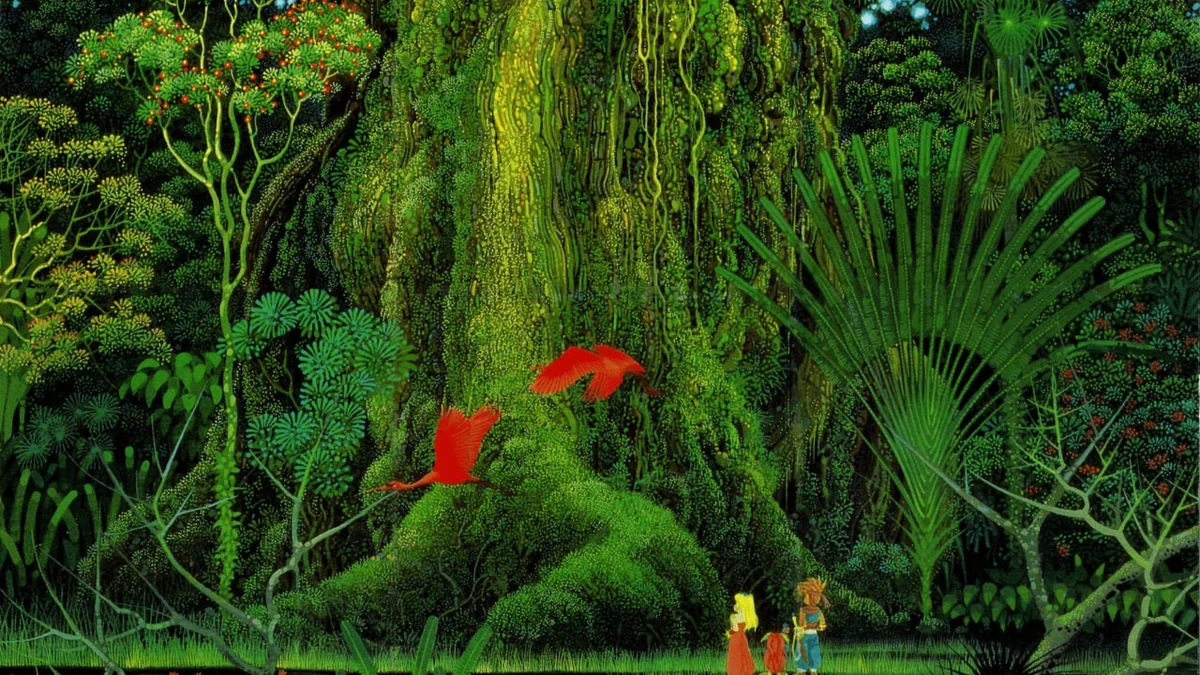
I have always been fascinated by the chaotic birth of Secret of Mana and Chrono Trigger on the Super Nintendo. When you think about it, the sudden cancellation of the SNES CD-ROM add-on forced a small group of developers to improvise under pressure, giving us both the lush poetry of the Mana Tree on cartridge and the timeless adventure drawn by Akira Toriyama. No algorithm trained on past data could ever turn a hardware setback like that into two distinct masterpieces, and I am convinced that the magic of going "from 0 to 1" will always belong to creators who dare to stumble, improvise, and pour their own soul into the screen.

Based on the outskirts of New York City, Chaya 'Chayane' spent five years studying software engineering in Montreal before returning to her home state. A Full-Stack developer and Deep Learning AI architecture researcher, she explores neural networks and algorithmic optimization while engineering data pipelines for Retrocharting and Gamescharting alongside Grimtag. A gamer for over 20 years and an avid collector of Nintendo history and The Legend of Zelda, she explored World of Warcraft's Azeroth before bringing her deep technical background to video game analysis.