Oblivion Remastered PC Mod Built With Claude AI Boosts FPS by Over 40% Without Lowering Visual Quality
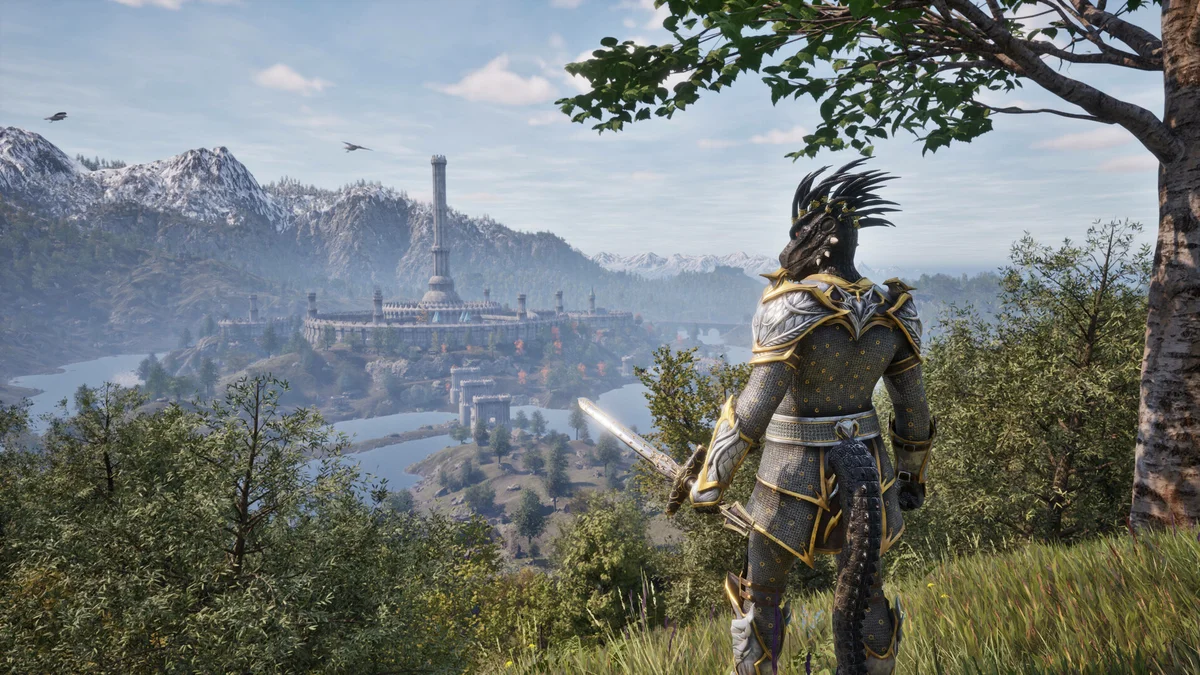
Since launch, The Elder Scrolls IV: Oblivion Remastered has pushed PC hardware to its limits. Despite the visual leap of Cyrodiil running on Unreal Engine 5, players have faced severe CPU bottlenecks, persistent traversal stuttering, and steep frame rate drops inside major cities. Released as an open-source project on GitHub and Nexus Mods by developer LTSharpe, the Oblivion Remastered Performance Fix changes the equation entirely: built over two weeks with the assistance of Anthropic's Claude Code, the mod boosts frame rates by over 40% without sacrificing a single graphical setting.
Pinpoint Profiling of 40 Engine Bottlenecks in Unreal Engine 5
Unlike standard configuration tweaks that simply slash draw distances or strip away shadows, LTSharpe used Claude Code to profile and reverse-engineer the remaster's runtime behavior. Over a two-week period, this deep diagnostic isolated and patched roughly 40 code and resource-management flaws that were choking the processor.
The most glaring culprit involved the game's celestial lighting loop. By default, the engine was forcing a complete recalculation of Sun and Moon lighting on every single frame for every loaded object in memory, hammering a single CPU thread. In dense urban hubs like Cheydinhal, this redundant loop dragged performance down to 20 or 30 FPS even on high-end rigs.
- Eliminating Redundant Lighting Loops: Caches solar and lunar lighting parameters intelligently instead of recreating them on every frame.
- Managed Memory Buffers: Replaces constant memory allocation and de-allocation cycles that previously triggered micro-freezes.
- Parallelized DirectX Draw Calls: Spreads critical rendering commands across multiple threads rather than bottlenecking a single core.
- Smoothed Traversal Loading: Distributes cell loading, NPC instantiation, and physics linking across multiple frames while exploring the open world.

Over 40% Higher FPS at 4K and Full AMD FSR Frame Generation Support
Benchmarks recorded on the developer's test bench, powered by an AMD Ryzen 7 5800X processor, 32 GB of RAM, and an AMD Radeon RX 9070 XT graphics card on Windows 11, show dramatic gains. Across the open world, average frame rates climb by roughly 30%, while 1% low figures improve by up to 50%. In the most CPU-bound town areas, frame rates effectively double.
The patch also introduces refined support for AMD FSR Frame Generation by fixing camera-vector passing to eliminate frame-pacing judder. With Frame Generation enabled at 4K resolution, performance jumps from 72 to 102 FPS while keeping ray-traced lighting and native visual fidelity completely intact.
While fans wait for the next mainline chapter following the recent 8-letter clue teased for The Elder Scrolls 6's official subtitle, this community breakthrough highlights once again how PC modders step up to solve deep engine hurdles. It makes returning to Cyrodiil smoother than ever right in the middle of a packed October 2026 game release calendar.
My Take: Smart Modding Where Official Patches Fall Short
I find it fascinating how an AI-assisted profiling workflow, guided by a methodical developer, was able to pinpoint something as absurd as a per-frame Sun and Moon recalculation in just two weeks. Where so many players assumed they needed to gut their visual settings or upgrade their CPU just to walk through Cheydinhal without hitching, this open-source fix proves the real bottleneck was redundant engine logic. That is the kind of transparent, low-level engineering I love seeing from the PC modding community.

Based on the outskirts of New York City, Chaya 'Chayane' spent five years studying software engineering in Montreal before returning to her home state. A Full-Stack developer and Deep Learning AI architecture researcher, she explores neural networks and algorithmic optimization while engineering data pipelines for Retrocharting and Gamescharting alongside Grimtag. A gamer for over 20 years and an avid collector of Nintendo history and The Legend of Zelda, she explored World of Warcraft's Azeroth before bringing her deep technical background to video game analysis.