PowerColor Radeon RX 9050 8GB Low Profile Leaks: First Half-Height RDNA 4 GPU Faces the 75W PCIe Slot Dilemma
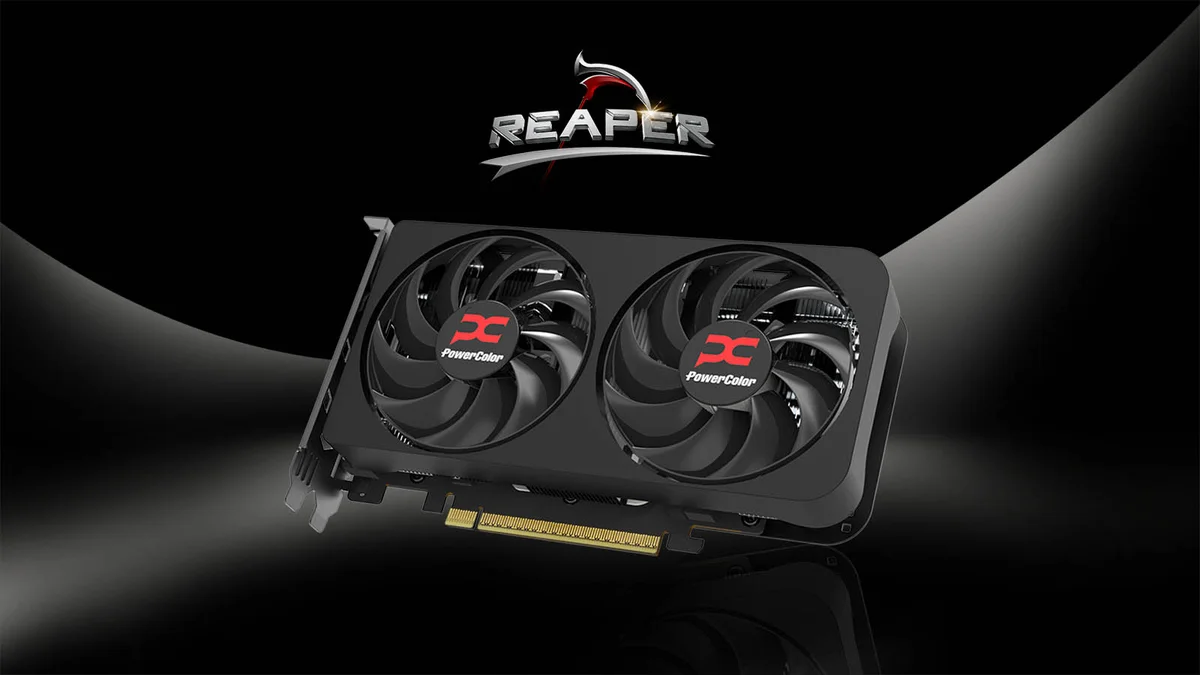
Small form factor builders and home theater PC enthusiasts have been waiting for AMD's RDNA 4 architecture to trickle down into truly compact dimensions. A new retail and distribution listing for an unannounced PowerColor RX9050 8GB LP graphics card has surfaced via hardware leaker @momomo_us on X. The model marks the very first known Low Profile (half-height) variant of the Radeon RX 9050 8GB, engineered specifically for slim SFF cases, HTPCs, and compact office desktops.
4nm Navi 44 Silicon With 8GB GDDR6 on a 128-Bit Bus
Originally introduced in late July 2026 at a $279 reference price across Asia-Pacific, Japan, and Latin America (while the cut-down 4GB version remains strictly OEM-only), the Radeon RX 9050 8GB serves as the entry point to AMD's 4nm RDNA 4 lineup built at TSMC. At a time when PC builders are scrutinizing component retail listings more closely than ever, following incidents like the surgical Ryzen 9 9950X3D2 return scam targeting buyers on Amazon, a dedicated half-height Radeon card fills a clear physical niche in the budget hardware market.
Under the shroud, the Navi 44 XE silicon packs 16 Compute Units (CUs) totaling 1,024 Stream Processors, alongside 16 Ray Tracing accelerators and 32 AI Matrix Cores capable of running AMD FSR 4 upscaling at 1080p. Unlike entry-level cards crippled by narrow 64-bit or 96-bit memory interfaces, the RX 9050 retains a full 128-bit memory bus paired with 8GB of 18 Gbps GDDR6 VRAM, delivering 288 GB/s of memory bandwidth, 32 MB of Infinity Cache, and a PCIe 5.0 interface.
Check PowerColor AMD Radeon Graphics Cards on Amazon→
The 92W TBP vs. 75W PCIe Slot Power Dilemma
While the appearance of the PowerColor RX9050 8GB LP is welcome news for ultra-compact builds, its power delivery raises an immediate engineering question. According to AMD's baseline specifications, the Radeon RX 9050 carries a Typical Board Power (TBP) of 92W, operating at a 1,920 MHz Game Clock and boosting up to 2,600 MHz.
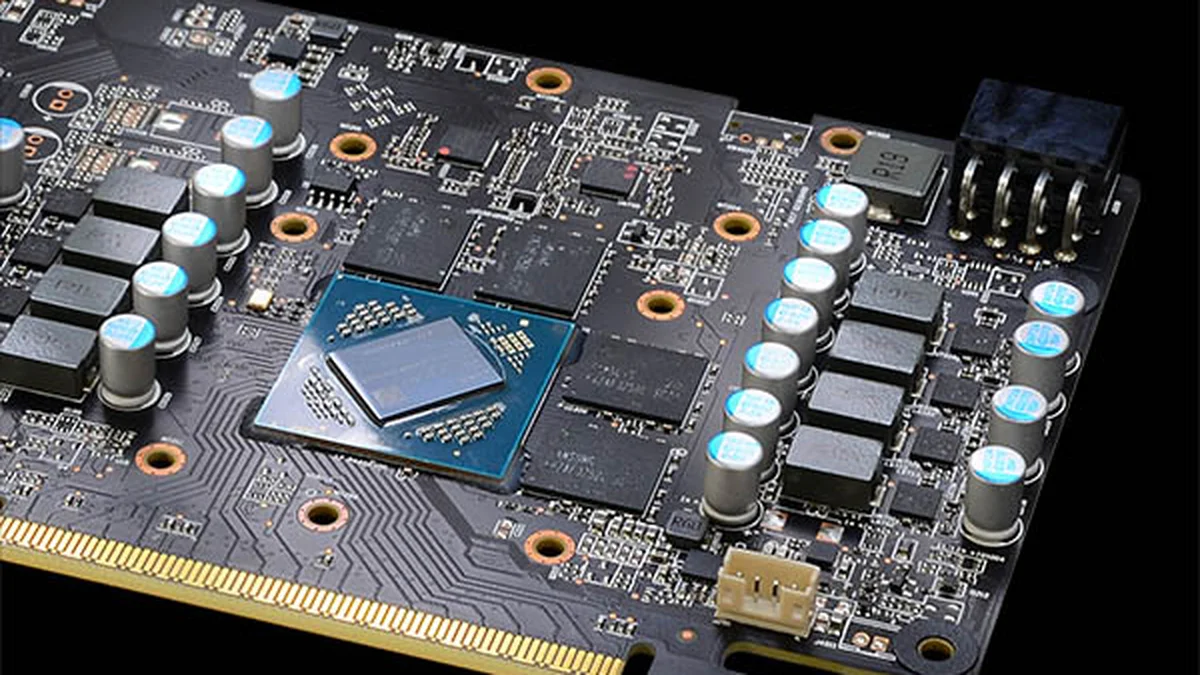
Because a standard motherboard PCIe x16 slot can supply a maximum of 75W directly through the board, standard dual-slot versions of this GPU require external power. PowerColor's existing full-height Reaper Radeon RX 9050 8GB (measuring 200 x 100 x 39 mm across two slots with dual-ball bearing fans and a direct-touch copper base) relies on a single 8-pin PCIe power connector and recommends a 450W power supply. Managing thermals and power limits inside cramped enclosures is always a delicate balancing act, much like the thermal throttling challenges seen on compact 35W-capped silicon.
To bring the RX 9050 8GB into a half-height Low Profile form factor, PowerColor's board engineers face two distinct paths:
- Retain an auxiliary 8-pin or 6-pin power connector (typically rear-mounted on the short PCB) to preserve the full 92W power envelope and 2.6 GHz boost clocks, similar to the approach used on low-profile GeForce RTX 4060 and RTX 5050 cards.
- Trim the factory power limit down to 75W with slightly conservative clock speeds and voltage curves so the card can run entirely off PCIe slot power without external cables, which is essential for upgrading pre-built slim office PCs with proprietary power supplies.
A Rare Half-Height Addition to the RDNA 4 Generation
Low-profile graphics cards built on the AMD RDNA 4 architecture have been exceedingly scarce since launch, with Vastarmor's low-profile RX 9060 XT appearance at CES standing as one of the only prior examples. By pairing a half-height bracket with 8GB of GDDR6, an HDMI 2.1b port, and dual DisplayPort 2.1a outputs, PowerColor is targeting a specialized SFF segment that most board partners have overlooked this generation.
My Lab Take
Whenever a board partner dares to squeeze an 8GB, 128-bit GPU onto a half-height PCB, it immediately gets my attention on the test bench. Let's be realistic about raw rasterization numbers: with 16 RDNA 4 compute units and 1,024 stream processors, the Radeon RX 9050 is not built to trade blows with midrange cards in heavy AAA titles. However, inside a sub-5-liter SFF chassis or a living room media server, physical clearance and power efficiency dictate everything.
Whether this PowerColor RX 9050 8GB LP becomes a cult classic or just a niche curiosity comes down to one critical design choice: the power connector. If PowerColor tunes the Navi 44 BIOS down to a strict 75W ceiling so it runs purely off the PCIe slot without an 8-pin cable, while keeping all 8GB of GDDR6, FSR 4 support, and DisplayPort 2.1a media engines intact, it will instantly become the go-to drop-in upgrade for slim office desktops. If it still demands an external 8-pin plug to feed its 92W reference rating, custom Mini-ITX builders will still appreciate it, but it will miss out on the plug-and-play SFF crowd that needs a slot-powered RDNA 4 card the most.

PC hardware enthusiast and competitive gamer, Arthur 'Heimdall' splits his time between France and the UK working in enterprise B2B software solutions. A business school graduate passionate about component benchmarking, he has been building, modding, and tuning PCs since childhood, optimizing every thermal degree and millisecond of display latency. An avid gamer across Assassin's Creed and sandbox titles, he forged his alliance with Grimtag and Chaya during late-night World of Warcraft raids before joining Pro-Gamer.