AMD RDNA 5: Why Next-Gen Radeon RX GPUs Won't Surface Before Computex 2027
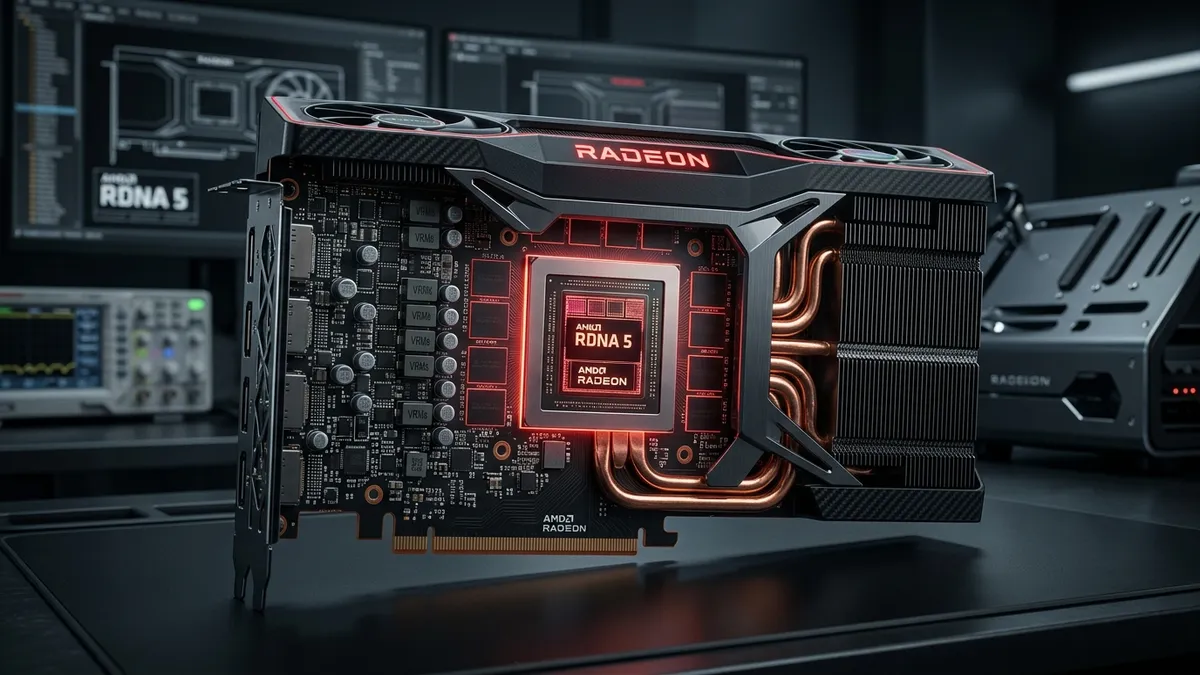
PC gamers waiting for AMD's next true architectural leap will need to practice serious patience. While hardware enthusiasts were bracing for a swift high-end counteroffensive against Nvidia, fresh supply chain intelligence indicates that Team Red's next-generation Radeon RX graphics cards are far further away than anticipated.
The long-awaited clean-sheet architecture will not land on desktop motherboards anytime soon, locking the PC graphics market into an extended holding pattern.
Computex 2027 Emerges as the Earliest Plausible Reveal Window
According to disclosures shared by seasoned hardware insider Kepler_L2 on the AnandTech forums and corroborated by Taiwanese supply chain reports via BenchLife, AMD has effectively ruled out an early 2027 showcase. Major industry trade stages such as CES in Las Vegas are completely off the table for any RDNA 5 unveiling.
Instead, Computex Taipei in June 2027 now stands as the earliest potential milestone where AMD might officially pull back the curtain on this silicon generation. Even in that best-case scenario, industry tracking suggests that actual retail shelf availability will slip into the second half of 2027, with broader product family rollout stretching well into 2028.
The RDNA 5 Clean-Sheet Overhaul Explains the Delay
This extended runway is the direct consequence of AMD's deliberate roadmap pivot. With the current RDNA 4 generation, the engineering teams made a conscious decision to bypass the ultra-enthusiast tier, prioritizing mainstream volume and aggressive price-to-performance ratios across mid-range gaming builds.
RDNA 5 represents a complete architectural reset built from the ground up rather than an iterative polish. Leaked technical briefs suggest that AMD is targeting aggressive core clock speeds between 3.1 GHz and 3.4 GHz under boost conditions.
Crucially, the new architecture transitions fully to high-density GDDR7 memory and introduces dedicated neural acceleration, including Neural Lighting technology designed to rival Nvidia DLSS in ray-traced workloads.
Industry-Wide Timeline Alignment with Nvidia
While an extended release gap might sound frustrating for desktop enthusiasts, AMD is reacting to broader market dynamics rather than falling behind in isolation. Competitor schedules mirror this exact slowdown, with reports signaling that Nvidia GeForce RTX 60 Rubin GPUs are pushed to 2028 as foundry capacity remains dominated by enterprise AI accelerator orders.
Without the pressure of an immediate consumer GPU blitz from Santa Clara, AMD has ample breathing room to refine its node packaging and silicon tape-outs rather than rushing a half-baked silicon revision to market.
What This Means for PC Gamers and Upgraders
For competitive players and system builders planning future upgrades, the practical takeaway is straightforward. Current hardware setups will retain their frontline relevance for much longer than previous two-year upgrade cycles allowed.
Initial distribution reports suggest that AMD will stagger the RDNA 5 rollout over several quarters. The first silicon die (the physical piece of etched silicon forming the GPU core) expected to hit production lines is rumored to be the AT2 package, featuring roughly 40 Compute Units for the upper mid-tier market, with flagship enthusiast silicon arriving downstream in 2028 to challenge the undisputed 4K crown.
The battle for desktop GPU dominance has officially been postponed, giving both silicon architects a rare moment of technical recalibration before the next generational collision.

SEO consultant for over 20 years and digital entrepreneur, Charles 'Grimtag' Ronchain is the founder of Pro-Gamer.gg, Retrocharting.com, and Gamescharting.com. A competitive gamer, streamer, and retro game collector, he has worked in the video game industry for over 15 years, notably as a consultant for leading game price comparison platforms. Passionate about real-time performance data and gaming technology, he analyzes competitive esports, gaming hardware benchmarks, and creator workflows on Pro-Gamer.gg with an authentic player perspective.