Why GPU Prices Refuse to Drop: How the AI Memory Crunch Is Strangling PC Gaming
For months, the PC gaming community held onto the same collective hope. Many believed that the burst of the cryptocurrency bubble and the resolution of post-pandemic supply chain chaos would finally drag graphics card prices back to pre-2020 levels.
The industrial reality is far harsher. Retail shelves are stocked, yet price tags stubbornly refuse to budge, establishing a permanent and painful entry fee even for modest mid-range rigs.
The Death of the Affordable GPU: Why Prices Hit an Unbreakable Floor
The era when a legendary card like the GTX 1060 could be picked up brand new for 250 dollars belongs to another geological era. Today, assembling a capable modern gaming rig requires spending between 550 and 700 dollars solely on the graphics processor.
Quarterly industry data from Jon Peddie Research (JPR) confirms this persistent rigidity across the market. Even as overall desktop graphics card shipments fluctuate, the average selling price (ASP) of consumer GPUs remains locked on a historically elevated plateau.
This price floor is not accidental, nor is it merely driven by board partner greed. It is the direct consequence of a silent war fought inside semiconductor fabrication plants over every square millimeter of silicon wafer capacity.
Wafer Wars: How Samsung, Micron, and SK Hynix Reallocated DRAM to AI
To pinpoint why GPU pricing refuses to normalize, one must look at the three undisputed kings of memory manufacturing: Samsung Electronics, SK Hynix, and Micron Technology. Together, these three conglomerates control over 90 percent of global DRAM production.
Over the past two years, all three manufacturers have aggressively pivoted their fabrication lines away from consumer components toward one singular priority: feeding enterprise artificial intelligence clusters.
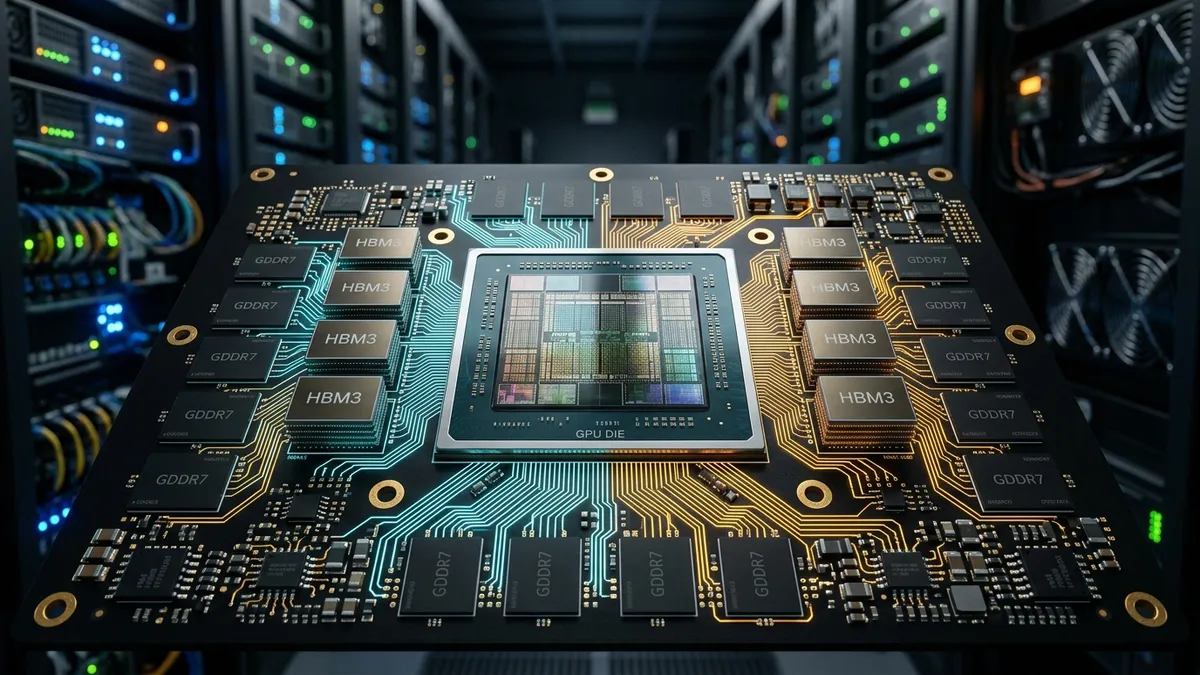
Market intelligence from TrendForce reveals that high-bandwidth memory (HBM3e and next-generation HBM4) is consuming an unprecedented share of cleanroom wafer starts. Fabricating HBM requires advanced 3D die stacking and cutting-edge packaging that consumes up to three times more raw silicon wafers than standard DDR5 or graphics memory.
By heavily shifting finite cleanroom capacity toward enterprise memory stacks, memory suppliers have engineered a structural bottleneck for the video memory (VRAM) that consumer graphics cards depend on.
The $35,000 Margin Trap: Enterprise AI vs. Consumer Silicon
The economic calculation for semiconductor foundries and chip designers is ruthlessly pragmatic. An enterprise AI accelerator, such as Nvidia Blackwell or AMD Instinct hardware, commands between 30,000 and 40,000 dollars per unit from hyperscale cloud operators.
Operating margins on these enterprise data center accelerators frequently exceed 75 percent. Selling a consumer gaming card to a dedicated enthusiast for 600 or 800 dollars yields meager returns compared to the staggering profitability of enterprise server racks.
This massive margin disparity dictates supply chain prioritization across the board. When packaging facilities and foundries must allocate substrate, interposers, and premium silicon yields, commercial gaming products are consistently pushed to the back of the queue.
Hardware enthusiasts are feeling this hardware squeeze throughout their entire systems, an evolution highlighted by the latest data showing how 32GB RAM finally surpassed 16GB in the Steam Hardware Survey. As game engines evolve, memory demands are skyrocketing across both system RAM and graphics hardware.
GDDR7 Allocation: Why 16GB VRAM Is Now the Strict Baseline for Gaming and Streaming
This memory squeeze lands at the worst possible technical inflection point for PC gamers. The widespread adoption of Unreal Engine 5.5, comprehensive Path Tracing implementations, and bloated high-resolution texture packages have transformed modern VRAM consumption into a bottomless pit.
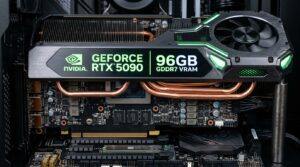
Next-generation GDDR7 memory promised blistering transfer speeds between 28 and 32 Gbps per pin. However, initial supplies of high-density GDDR7 modules, especially 24Gb chips capable of delivering 3GB per package, are heavily earmarked for localized AI inference accelerators and professional workstations.
In practice, 16GB of video memory has become the strict operational baseline in 2026 for any gamer aiming to maintain high-level competitive performance while broadcasting to Twitch or YouTube. Cards equipped with 8GB or 12GB of VRAM choke the moment a modern title runs alongside OBS studio encoding in AV1 with background AI audio filters active.
Once video memory spills over the PCIe bus into system RAM, performance degrades instantly. Competitive players face noticeable micro-stutter, severe drops in 1 percent low frame rates, and erratic input latency during intense firefights.
Upgrade Now or Wait for a Drop? A Hard Reality Check for PC Builders
Gambling on a massive price collapse for gaming graphics cards over the next twelve to eighteen months is an ill-advised strategy. Production capacity for both HBM stacks and high-speed GDDR7 is already booked solid through early 2027 by enterprise infrastructure clients.
If your current rig is limping along on a GPU with less than 12GB of VRAM and struggling with frametime consistency in modern competitive titles, waiting for a hypothetical 40 percent price slash is wishful thinking. Hunting for certified refurbished hardware or securing an existing 16GB card during targeted seasonal sales represents the most sensible tactical move.
The cardinal rule for building or upgrading a gaming setup today is uncompromising: never sacrifice VRAM capacity just to save 80 dollars at checkout. Raw core clock speeds cannot rescue a system when memory allocation saturates and chokes the memory bus.
PC gaming is no longer the primary driver of semiconductor innovation or foundry profits. Surviving and competing in this new hardware climate requires treating your graphics card purchase not as a seasonal impulse, but as a deliberate and durable capital investment.

SEO consultant for over 20 years and digital entrepreneur, Charles 'Grimtag' Ronchain is the founder of Pro-Gamer.gg, Retrocharting.com, and Gamescharting.com. A competitive gamer, streamer, and retro game collector, he has worked in the video game industry for over 15 years, notably as a consultant for leading game price comparison platforms. Passionate about real-time performance data and gaming technology, he analyzes competitive esports, gaming hardware benchmarks, and creator workflows on Pro-Gamer.gg with an authentic player perspective.