VRR, Fan Profiles and Instant Sleep: Valve Officially Adapts SteamOS for ROG Ally and Legion Go
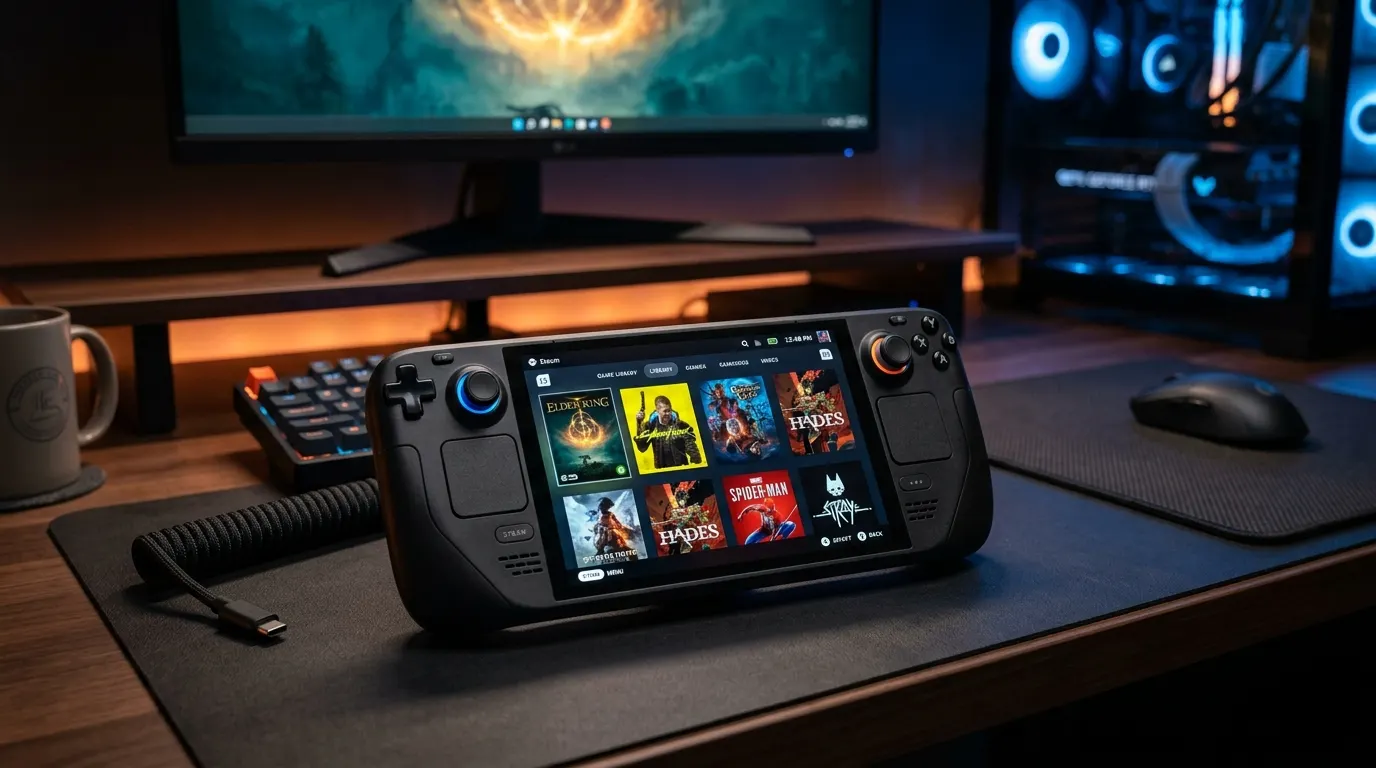
The Steam Deck's exclusive lock on its operating system has officially ended. Valve is accelerating the rollout of SteamOS across competing handheld hardware.
Once tethered exclusively to Gabe Newell's hardware, the Linux-based gaming platform now runs natively across third-party handhelds powered by AMD silicon. Owners of the ASUS ROG Ally, ROG Ally X, and Lenovo Legion Go are finally getting the tailored handheld experience they wanted.
SteamOS Breaks Free from Deck Exclusivity
Following updates throughout SteamOS 3.8 and the recent 3.9 Beta branches, Valve's handheld roadmap has grown remarkably ambitious. The company wants a unified console experience on handheld PCs, regardless of whose badge sits on the chassis.
Valve engineers have integrated proprietary hardware controls directly into the kernel. Dedicated shortcut buttons on ASUS and Lenovo devices now immediately trigger the Steam overlay and Quick Access settings menu.
This deep integration fixes stubborn hardware quirks that previously hindered third-party hardware. On the ROG Ally, power delivery to the fingerprint reader is now completely shut down when powered off, eliminating passive battery drain while stored inside a case.
Native VRR, Brightness Sliders and Thermal Curve Fixes
The biggest leap forward lies in dynamic display management. Valve's Gamescope compositor now natively handles Variable Refresh Rate (VRR) across compatible screens.
Frame limiter toggles no longer clash with active VRR synchronization. Motion clarity and frame pacing remain seamless without wrestling with cumbersome desktop configuration tools.
Display brightness also receives native treatment. On the Lenovo Legion Go and the upcoming Legion Go 2, panel backlight controls operate straight from the native quick menu, eliminating the need for makeshift Decky plugins.
Cooling curves have also received crucial attention. Valve implemented targeted fixes to stop aggressive fan ramping on ASUS handhelds when resuming from sleep mode. As highlighted in our ROG Ally versus Steam Deck hardware breakdown, erratic acoustics and desktop software bloat were the primary headaches plaguing Windows handhelds.
Windows 11 Loses Ground in the Handheld Arena
Until now, handheld owners seeking a pure gaming interface had to lean on community distributions like Bazzite. Valve is now rolling out official recovery images and actively certifying third-party devices under its software banner.
True suspend-and-resume gameplay remains the definitive advantage of this platform. While Microsoft's operating system frequently sends portable machines into thermal sleep loops, Valve's operating system wakes your game session in a fraction of a second.
By tailoring SteamOS for competing AMD hardware, Valve is exposing the glaring flaws of desktop operating systems on 7-inch screens. Microsoft has dragged its feet on creating a true lightweight handheld interface, and SteamOS is actively seizing the category.

SEO consultant for over 20 years and digital entrepreneur, Charles 'Grimtag' Ronchain is the founder of Pro-Gamer.gg, Retrocharting.com, and Gamescharting.com. A competitive gamer, streamer, and retro game collector, he has worked in the video game industry for over 15 years, notably as a consultant for leading game price comparison platforms. Passionate about real-time performance data and gaming technology, he analyzes competitive esports, gaming hardware benchmarks, and creator workflows on Pro-Gamer.gg with an authentic player perspective.