No PS5 Emulator Required: How Regaliant Runs the Demon's Souls Remake Natively on PC With DLSS and FSR
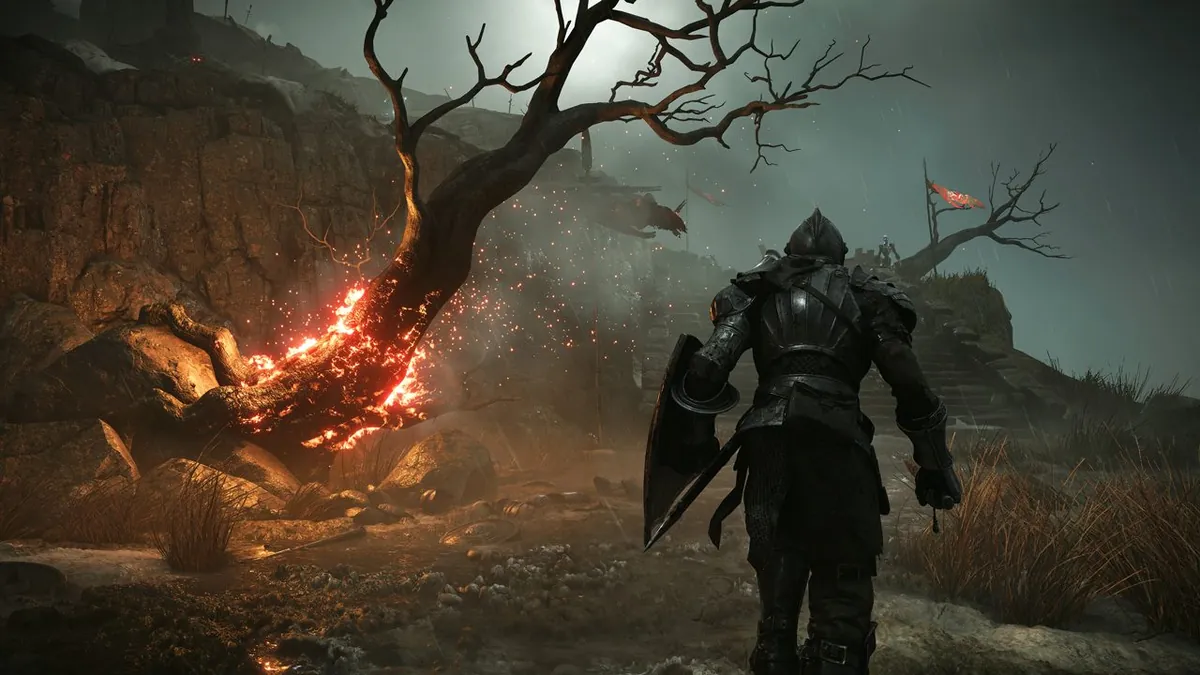
Six years after launching alongside the PlayStation 5, Bluepoint Games' remake of Demon's Souls remains one of the few flagship PS5 exclusives that Sony has never brought to PC. That barrier is now being challenged by Regaliant, an open-source Rust project built by developer SulphurS16 and published on GitHub on November 23, 2026.
Updated to version 0.1.9 on November 27, 2026, the repository has quickly climbed past 520 stars, with nearly 1,700 downloads for the latest release archive alone. Rather than functioning as a conventional PlayStation 5 emulator, Regaliant operates as a Windows binary compatibility layer that executes the original PS5 program directly on desktop hardware.
Native x86-64 Execution and Vulkan Translation: How Regaliant Works
Traditional console emulators have to translate foreign processor architectures on the fly, which carries a steep performance penalty. Regaliant avoids CPU emulation entirely because the PlayStation 5 runs on an x86-64 processor, the same core instruction family used by modern Windows PCs. It is not a source-code reconstruction either.
Instead, the tool loads the game's original PS5 binary (eboot.bin along with its two core system libraries) straight onto the host CPU, applying only targeted load-time adjustments such as routing thread-local storage through Windows and rewriting AMD-specific SSE4A instructions on processors that lack them.
Around that executable, SulphurS16 reimplemented the required PS5 operating system libraries in Rust, covering memory management, threading, file access, saves, audio, video playback, and controller input. Because the console release drives the PS5 GPU directly without a high-level desktop API, Regaliant executes the graphics command stream through Vulkan 1.3 and converts shaders into SPIR-V. It follows the same technical wave we previously explored in how AnyPS5 runs PlayStation 5 games natively on PC without emulation.
True DLSS, FSR, XeSS, and 32:9 Support in Version 0.1.9
Version 0.1.9, released on November 27, 2026, delivers a major leap for image reconstruction. In earlier builds, upscalers only performed anti-aliasing at the internal render size without boosting frame rates. Now, NVIDIA DLSS, AMD FSR, and Intel XeSS perform genuine upscaling across Quality, Balanced, Performance, Ultra Performance, and Native AA modes, driven directly by the game's own motion vectors and jitter.
Regaliant also injects a dedicated PC tab straight into the in-game settings screen, with most adjustments taking effect immediately:
- Modern display options: native 16:9, 16:10, 21:9, and 32:9 aspect ratios without stretching, HDR output via the game's built-in HDR pipeline, plus G-SYNC and FreeSync support.
- Unlocked frame rates: selectable 30 FPS, 60 FPS, or uncapped frame rate limits while preserving normal simulation speed.
- PC input and DualSense support: fully rebindable keyboard and mouse controls with raw mouse look, alongside Xbox controllers and native USB or Bluetooth DualSense support without requiring Steam Input.
- Built-in performance overlay: live frame rate, 1% and 0.1% lows, busiest CPU thread load, GPU utilization, clocks, VRAM, and system RAM tracking.
- Signed self-updater and save importer: automatic update checks with cryptographic verification and one-click rollback, external save importing with automatic backups, and direct download of the official NVIDIA DLSS library from NVIDIA's GitHub SDK after license acceptance.
The 0.1.9 release also resolves a memory leak where repeatedly switching render scale or upscalers caused FSR and XeSS to hold onto old buffers and degrade frame rates, and addresses an instant crash seen on RTX 5080 systems paired with an integrated GPU where NVIDIA's runtime mistook Regaliant's launch helper for a debugger.

One-Hour Shader Warm-Up, 32 GB RAM, and Strict Legal Boundaries
Released under the GNU General Public License v3 (with an additional permission covering DLSS and XeSS), Regaliant draws a firm legal line. The repository ships zero game assets, zero copyrighted game code, and no decryption keys. Users must provide their own legally owned copy of Demon's Souls for PS5 (build PPSA01341, version 01.007.000) with its executable and two system libraries decrypted.
The documentation is equally candid about early-stage limitations and hardware demands:
- Lengthy one-time shader preparation: on first launch, the game runs itself silently and hidden in the background to build its shader cache. That warm-up takes roughly one hour on a fast PC and longer on slower machines, though subsequent launches start immediately.
- Benchmarked performance: on SulphurS16's test rig (Ryzen 9 5900X, 32 GB RAM, NVIDIA RTX 4090, Windows 11), the port holds 60 FPS or close to it across many areas, dipping to around 40 to 55 FPS in heavy scenes. Single-core CPU speed is the main bottleneck, with a 6-core limit retaining 91% to 94% of full 12-core performance.
- Memory and GPU requirements: 32 GB of system RAM and a Vulkan 1.3 GPU with 12 GB of VRAM or more are recommended. The game reserves 35 to 40 GB across RAM and the Windows page file while actively using 4 to 5 GB during play. Simulated 6 GB cards run properly with system memory spillover, while 4 GB drops to 9 to 30 FPS and anything below 4 GB breaks rendering.
- Untested hardware and offline play: AMD and Intel GPUs, HDR displays, and real 16 GB RAM rigs have not been tested yet. Online features such as co-op, messages, and invasions are disabled, a complete playthrough has not been verified from start to finish, and Linux, Proton, and Steam Deck remain unsupported for now.
The launcher can also pack the game folder into a single compressed .zar archive that cuts storage footprint by roughly one third. Meanwhile, the broader spotlight on PS5-to-PC compatibility layers continues to draw platform scrutiny, especially after GitHub recently deleted its social post celebrating AnyPS5.
My Tech Take
From an engineering standpoint, what SulphurS16 has pulled off in Rust is remarkable. Most early compatibility layers struggle just to reach a title screen without broken lighting or audio dropouts. Seeing a ninth-generation PlayStation exclusive running natively on Windows x86-64 with Vulkan 1.3, genuine motion-vector DLSS, FSR, and XeSS upscaling, native DualSense support, and clean 32:9 ultrawide framing within its first public week is a serious technical milestone.
That said, this is clearly an alpha showcase for tinkerers rather than a plug-and-play PC release. Sitting through an hour-long background shader run, needing 32 GB of RAM, and still seeing drops into the 40 FPS range on an RTX 4090 prove there is plenty of optimization work ahead. Still, the message to console holders is impossible to miss: when shared x86-64 silicon lets a solo developer translate a flagship PS5 exclusive to Windows, hardware walls are thinner than ever.

PC hardware enthusiast and competitive gamer, Arthur 'Heimdall' splits his time between France and the UK working in enterprise B2B software solutions. A business school graduate passionate about component benchmarking, he has been building, modding, and tuning PCs since childhood, optimizing every thermal degree and millisecond of display latency. An avid gamer across Assassin's Creed and sandbox titles, he forged his alliance with Grimtag and Chaya during late-night World of Warcraft raids before joining Pro-Gamer.