GTA 6 Hits Nearly 120 FPS in 4K on a Jailbroken PS5 Pro With Frame Generation, yet 1% Lows Reveal the Real Catch
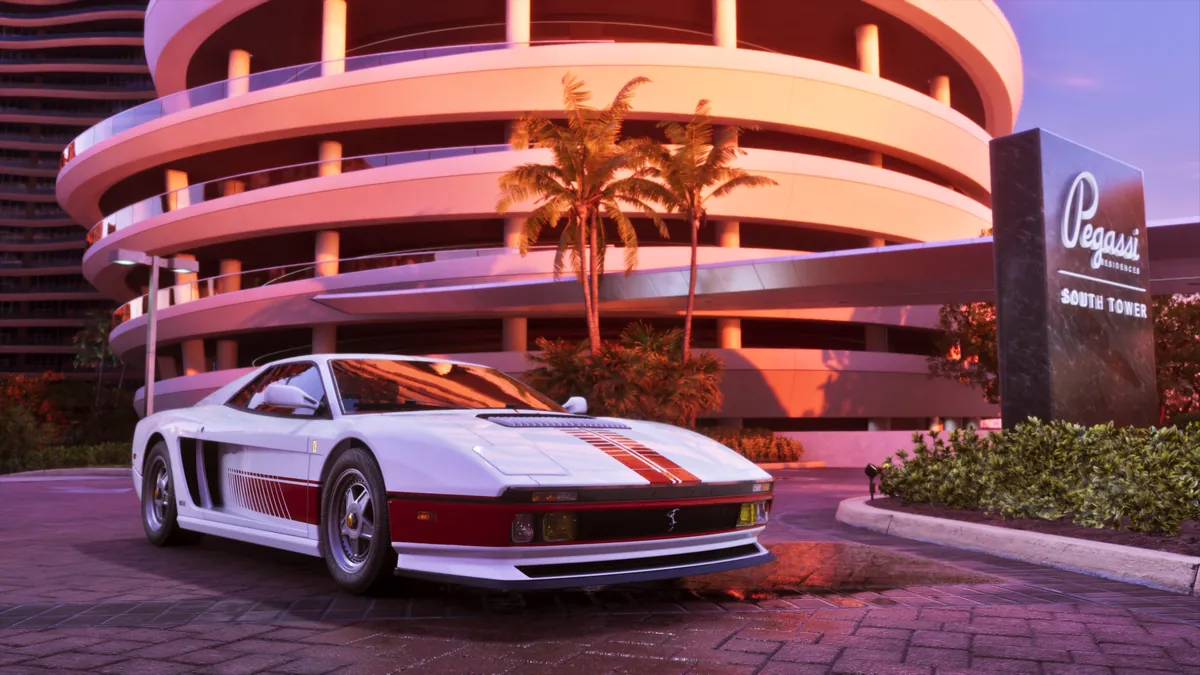
Pushing Grand Theft Auto VI close to 120 frames per second in 4K directly on console hardware, with no PC passthrough and no capture card involved, sounds far-fetched on a game officially capped at 30 FPS. Yet on November 28, 2026, PlayStation homebrew developer Sword (best known for the native PS2 emulator PS5SX2) shared gameplay footage on X running on a jailbroken PS5 Pro. By stacking Sony's PSSR upscaler, an unofficial 60 FPS unlock, and 2x Lossless Scaling frame generation, the main counter hovers between 108 and 118 FPS, though the rest of the telemetry tells a far more grounded story.
How Native Lossless Scaling Runs Directly on a PS5 Pro
Ever since GTA 6 launched on November 19, 2026 with a strict 30 FPS lock across PS5, PS5 Pro, and Xbox Series X|S, high-framerate experiments fell into two camps. One relied on routing the console's HDMI signal through a PC capture card for external interpolation, an approach we broke down with the free SmoovPlay 120 FPS workaround on PS5 and Xbox Series. The other used unofficial console patches to remove Rockstar's 30 FPS limiter without touching frame generation.
Sword's experiment combines both worlds directly inside the console. The developer previously proved this pipeline in PS5SX2 version 2.50, enabling a modified PlayStation 5 to load Lossless Scaling's frame-generation library natively on the system itself. Applied to Rockstar Games' open world, the 2x interpolation layer doubles the output of an unofficial unlocked 60 FPS mode while relying on PlayStation Spectral Super Resolution (PSSR) to reconstruct a 4K presentation.
108 to 118 FPS in Downtown Traffic: Reading the Actual Overlay Metrics
Responding to skeptics who argued earlier clips only showed empty stretches of road, Sword posted 61 seconds of high-speed night driving through Vice City with a two-star wanted level, active traffic, and dense street lighting. Inspecting the telemetry overlay across three distinct moments of the run reveals how hard the silicon is working.
| Driving Scene | Displayed FPS (2x FG) | Frametime | 1% Low | CPU Load & Temp | GPU Clock & Temp |
|---|---|---|---|---|---|
| Coastal highway at night | 117.8 FPS | 8.8 ms | 56.5 FPS | 25% at 3,200 MHz (72°C) | 2,103 MHz (66°C) |
| Lit downtown avenue | 111.0 FPS | 9.5 ms | 54.8 FPS | 100% at 3,200 MHz (71°C) | 2,121 MHz (65°C) |
| Busy city intersection | 107.9 FPS | 9.4 ms | 42.5 FPS | 88% at 3,200 MHz (71°C) | 2,115 MHz (66°C) |
The contrast between the headline counter and the underlying stability is immediate. While the interpolated output sits between 107.9 and 117.8 FPS with a reported 8.8 to 9.5 ms frametime, the 1% lows drop between 42.5 and 56.5 FPS once city traffic piles up. At the same time, CPU utilization spikes to 88% and 100% at 3,200 MHz. Thermals stay noticeably cooler than in the base PS5 40 FPS mod test that pushed past 90°C, with the PS5 Pro reporting 71 to 72°C on the CPU and 65 to 66°C on the GPU.
Three Technical Caveats Behind the Headline Number
Even as a console engineering proof of concept, several constraints separate this demo from a true native 4K 120 FPS experience. First, the video uploaded to X is re-encoded by the platform at 1080p and roughly 57.5 frames per second, meaning viewers cannot verify genuine 120 Hz motion clarity directly from the stream beyond what the overlay prints.
Second, several system readouts inside the homebrew overlay never budge across the entire minute of footage: RAM stays frozen at 5,154/16,384 MB, VRAM sits permanently at 11%, fan speed stays locked at 33%, and power draw never moves from 268 W. Static sensors like these are common with unofficial console overlays and serve as a reminder to treat unverified hardware telemetry with caution.
Third, this setup only exists on modified consoles running older vulnerable firmware, completely cut off from Sony's online ecosystem and official patches. On a purely technical level, injecting optical-flow frame generation on top of an engine without access to RAGE 9's internal motion vectors inevitably introduces HUD and mini-map shimmer during rapid camera pans.
My Test Bench
Seeing a PS5 Pro push GTA 6 past 110 displayed frames per second with no external PC attached is an eye-catching technical feat. Still, whenever I look at a performance overlay, my eyes jump straight to the 1% lows and CPU load before the headline FPS figure. When the processor pegs at 100% in downtown traffic and 1% lows dip to 42.5 FPS, 2x frame generation is only smoothing what reaches the screen, never speeding up how the game reacts to your controller.
Optical interpolation actually adds a small buffering penalty on top of a base frame rate that is already slipping below a locked 60 FPS. Sword's native homebrew pipeline deserves real credit for showing how much GPU headroom the PS5 Pro can tap with PSSR doing the heavy lifting. At the same time, it underlines why Rockstar stuck to a locked 30 FPS at launch: the CPU remains GTA 6's hard ceiling on current consoles, and frame generation cannot turn uneven base frame pacing into crisp 120 Hz responsiveness.

Grand Theft Auto 6 (GTA 6)
Explore official trailers, technical specs and all latest coverage for Grand Theft Auto 6 (GTA 6).

PC hardware enthusiast and competitive gamer, Arthur 'Heimdall' splits his time between France and the UK working in enterprise B2B software solutions. A business school graduate passionate about component benchmarking, he has been building, modding, and tuning PCs since childhood, optimizing every thermal degree and millisecond of display latency. An avid gamer across Assassin's Creed and sandbox titles, he forged his alliance with Grimtag and Chaya during late-night World of Warcraft raids before joining Pro-Gamer.