Lenovo Legion Go Beam Leaks With Android, Snapdragon G2 Gen 1, and a 120Hz Display, Ditching Windows and SteamOS
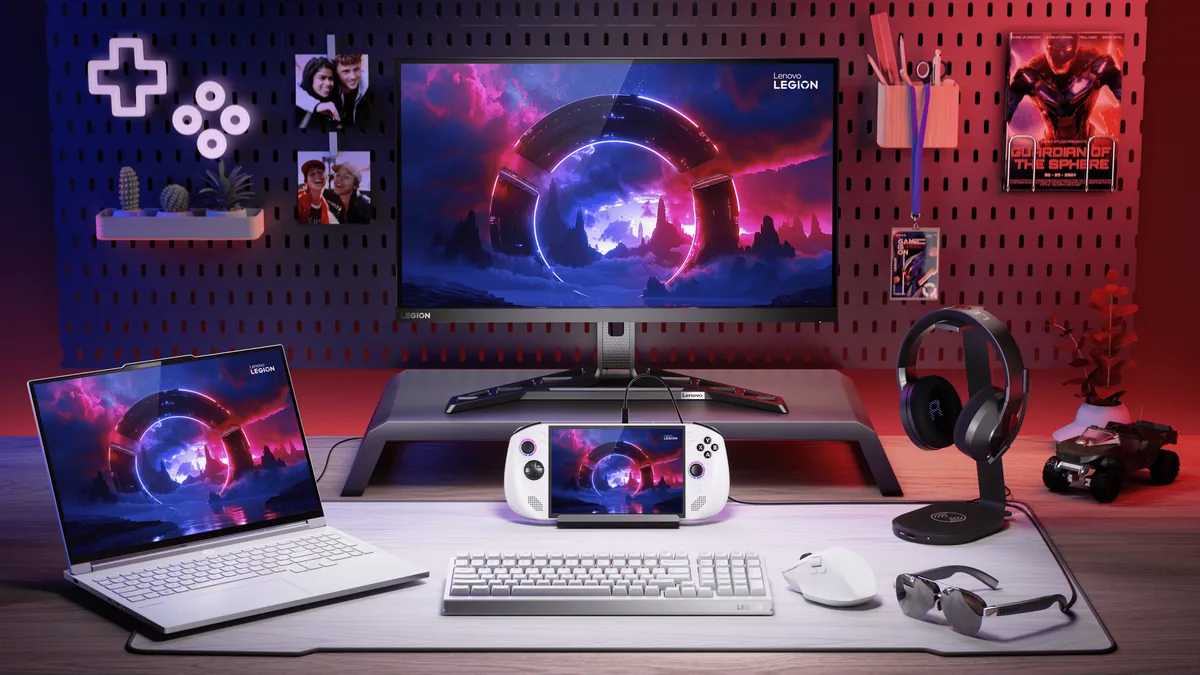
Lenovo appears ready to take its handheld lineup in a completely different direction. Following hardware renders that surfaced on November 18, a fresh wave of leaked specifications on November 24 and 25 indicates that the unannounced Lenovo Legion Go Beam skips both Windows 11 and SteamOS entirely in favor of Android, paired with a Qualcomm Snapdragon G2 Gen 1 chip and a 7-inch 120Hz display.
Built Around Streaming, Cloud Gaming, and Native Android
The Beam name suddenly makes a lot more sense. While Lenovo's x86 handhelds focus on full PC libraries and recently benefited from Valve officially adapting SteamOS for the ROG Ally and Legion Go, the Legion Go Beam is reportedly positioned as a lighter, more affordable tier built for three core workloads: native Android titles, retro emulation, and low-latency game streaming from a local PC, a home console, or cloud services like Xbox Cloud Gaming and GeForce NOW.
Lenovo's Legion Space front-end is expected to return in an Android-adapted form to keep local apps and remote play streams under one roof. Supporting Wi-Fi 6E is another clear tell of the hardware's priority, especially as handheld streaming continues to gain traction across ecosystems, highlighted recently by GTA 6 launching cloud streaming on PS5 and PlayStation Portal.
Snapdragon G2 Gen 1 and 120Hz Panel: What the Leak Reveals
Under the hood, the latest specifications point to Qualcomm's Snapdragon G2 Gen 1, a dedicated handheld platform featuring an 8-core Kryo CPU, an Adreno A21 GPU, and FastConnect 6700 wireless hardware for Wi-Fi 6E. Qualcomm rates the platform for FHD+ panels up to 144Hz, lining up cleanly with the leaked 7-inch 120Hz 16:9 display. Still, because the device remains unannounced and is widely expected to surface around CES 2027, the final silicon could still be tweaked before mass production.
| Specification | Leaked Details (Lenovo Legion Go Beam) |
|---|---|
| Operating System | Android with Lenovo Legion Space interface |
| Processor (SoC) | Qualcomm Snapdragon G2 Gen 1 (8-core Kryo CPU, Adreno A21 GPU, subject to change) |
| Display | 7-inch, 120Hz, 16:9 aspect ratio, thicker display bezels |
| Wireless Connectivity | Wi-Fi 6E |
| Design and Controls | Unibody white shell with lime-green accents, fixed controllers, no trackpad, 2 rear paddles |
| Ports | Single USB Type-C, 3.5mm headphone jack, and microSD card slot on the top edge |
| RAM, Storage, Battery, Price | Not disclosed yet (long battery life highlighted in early details) |
| Expected Reveal Window | CES 2027 (January 2027, unconfirmed by Lenovo) |
A Unibody Redesign That Drops Detachable Controllers
The physical renders leaked earlier this month already signaled a sharp departure from the original Legion Go. Rather than modular detachable grips and a vertical mouse mode, the Legion Go Beam uses a fixed monobody white shell accented in lime green, complete with front-facing stereo speakers at the base of each grip and one programmable macro paddle on the back of each side. The right-hand trackpad is also gone, reinforcing that the UI is built around controller navigation and touch rather than desktop cursor duties.
Connectivity is kept straightforward along the top edge with a single USB Type-C port, a 3.5mm audio jack, and a microSD slot for expanding storage on mobile games or retro libraries. For now, key figures such as RAM capacity, internal storage, exact battery watt-hours, weight, and retail pricing remain absent from the leaked documents.
My Test Bench
To be upfront, this is an unconfirmed hardware leak and I have not had the chance to benchmark the device or measure real-world decoding latency myself. On paper, however, pairing a 7-inch 120Hz screen with Wi-Fi 6E fixes the biggest weak spot of budget streaming handhelds stuck at 60Hz, where frame pacing and input feel on Moonlight, GeForce NOW, or local console streams immediately suffer.
The real question mark is the Snapdragon G2 Gen 1. It is efficient enough for low-power video decoding, lightweight Android games, and classic emulation, yet it trails flagship Arm gaming chips when pushed by heavy 3D native titles. That puts all the pressure on Lenovo's pricing at CES 2027: if the Legion Go Beam lands aggressively below $300, a mainstream 120Hz unibody handheld makes immediate sense; if it creeps too close to entry-level x86 handhelds, dropping Windows and SteamOS will be a much harder sell.

PC hardware enthusiast and competitive gamer, Arthur 'Heimdall' splits his time between France and the UK working in enterprise B2B software solutions. A business school graduate passionate about component benchmarking, he has been building, modding, and tuning PCs since childhood, optimizing every thermal degree and millisecond of display latency. An avid gamer across Assassin's Creed and sandbox titles, he forged his alliance with Grimtag and Chaya during late-night World of Warcraft raids before joining Pro-Gamer.