Zelda: Ocarina of Time on Switch 2: Nintendo Almost Turned the Joy-Con Into an Ocarina While Shaping Future Puzzles
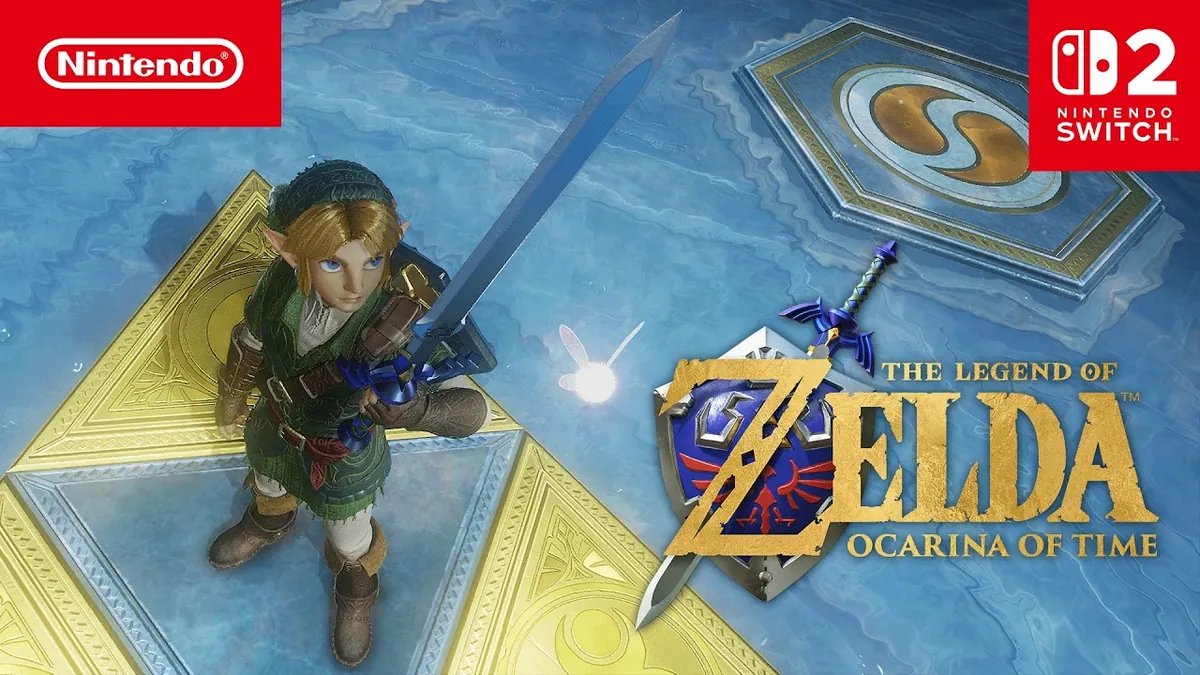
Three weeks after The Legend of Zelda: Ocarina of Time launched on Nintendo Switch 2 on November 5, 2026, series producers Eiji Aonuma and Hidemaro Fujibayashi have shared fresh behind-the-scenes details on how the project connects classic and modern Zelda. In a newly published launch interview, the pair revealed an unexpected hardware prototype involving the Joy-Con and explained how Switch 2 graphics are already changing the way Nintendo builds puzzles.
Turning the Joy-Con Into an Ocarina: The Concept Nintendo Dropped
Players can already trigger Link's songs with standard button inputs or by humming into the Switch 2 microphone, yet Nintendo briefly looked at pushing the hardware gimmick even further. Speaking about the idea of holding a Joy-Con up and playing it like an actual ocarina, Eiji Aonuma confirmed the team tested the notion before pivoting to software audio recognition.
"To be honest, we did briefly think about doing exactly that, but then we also considered how difficult it is to turn the Joy-Con into something that's going to make a sound that is faithful, and then also how to develop that into the application inside of the game as well."
Instead of forcing a compromised controller gimmick, the developers built an audio recognition feature directly into the game so players can perform Hyrule's melodies using any analog or digital instrument. That open approach pairs neatly with the real 12-hole Ocarina of Time co-developed by Nintendo and Otsuka in Japan.
How Switch 2 Visual Density Reshapes Zelda Puzzle Design
Both producers also highlighted how lessons from Tears of the Kingdom carried over into this 60fps Switch 2 remake. Eiji Aonuma pointed out that the team's ability to express fine environmental details and deep world immersion heavily influenced Hyrule's reconstruction, adding distant visual landmarks that draw players off the beaten path without cluttering the screen with interaction prompts.
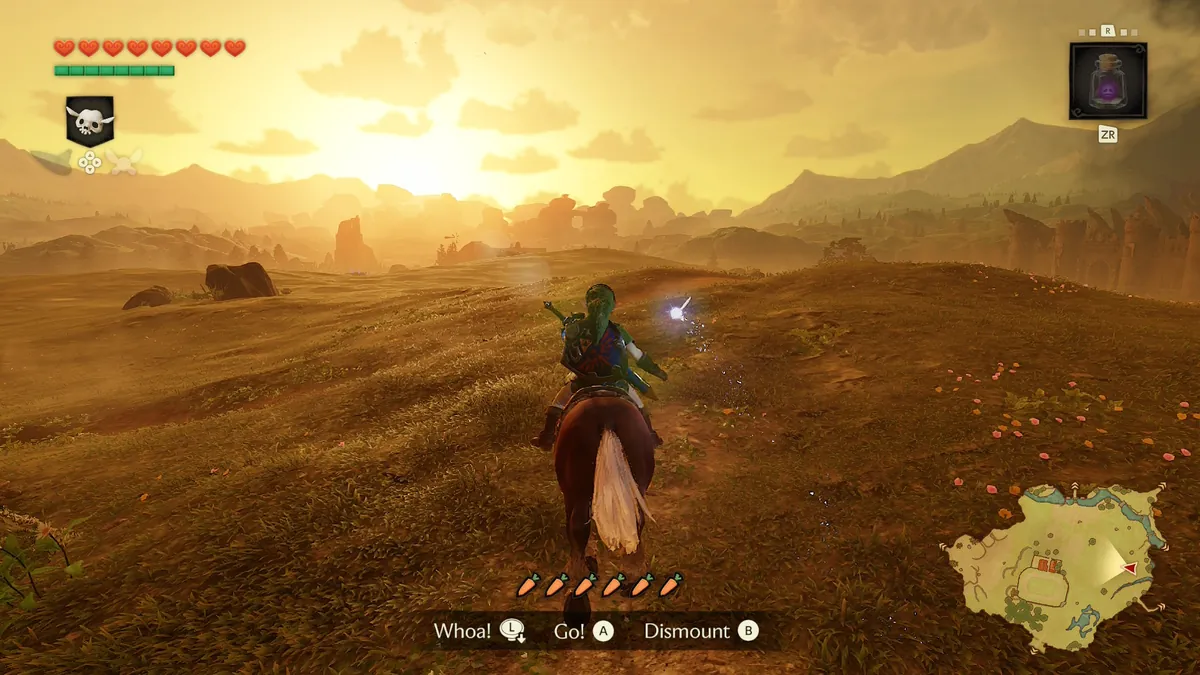
Hidemaro Fujibayashi described "the idea of exploration and discovery" as the constant throughline across the franchise. Comparing the Switch 2 rebuild directly to Breath of the Wild, he explained why sharper, denser environments change puzzle creation from the ground up.
"A system that lets you share a high, dense volume of information visually provides new ways of giving clues to the player: They can use their sight to gather the information they need to do some of the puzzle solving. Even if you compare the graphics to Breath of the Wild, it looks slightly more realistic now. And that impacts how we approach puzzle solving and puzzle creation."
Training a New Generation and Radio Silence on Majora's Mask
Nintendo deliberately staffed the project with younger developers coming off Tears of the Kingdom, including team members who had never played the 1998 Nintendo 64 original. Eiji Aonuma framed the remake as an opportunity for those designers to absorb the tighter pacing of classic Hyrule and carry those discoveries into the next mainline 3D Zelda game.
Inevitably, the launch interview also touched on whether Nintendo might follow history and build a Majora's Mask remake on top of the same engine. When pressed on the subject, Nintendo declined to answer any questions about Majora's Mask.
My Perspective
Blowing into a plastic Joy-Con on the couch would have turned into a comedy sketch within five minutes, so I am glad Aonuma's team went with open audio recognition instead. What really excites me here is Fujibayashi's comment about visual density replacing loud UI prompts. Reading a room with your own eyes rather than chasing glowing pop-ups is when Zelda feels sharpest in my hands. And that tight-lipped refusal to talk about Majora's Mask? Kyoto rarely slams a door that hard when a brand-new engine is already flying off store shelves.
Zelda Ocarina of Time
Explore official trailers, technical specs and all latest coverage for Zelda Ocarina of Time.
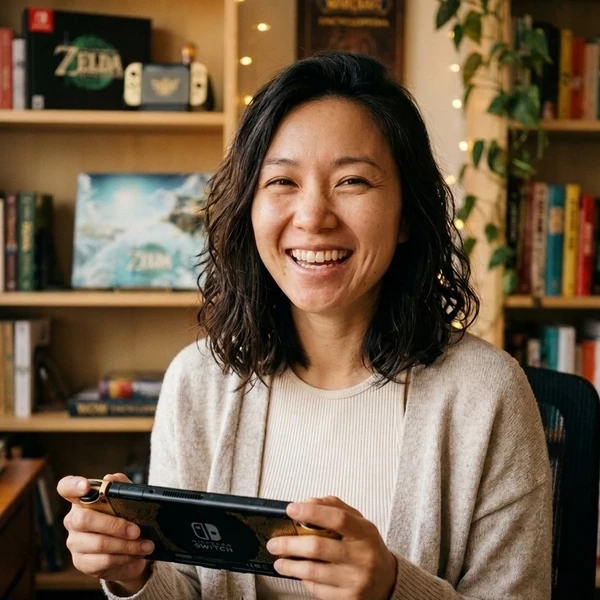
Based on the outskirts of New York City, Chaya 'Chayane' spent five years studying software engineering in Montreal before returning to her home state. A Full-Stack developer and Deep Learning AI architecture researcher, she explores neural networks and algorithmic optimization while engineering data pipelines for Retrocharting and Gamescharting alongside Grimtag. A gamer for over 20 years and an avid collector of Nintendo history and The Legend of Zelda, she explored World of Warcraft's Azeroth before bringing her deep technical background to video game analysis.