From Manabu Sakamoto's 3D Logo to Takafumi Fujisawa's Startup Sound: How the Original PlayStation Boot Sequence Hid a CD-ROM Error Check
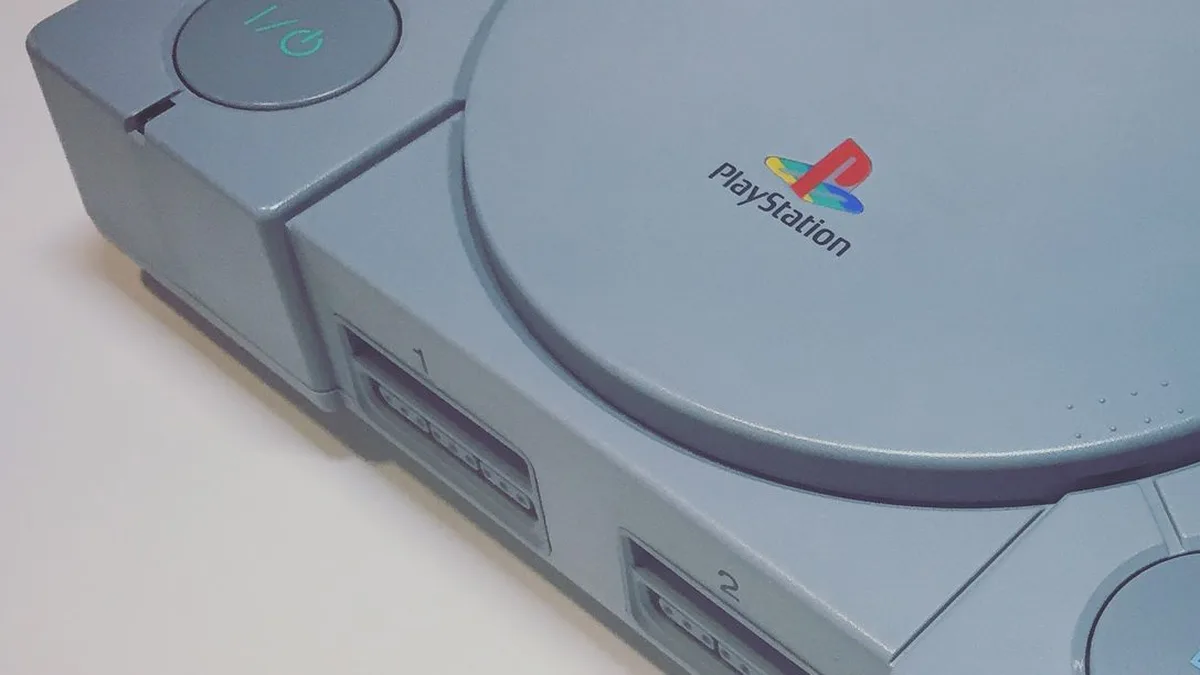
Pressing the power button on a PlayStation has triggered a familiar ritual for more than three decades: a few seconds of light and sound that build in tension, pause, and then hand control over to the player. As highlighted in November 2026 by motion studio founder Andrew Vucko, that brief transition born in spring 1994 from the collaboration between graphic designer Manabu Sakamoto and sound designer Takafumi Fujisawa was never mere decoration.
Long before Sony's original console debuted in Japan on December 3, 1994, the boot sequence was engineered to serve a dual purpose: recreating the hush of a movie theater just before the lights dim while quietly running a hardware diagnostic on the CD-ROM drive.
An Upright 'P' and a Perspective 'S': How Manabu Sakamoto Visualized the 3D Era
When Sony Creative Center designer Manabu Sakamoto set out in 1994 to craft the visual emblem for the upcoming PlayStation, his primary brief was to capture the console's defining hardware leap: real-time 3D polygonal graphics. After roughly 20 iterations and dozens of spatial sketches, Sakamoto rejected flat two-dimensional badges in favor of an optical illusion built around depth.
The bright red "P" stands upright facing the viewer, while the three-toned "S" in yellow, green, and blue lies flat behind it like a cast shadow stretching along the Z-axis. According to Sakamoto, those four colors were selected to represent passion (red), energy (yellow), excellence (green), and depth (blue).
By spring 1994, just as the first working hardware prototype was assembled inside Sony, Sakamoto's static emblem was turned into an animated sequence internally referred to as the "motion logo." That silent animation was then handed over to sound designer Takafumi Fujisawa with almost no creative restrictions.
Two Weeks of Prep, Tight ROM Limits, and a Scrapped Whispered Voice Track
Having joined the PlayStation project before the division was even formally established, Takafumi Fujisawa was already working on the console's sound chip, firmware, and developer tools. As he recalled in an interview on the official PlayStation Blog, hardware architect Ken Kutaragi never whistled a melody or dictated a style: the only hard ceiling was squeezing the ADPCM-compressed audio samples into the tiniest possible footprint inside the system's read-only memory (ROM).
Fujisawa also had to ensure the chime would translate cleanly across every conceivable mono and stereo CRT television speaker worldwide. Spending two weeks selecting tones and just two days recording in the studio, he crafted a musical progression meant to mirror the anticipation of stepping into a cinema, right at a moment when Sony was fighting to prove its gaming legitimacy and even had to save Shinji Mikami's 1996 Resident Evil from a retail ban.
"I structured the sound so that the listener starts off stable and then feels a little bit off, creating a strong impression by starting with an equal temperament and taking it to an original, pure intonation harmony, before the rich strings kick in and the twinkling tones set the perfect fourth chords." , explique Takafumi Fujisawa, original PlayStation sound designer
One detail from those 1994 sessions rarely surfaces: Fujisawa actually recorded a second demo where he layered his own voice whispering the word "PlayStation" over the chime. The team ultimately shelved that vocal version because it felt too much like the machine was talking directly to the player in the living room, opting instead for the purely instrumental cue.

Why the Reverse 'Swoosh' Was Engineered as a CD-ROM Read-Error Loop
Beyond setting an unforgettable mood, Fujisawa's composition performed a critical hardware check every time the console powered on. Moving from instant-read cartridges to optical CD-ROMs meant the laser pickup needed several seconds to spin up the disc, read the table of contents, and verify the copy-protection wobble groove.
- The Opening C-Major Swell (Orange Sony Computer Entertainment Screen): Confirms that the power supply, internal BIOS ROM, and motherboard logic have initialized properly.
- The Reverse 'Swoosh' Mid-Section: Intentionally designed by Fujisawa to loop continuously if the optical drive struggled to read the disc, giving both players and technicians an immediate audible warning of a read fault.
- The Twinkling Chimes and Perfect Fourth Chord (Black PlayStation Screen): Signal that the disc authentication has passed and release the player into the game.
That philosophy of authoring the wait outlived the optical bottleneck that created it. When Sony transitioned to the PlayStation 2, an era whose unreleased purple trapezoid PS2 and HiFD prototypes show just how boldly Kutaragi's hardware teams experimented, Fujisawa held an internal contest among his expanded audio staff and reinforced that same perfect fourth harmony to evoke landing from space, paving the way for the ambient boot sequence that greets PlayStation 5 Slim players today.
Check PlayStation 5 Slim Availability on Amazon→
My Perspective
Anyone who grew up with a gray PlayStation hooked up to a living-room CRT knows that split second of holding your breath between the orange diamond and the black boot screen: whenever a scratched disc was in the tray, you waited for those final glass-like chimes like a courtroom verdict. What Manabu Sakamoto and Takafumi Fujisawa pulled off in 1994 is a masterclass in console design, because instead of hiding a slow CD-ROM check behind a sterile loading bar, they turned tight ROM limits into a curtain-raiser that still gives us chills thirty-two years later.

Based on the outskirts of New York City, Chaya 'Chayane' spent five years studying software engineering in Montreal before returning to her home state. A Full-Stack developer and Deep Learning AI architecture researcher, she explores neural networks and algorithmic optimization while engineering data pipelines for Retrocharting and Gamescharting alongside Grimtag. A gamer for over 20 years and an avid collector of Nintendo history and The Legend of Zelda, she explored World of Warcraft's Azeroth before bringing her deep technical background to video game analysis.