Why There Will Never Be a GTA 7: AI Recompilation, PC RP Servers, Piracy, and the End of $2 Billion Blockbusters
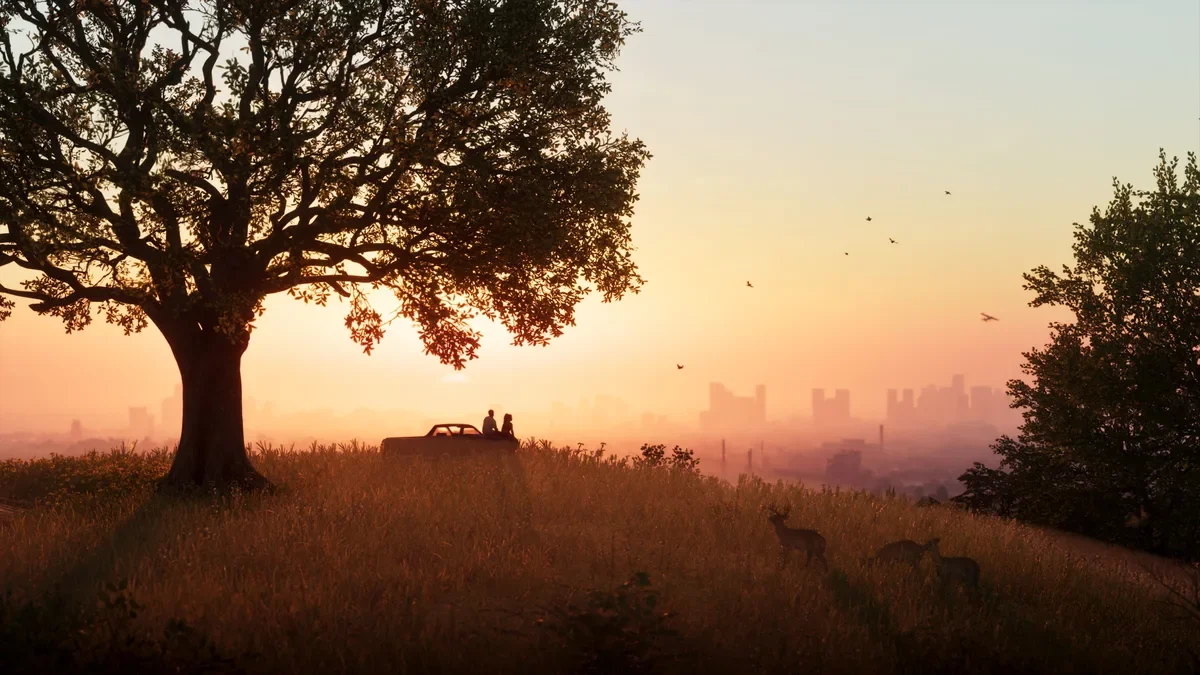
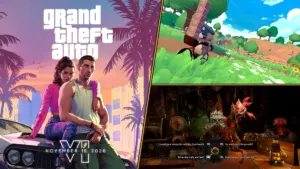
Tomorrow, on November 19, 2026, Grand Theft Auto VI finally lands on PlayStation 5 and Xbox Series X|S after a staggering thirteen-year wait. Backed by an estimated development and marketing budget between $1.5 billion and $2 billion, a sum already recouped before launch day thanks to a record-shattering 15.88 million pre-orders, Rockstar Games is about to bring the entire entertainment industry to a standstill. Yet beneath the celebration of this historic release lies a sobering industrial reality: why there will never be a GTA 7 boils down to a convergence of AI recompilation, PC modding speed, security trauma, and economic gravity that no publisher on Earth will ever risk repeating.
The November 19 Paradox: PC Roleplay Ambitions on Day One Without a PC Port
Officially, Rockstar Games still has not announced a PC release window for its return to Vice City. Back in 2013, when Grand Theft Auto V debuted on PlayStation 3 and Xbox 360, PC players waited eighteen months in patient resignation before stepping into Los Santos at unlocked frame rates. Thirteen years later, both player expectations and the underground software toolkit have changed beyond recognition.
Because the PlayStation 5 and Xbox Series X|S run on x86 architectures closely related to desktop gaming rigs, and because asset extraction, low-level emulation, streaming hooks, and AI-assisted reconstruction tools now move at breakneck speed, the community mindset has flipped. Instead of waiting passively for 2028, countless players and modders half-expect to see chunks of Leonida and Vice City extracted, reverse-engineered, or recreated on PC to fuel custom multiplayer roleplay servers in the mold of FiveM within days of the console launch. The era of the hermetically sealed console window is rapidly evaporating.
The Nintendo and Ocarina of Time Wake-Up Call: No Code Is Untouchable
If anyone still doubts that local game binaries can no longer be contained, look no further than Nintendo. The Kyoto giant has long stood as the most fortified, secretive, and legally ruthless fortress in gaming: proprietary hardware, tightly woven first-party code with minimal bloat, and a battalion of lawyers firing off DMCA takedown notices at the slightest provocation.
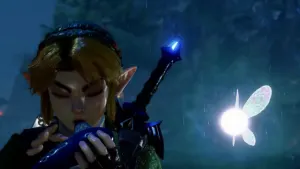
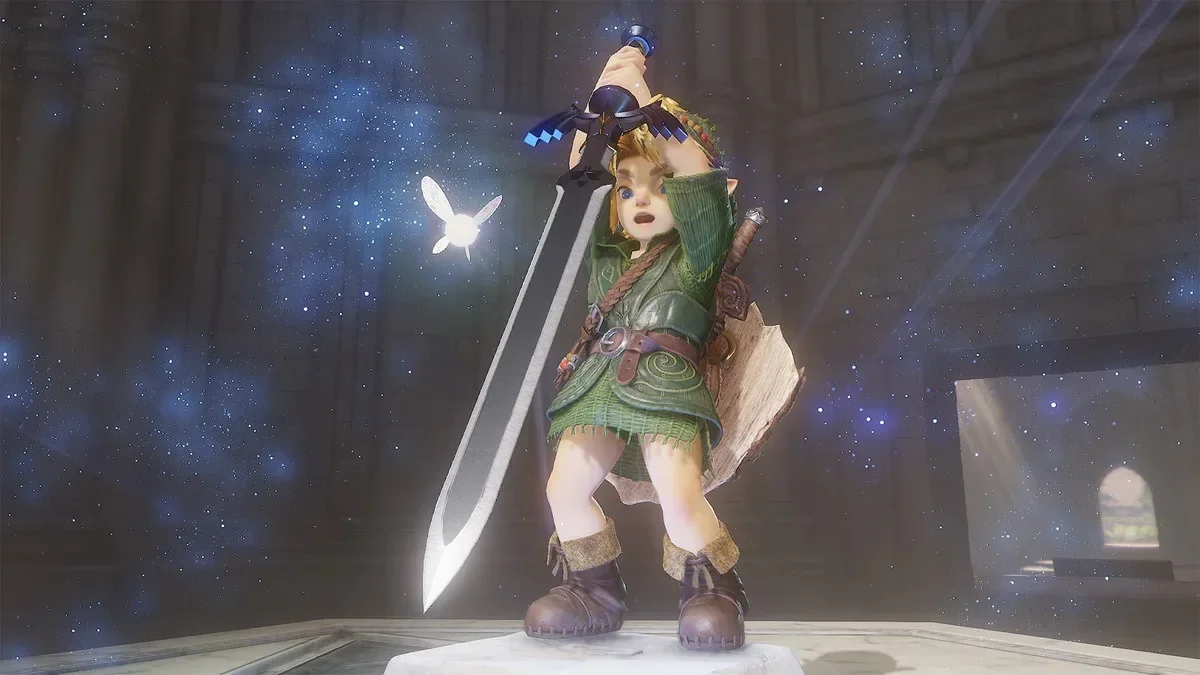
Yet look at what happened to its crown jewels. Through reverse engineering and decompilation spearheaded by Ship of Harkinian, The Legend of Zelda: Ocarina of Time not only runs natively on PC at 4K and 120+ FPS, but modders even bolted on a full online cooperative multiplayer framework called Anchor, letting friends clear the entire campaign together in a way Nintendo never envisioned. Even more telling, just days after the release of the Ocarina of Time remake on Nintendo Switch 2, coders armed with new static recompilation pipelines like kid-with-sword-remake and kaiHEN had it running natively at 60 FPS on PC and Mac, right as Nintendo scrambled to wipe four native PC recompilation ports off GitHub, including Super Mario Odyssey, Skyward Sword HD, and Mario Kart: Double Dash!!. If Nintendo, which controls the silicon, the cartridge, and the operating system, cannot stop modders from porting its flagship releases to PC and injecting online co-op within days, how could Rockstar ever hope to shield future releases running on standard x86 consoles?
The AI “Vibe Coding” Tsunami on Steam vs. 13-Year Mega-Productions
The industrial blueprint behind GTA 6, mobilizing thousands of developers across every Rockstar studio worldwide for more than a decade, belongs to a bygone era that is now colliding head-on with generative AI. The 2026 numbers on Valve's storefront tell the story: more than 21,388 new games have launched on Steam this year alone, averaging 66 releases every single day on the back of AI-assisted “vibe coding.” During the recent Steam Next Fest, playable demos built by solo creators and tiny indie teams using AI workflows flooded the charts by the thousands.
Just this week, the runaway success of Slotbound on Steam, built by solo dev Optima Arch without prior coding knowledge to gross $356,000 and 50,000 copies in 48 hours using OpenAI Codex, GitHub Copilot, and Cursor, proved that the traditional technical barrier has collapsed. As AI pipelines rapidly learn to generate sprawling open worlds, dynamic voice acting, physics interactions, and autonomous NPC routines on the fly, locking up $2 billion and 3,000 human developers for fifteen years to build a hypothetical GTA 7 becomes an economic absurdity.
The Lapsus$ Security Trauma and the Dead End of Local Executables
Compounding that financial calculation is a security scar Rockstar will never forget. The studio endured the worst breach in video game history at the hands of Arion Kurtaj of the Lapsus$ hacking collective, who just pleaded guilty in a London court this week, mere days before the global launch, after ninety internal GTA 6 development clips and the full GTA 5 source code were stolen via Slack.
In an era of AI-accelerated decompilation, real-time memory inspection, and automated asset cloning, shipping 150 to 200 gigabytes of local executable files directly onto consumer hardware guarantees that a game will be dissected, modded, emulated, or cloned in record time. The prerequisite for any future successor is absolute: unless a breakthrough security architecture arrives that makes copying, emulating, memory-reading, or hijacking a game physically and mathematically impossible, such as 100% server-side encrypted cloud execution where zero executable files ever reside on the player's PC or console, Rockstar and Take-Two will never greenlight another $2 billion local client.
Project ROME: Turning GTA 6 Into a Perpetual RP Platform Instead of GTA 7
That exact realization explains why Rockstar acquired Cfx.re, the team behind FiveM and RedM, and has been quietly building Project ROME (Rockstar Online Modding Engine) in-house. Rather than fighting a losing war against PC modders, rogue roleplay servers, and AI recompilation tools, or embarking on another fifteen-year development marathon for a GTA 7 in 2040, Rockstar is absorbing the entire ecosystem under its own roof.
Take-Two Interactive CEO Strauss Zelnick has already signaled that waiting another thirteen years between flagship releases is off the table while making intellectual property protection against AI a top corporate priority. Through Project ROME, Vice City and the state of Leonida are engineered to operate as a perpetual, evolving platform along the lines of Fortnite or Roblox. Over the next ten to fifteen years, Rockstar will expand Leonida with new map territories, official creator tools, and monetized roleplay servers, cementing Grand Theft Auto VI as the final numbered monument of its kind.

My Take
We need to appreciate what we are witnessing tomorrow night when Vice City opens its doors: this is the swan song of the multi-billion-dollar, decade-long local blockbuster. When independent coders can recompile Nintendo's most fiercely guarded Switch 2 and N64 classics onto PC in a matter of days with custom online co-op, and a solo developer can bank over $350,000 in a single weekend on Steam using AI coding assistants, no board of directors will ever again lock up $2 billion and 3,000 developers for fifteen years to ship a vulnerable local binary. Unless a mathematically unbreakable, server-side encrypted cloud architecture replaces local files entirely, Rockstar has zero incentive to ever build a seventh numbered entry. With FiveM and Project ROME built straight into Leonida's DNA, this sixth chapter is designed to last forever.

SEO consultant for over 20 years and digital entrepreneur, Charles "Grimtag" is the founder of Pro-Gamer.gg, Retrocharting.com, and Gamescharting.com. A competitive gamer, streamer, and retro game collector, he has worked in the video game industry for over 15 years, notably as a consultant for leading game price comparison platforms. Passionate about real-time performance data and gaming technology, he analyzes competitive esports, gaming hardware benchmarks, and creator workflows on Pro-Gamer.gg with an authentic player perspective.