Meremanoid on PS1: 27 Years After Its 1999 Japan Release, the Obscure JRPG Gets a Full Fan Translation With "Zero Use of AI"

Originally released exclusively in Japan on August 5, 1999 for the original PlayStation (catalog serial SLPS-01664), the turn-based role-playing game Meremanoid (Shinkai Densetsu Meremanoid) has finally crossed the language barrier twenty-seven years after launch. Developed by Shout! Designworks and published by Xing Entertainment, this deep-sea RPG remained locked to Japanese disc collections until November 15, 2026, when a six-person localization team released a complete version 1.0 English patch built with 100% human craft and zero generative AI.
A Matriarchal Deep-Sea Utopia Illustrated by Akihiro Yamada
Before arriving on Sony's 32-bit console, Shinkai Densetsu Meremanoid began life as a 24-episode television anime series produced by Kitty Films, animated by Triangle Staff, and broadcast on TV Asahi between October 1997 and April 1998. Much of the project's striking visual identity comes from its character designer, Akihiro Yamada, the renowned illustrator behind The Twelve Kingdoms, RahXephon, and Castlevania: Dracula X.
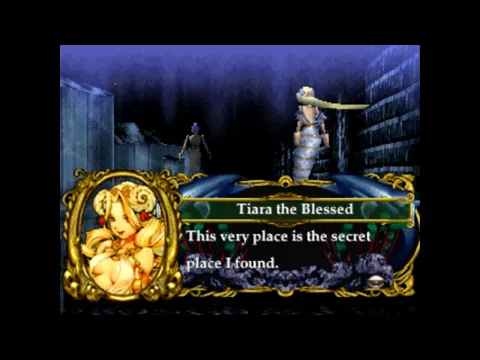
Rather than following standard medieval high-fantasy tropes, the RPG takes place entirely on the ocean floor. The narrative centers on Meremanoia, a deep-sea utopia blessed by the goddess Aphrodite where Meremanoids, a race of mermaid-like beings, are all born female. The story opens in a remote settlement where the protagonist, Ardin, stumbles upon a mysterious ring. That single discovery triggers a chain of political and religious upheavals across the abyss, forcing allies to band together and part ways as the hidden truth of the deep sea comes to light.
Six ROM Hackers Push Back Against Machine-Translated Patches
The rescue of this 1999 curiosity started in February 2026 when programmer and ROM hacker Chapu discovered the game. Drawn to its fully 3D polygonal presentation reminiscent of late-1990s PlayStation classics and its mature narrative themes, Chapu spent weeks reverse-engineering the game's MIPS assembly code. Using tools including armips, jpsxdec, and psximager, he engineered a full script dump and reinsertion pipeline while modifying the engine's graphics routines to display a clean English half-width font.
Once the technical foundation was running, Chapu posted about the project on Bluesky to recruit translators. Editor and proofreader misty responded right away, followed by translator Cargodin, who already had initial translation and graphical work prepared from an earlier script dump. Together with translators Popipopess and Shentok, plus graphics and video editor Mr. Nobody, the six-member crew brought the entire localization across the finish line.
At a time when the retro ROM-hacking scene has been flooded with unedited machine translations and large language model scripts, the team placed an unmistakable disclaimer on both the official Meremanoid translation page on ROM Hack Plaza and the ChapuTranslations/MeremanoidEnglishPatch GitHub repository: "No AI, LLM, MTL or other such nonsense was used in the production of this patch. Not for the translation, not for the graphics, not for the coding, not for anything."
Cut Content Documentation, a Translated 1999 Strategy Guide, and Open-Source Code
Distributed in xdelta3 format and verified against the Redump preservation standard for the Japanese disc image (Meremanoid (Japan).bin, CRC32 6aff6b47), the version 1.0 release translates every line of dialogue, item description, and battle menu. Much like other preservation milestones such as the revival of the lost GBA GPS JRPG Navinosuke, the team went well beyond a simple text swap to preserve the game's history.
Inside the download archive, players will find a dedicated extras folder packed with historical bonus material:
- A concise English instruction manual explaining the party mechanics and undersea navigation systems;
- A comprehensive breakdown of cut content uncovered inside the original Japanese disc files (marked with spoiler warnings for first-time players);
- A complete English translation of an original Japanese strategy guide website, formatted with the help of contributor Venom so newcomers can navigate Meremanoia without getting lost.
In the spirit of open preservation, Chapu also uploaded the full build pipeline and source assets to GitHub, explicitly encouraging other localization teams to fork the repository and translate Meremanoid into additional languages.
My Field Notes
Beyond the technical achievement of reverse-engineering a 1999 PlayStation RPG from scratch, what stands out here is the team's commitment to both human localization and open-source preservation. Rejecting automated AI scripts ensures that the political nuances of Meremanoid's matriarchal underwater society and Akihiro Yamada's world-building remain intact, while publishing the entire injection pipeline on GitHub gives future translators everything they need to bring the game to even more languages.

Originally from Lyon, France, gaming journalist Bastien "Orion" relocated nearly a decade ago to Quebec City's Saint-Roch district, right in the heart of eastern Canada's development studio hub. Before crossing the Atlantic, he honed his versatile reporting style across classic French gaming web portals and specialist television outlets in the 2000s and 2010s, notably with JeuxVideo.fr and JeuxNews. Equally passionate about AAA blockbusters, North American studio culture, retro preservation, and community modding projects, he anchors Pro-Gamer's transatlantic desk and real-time coverage of US and Japanese industry announcements.