“They Were Selling, Like, Nothing”: Why The Legend of Zelda Was in Dire Straits Before Breath of the Wild
The blockbuster launch of the The Legend of Zelda: Ocarina of Time remake on Nintendo Switch 2 has reignited a familiar debate across the community: did Nintendo abandon its traditional linear dungeon formula too hastily in favor of massive open-world sandboxes? Addressing that nostalgia on the latest episode of The Kit & Krysta Podcast, former Nintendo of America director of social media marketing and original content Kit Ellis and former senior manager of creator relations and original content Krysta Yang shared a blunt reality check on where the franchise actually stood prior to March 2017.
“Revisionist History”: Inside Zelda’s Pre-2017 Sales Slump
Having spent over a decade inside Nintendo of America leading up to the original Switch launch, both executives pushed back against the narrative that Kyoto walked away from classic 3D dungeon design while it was thriving. Ellis described claims that the development team “ripped these classic-style games away from us at the peak of their popularity” as outright “revisionist history.”
Yang immediately backed up that assessment in no uncertain terms: “That's ridiculous. This series was in dire straits. They were selling, like, nothing.” While critical reception remained high, commercial momentum had stalled badly relative to ballooning HD development budgets and Nintendo’s other flagship pillars.

Grim Focus Groups and a Sub-4 Million Ceiling
Ellis recalled the sobering atmosphere inside internal research sessions ahead of the open-world reboot: “I remember, I was going to the focus groups. It was a really dark moment of like, the feedback is 'the fan base is dwindling, this is not bringing in new players.'” According to Ellis, Nintendo had accumulated extensive internal data showing that “the interest in the audience was getting smaller and smaller” with each successive entry, leaving leadership with one conclusion: “They had to do something dramatic like that.”
Nintendo’s historical financial reports illustrate just how tight that ceiling had become. Released in late 2011 on a Wii hardware base exceeding 101 million units, The Legend of Zelda: Skyward Sword (the final brand-new traditional 3D entry before 2017) topped out at roughly 3.67 million copies on Wii. Subsequent releases like The Wind Waker HD (2.37 million) and Twilight Princess HD (1.17 million) on Wii U, alongside the multiplayer spin-off Tri Force Heroes (1.36 million) on Nintendo 3DS, underscored how difficult it had become to expand the audience.
How Breath of the Wild Paved the Way for Ocarina of Time’s 2026 Explosion
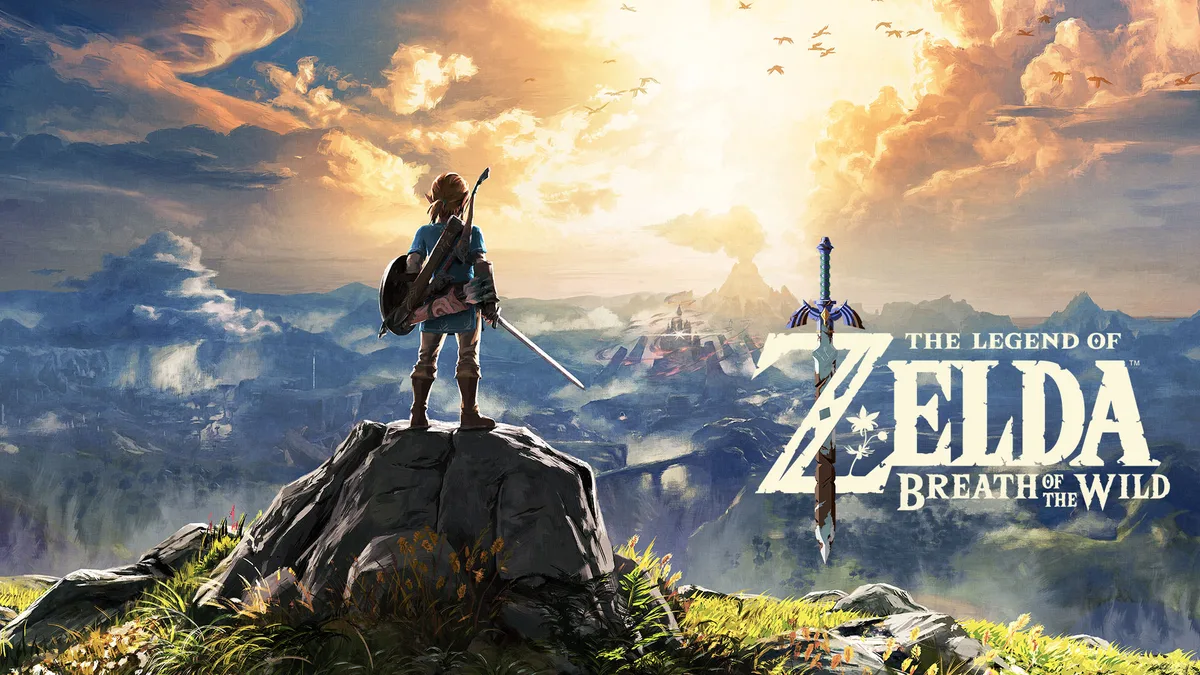
The radical overhaul introduced by Breath of the Wild shattered every previous benchmark for the series. According to Nintendo’s official sales data through the end of September, the Switch 1 version alone has reached 34.28 million copies (over 35.8 million including Wii U), while its direct sequel Tears of the Kingdom stands at 22.9 million units.
That tenfold expansion of the active player base is the primary catalyst behind the 5.2 million copies sold in four days by the Zelda: Ocarina of Time remake on Switch 2. Millions of players whose first contact with Hyrule came through open-air exploration are now jumping into the 1998 classic for the very first time, driving UK physical launch sales 35% higher than Breath of the Wild’s debut.
Further reinforced by its 537,041 physical launch sales in Japan, the remake’s reception proves there is massive room for traditional dungeon structure today. Looking ahead, Yang noted she would love to see a future mainline entry fuse intricate classic dungeons with an open-world framework, whereas Ellis hopes Nintendo eventually greenlights “a modern attempt on a classic Zelda game” without open-world elements at all, fifteen years after Skyward Sword.
My Perspective
It is easy to look at Switch-era numbers and forget just how boxed-in the franchise felt around 2014. Back then, the rigid lock-and-key progression that longtime fans adored was actively intimidating newcomers who felt they needed a walkthrough just to get past a two-hour opening tutorial. Without Breath of the Wild kicking the doors wide open and bringing over 34 million players into the fold, the Switch 2 remake of Ocarina of Time never would have cleared 5.2 million copies in four days. The open-world gamble didn't bury classic Zelda; it built the massive audience that is now celebrating it.

Based on the outskirts of New York City, Chaya 'Chayane' spent five years studying software engineering in Montreal before returning to her home state. A Full-Stack developer and Deep Learning AI architecture researcher, she explores neural networks and algorithmic optimization while engineering data pipelines for Retrocharting and Gamescharting alongside Grimtag. A gamer for over 20 years and an avid collector of Nintendo history and The Legend of Zelda, she explored World of Warcraft's Azeroth before bringing her deep technical background to video game analysis.