16MB of RAM and a 200MHz CPU: How Halo: Combat Evolved Now Runs on an Original Sega Dreamcast
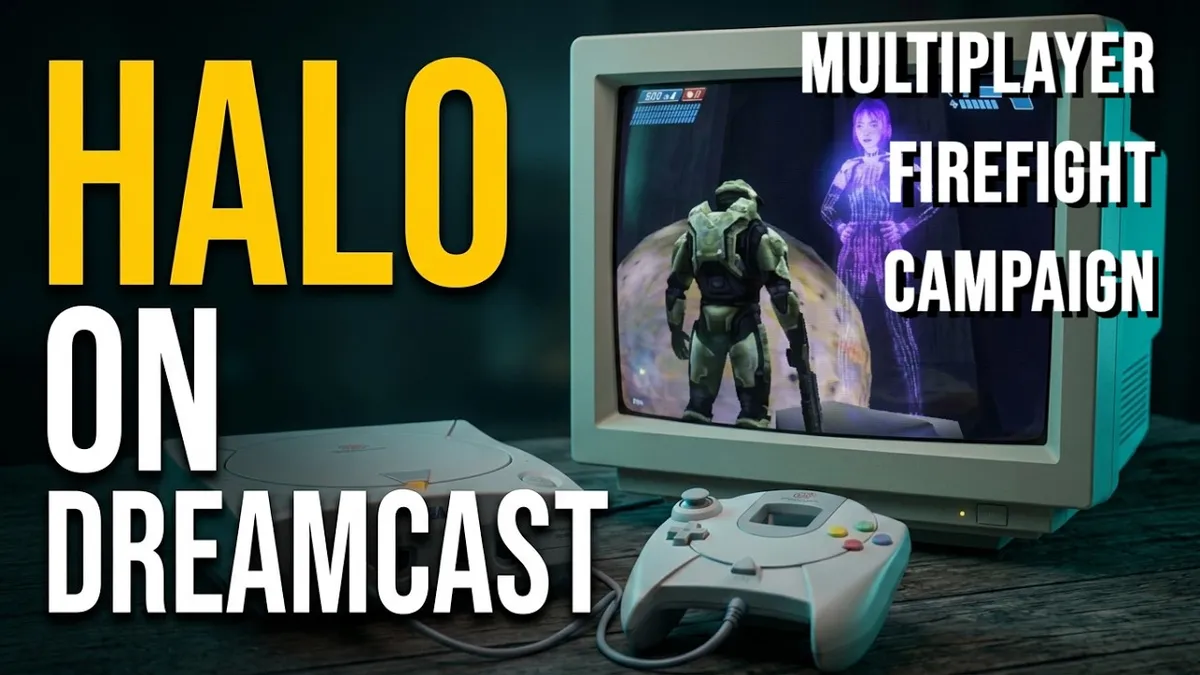
Fitting the flagship launch title of the 2001 original Xbox inside the hardware constraints of a 1998 Sega Dreamcast was long considered a pipe dream by the retro homebrew community. Yet independent developer JiltedValkyrie has pulled off that exact feat, showcasing nearly half an hour of Halo: Dreamcast Evolved running directly on stock Sega hardware.
2001 Xbox vs. 1998 Sega Dreamcast: The 16MB RAM Bottleneck
To understand why this demake port seemed out of reach for decades, one only needs to compare the two consoles side by side. Built by Bungie to showcase Microsoft's November 2001 powerhouse, Halo: Combat Evolved relied on a PC-like architecture featuring 64MB of unified DDR RAM and a programmable Nvidia GPU. By contrast, Sega's final home console operates with just 16MB of main system RAM paired with a 200MHz RISC processor.
| Component | Original Xbox (2001) | Sega Dreamcast (1998) |
|---|---|---|
| Processor (CPU) | Custom Intel Pentium III at 733MHz | Hitachi SH-4 RISC at 200MHz |
| Memory (RAM) | 64MB unified DDR SDRAM | 16MB main RAM (+ 8MB VRAM and 2MB audio RAM) |
| Graphics Chip (GPU) | Nvidia NV2A at 233MHz (programmable vertex and pixel shaders) | NEC PowerVR2 CLX2 at 100MHz (fixed-function, no shaders) |
| Standard Controller | Dual-analog Duke / Controller S gamepad | Single-analog Dreamcast controller |
While modern web engineering recently allowed Halo: Combat Evolved to run inside web browsers with 128 players, JiltedValkyrie's project goes in the opposite direction: stripping down level geometry, Covenant AI routines, and vehicle physics so the game never exceeds the Dreamcast's strict 16MB memory ceiling.
From 10 to 60 FPS: Three Performance Profiles, 320x240 Mode, and Corpse Culling
Across the 28-minute gameplay demonstration uploaded to the official Jilted Canon YouTube channel, the developer plays through the opening campaign mission The Pillar of Autumn, steps onto the Halo ring, tests split-screen and multiplayer matches, and shows off a custom Firefight survival mode. During heavy firefights against Covenant squads, the frame rate hovers between 10 and 30 FPS, while tighter indoor corridors climb all the way to 60 FPS.
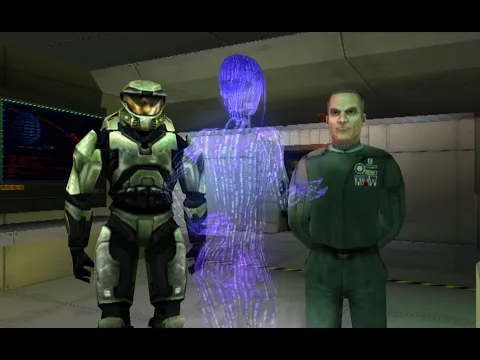
To keep the game running on the 200MHz Hitachi SH-4 CPU without crashing from out-of-memory errors, JiltedValkyrie implemented several aggressive optimizations:
- Three selectable performance presets in the settings menu: Balanced, Performance, and Fidelity.
- A low-resolution 320×240 display option that significantly reduces fill-rate pressure on the 100MHz NEC PowerVR2 CLX2 GPU and its 8MB of video memory.
- Rapid corpse despawning for fallen Marines and Covenant enemies to immediately reclaim precious RAM and CPU cycles during combat.
- A built-in community map and scenario editor accessible directly from the project menu.
Dreamcast Keyboard, Mouse, and Dual-Stick Support
Hardware memory is not the only hurdle on Sega's 1998 machine. Because the standard Dreamcast pad only features a single analog thumbstick on the left, playing a twin-stick shooter designed for the original Xbox controller requires creative input solutions. Halo: Dreamcast Evolved natively supports the official Dreamcast keyboard and mouse, alongside dual-analog controller setups and full button remapping.
This breakthrough arrives right in the middle of a banner month for original Xbox preservation, following closely behind Midtown Madness 3 getting a native 120 FPS PC port through static recompilation. For now, JiltedValkyrie's port remains an experimental, non-commercial work in progress, with no public CDI/GDI disc image or final release date announced yet.
My Field Notes
Watching Master Chief sprint down the metallic corridors of The Pillar of Autumn on a Sega Dreamcast feels like a surreal full-circle moment in console history. Before Microsoft launched the original Xbox in 2001 with Halo as its crown jewel, Redmond worked closely with Sega to supply a custom Windows CE operating system for the Dreamcast. Seeing the very game that defined Microsoft's hardware debut running twenty-five years later on Sega's final console is pure retro poetry.
I already know Arthur "Heimdall" is going to stare in disbelief at the raw hardware math here: cutting the available system memory to a quarter of the Xbox spec and dropping from a 733MHz Pentium III down to a 200MHz SH-4 without the engine collapsing is a masterclass in low-level optimization. Even when the action dips to 20 FPS at 320×240 with a Dreamcast keyboard and mouse plugged into the front ports, this kind of fearless engineering is the exact reason I love covering the homebrew scene.

Originally from Lyon, France, gaming journalist Bastien "Orion" relocated nearly a decade ago to Quebec City's Saint-Roch district, right in the heart of eastern Canada's development studio hub. Before crossing the Atlantic, he honed his versatile reporting style across classic French gaming web portals and specialist television outlets in the 2000s and 2010s, notably with JeuxVideo.fr and JeuxNews. Equally passionate about AAA blockbusters, North American studio culture, retro preservation, and community modding projects, he anchors Pro-Gamer's transatlantic desk and real-time coverage of US and Japanese industry announcements.