An Immortal Alley Soldier, Darkened Blood, and Softer Combat: Did the Zelda: Ocarina of Time Switch 2 Remake Sand Off Too Much of 1998's Edge?
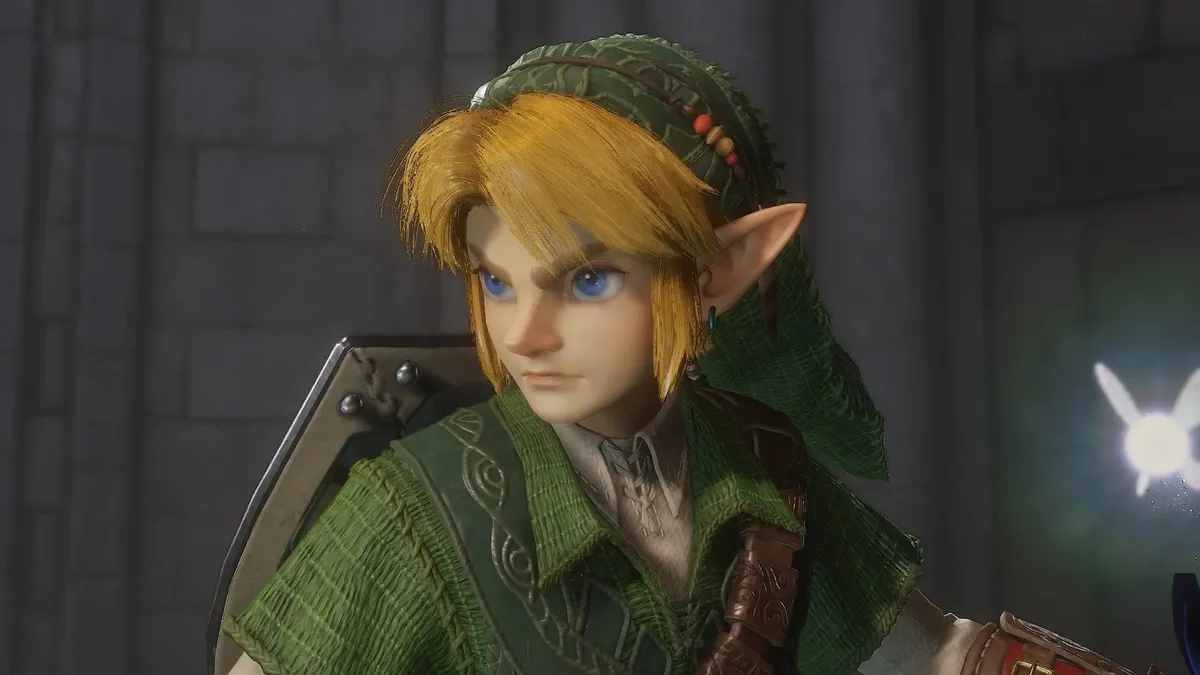
Following its record-shattering physical and digital launch, the Nintendo Switch 2 remake of The Legend of Zelda: Ocarina of Time is now undergoing intense scrutiny from longtime veterans of the 1998 Nintendo 64 original. Across r/zelda threads and side-by-side video breakdowns shared by players, a passionate debate has taken hold: beyond its sweeping visual overhaul, did this modern reimagining sand off too much of the mechanical friction and dark atmosphere that defined the 1998 masterpiece?
Forgiving Falls, Weakened Stalfos, and Hookshot Reticles: How the Switch 2 Remake Softens the Friction
While quality-of-life upgrades such as free camera control and streamlined item shortcuts built upon the 2011 3DS version have been widely welcomed, detailed community comparisons show that the underlying challenge has been noticeably toned down. In a 16-minute video breakdown compiled by player KloverKlub (@KloverKlub14) on X, alongside community post-mortems describing the changes as a "death by a thousand cuts" (as noted by player @NessMudkip), fans have cataloged dozens of subtle adjustments that make the journey far more forgiving.
Inside dungeons, plummeting off certain high ledges no longer sends Link crashing down to a lower floor as it did on the Nintendo 64, which originally forced players to fight their way back up; instead, Link simply respawns right at the edge where he slipped. Several formerly timed challenges have had their countdown timers removed entirely, key room objects are far less concealed, and environmental secrets are now explicitly signposted with dedicated visual reticles showing exactly where to aim the Hookshot.
On the combat front, the rebalancing cuts both ways but leans heavily toward accessibility. Stalfos knights now inflict half the damage they dealt in 1998 and have lost the ability to revive themselves if the player fails to defeat their entire squad quickly enough. At the end of the Forest Temple, Phantom Ganon fires noticeably slower energy spheres during his signature tennis volley. Conversely, heart drops from defeated foes are rarer (with the classic three-heart cluster drops absent), ReDeads are more aggressive and capable of running after Link, and King Dodongo now summons baby Dodongos while preventing players from safely standing on the side ledges as he rolls past. For veterans craving an uncompromising test of skill, these concessions make the recent discovery that dataminers uncovered Master Quest inside Zelda: Ocarina of Time on Switch 2 all the more crucial.
| Game Element | Original Nintendo 64 Version (1998) | Nintendo Switch 2 Remake (2026) |
|---|---|---|
| Castle Town Back Alley Soldier | Succumbs to his wounds after speaking ("He's not moving anymore...") | Survives indefinitely and repeats directions to the Temple of Time |
| Dungeon Ledge Falls | Link falls down to the lower dungeon floor | Instant respawn on the upper ledge across several platforming sections |
| Stalfos Combat Behavior | Full sword damage and squad-based self-revival mechanic | Damage cut in half and self-revival mechanic removed |
| Hookshot Targets & Timers | Unmarked environmental observation and strict countdown challenges | Dedicated visual targeting reticles and removal of several timers |
| Blood & Gore (Well, Shadow Temple, Finale) | Bright crimson puddles under torture racks and Ganondorf coughing blood (v1.0/1.1) | Faded dark-brown stains and complete removal of endgame blood cough |
The Castle Town Back Alley Soldier and Shadow Temple Bloodstains: Sanitized Darkness
Where the debate turns truly emotional is over the remake's handling of mortality and dread. The centerpiece of the controversy is the Castle Town back alley soldier. In both the 1998 Nintendo 64 release and the 2011 3DS version, returning to Castle Town as young Link right after Princess Zelda and Impa flee on horseback from Ganondorf allowed players to discover a mortally wounded royal guard slumped against a wall in the back alleys. After using his final breath to warn Link about Ganondorf's betrayal and direct him to the Temple of Time, the soldier passed away on screen, followed by Navi's haunting observation: "He's not moving anymore..."
In the Switch 2 remake, as highlighted by players including Steve (@StupidhanyEne), the soldier no longer dies. That final text box is gone, and Link can speak to the injured guard as many times as he wants, prompting the NPC to endlessly repeat his reminder to head to the Temple of Time. What was once an optional, gut-wrenching tonal shift that sold the human cost of Ganondorf's coup has been turned into a permanent waypoint signpost.
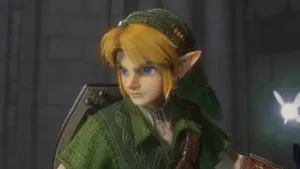
This softening of the game's darker edges extends to its visual violence, likely to preserve an ESRB E10+ rating alongside far more detailed 3D character models. While the overhauled character models and cutscenes,for which Bandai Namco Studios recently revealed its development role alongside Nintendo EPD,bring cinematic flair, the climactic battle no longer features Ganondorf coughing up blood (which was bright red in N64 cartridges v1.0 and v1.1 before turning green in v1.2). Down in the Bottom of the Well and the Shadow Temple, the bright red puddles beneath torture racks have been replaced by dark, faded brownish smears, as documented by @MightyGazelle1: a realistic middle ground resembling dried blood or rust that easily clears family-friendly rating boards without triggering the T for Teen label that Twilight Princess received in 2006.
An Unchanged Hyrule Field: Contemplative Scale or a 1998 Tech Demo Relic?
Ironically, while one camp argues that the Switch 2 remake alters too many granular details, another contends that Nintendo played it far too safe with the overworld layout of Hyrule Field. Writing on X, Moon Studios CEO Thomas Mahler (Ori, No Rest for the Wicked) criticized the decision to preserve the central hub's 1998 geometry unchanged, arguing that Hyrule Field was originally a technical showcase meant to prove the Nintendo 64 could render large 3D triangles against the PlayStation, and that copying its sparse 1:1 layout today is a missed design opportunity.
That critique immediately drew pushback from fellow developers such as Mark Diaz of New Blood Interactive, who argued that keeping Hyrule Field largely empty lets the world breathe, fosters a genuine sense of scale, and allows players to exist alone with their thoughts between dungeons rather than being constantly bombarded with open-world checklist clutter.
As our retro specialist Bastien "Orion" notes, this tension captures the core paradox of modernizing a 1990s landmark: "Back in November 1998, Ocarina of Time didn't hold your hand because the grammar of 3D adventure games was still being written. Falling all the way to the basement of a dungeon or stumbling upon a dying guard in a deserted alley gave weight to every step. By preserving the 1998 geometry while padding the sharp corners and mortality, Nintendo has built a breathtaking interactive museum behind safety glass."
My Take
I completely understand why Nintendo wanted to prevent a new generation of players from bouncing off an obtuse puzzle or an awkward platforming jump, and I genuinely enjoy the free camera and the livelier behavior of King Dodongo and the ReDeads. Still, I share that frustration over what happened to the soldier in the Castle Town back alley. Refusing to let that nameless guard die after Ganondorf's attack robs the first act of its most grounded, human tragedy. In 1998, that sudden silence in the alley told you in three seconds that Link's childhood was over and that Hyrule had become a dangerous, unforgiving place. Turning a quiet sacrifice into an immortal NPC who endlessly repeats your next objective sums up modern game design's fear of letting players feel momentarily lost or unsettled. More than anything, it leaves me wondering: if Nintendo felt the need to soften Ocarina of Time this much, what will happen to the existential dread, the oppressive three-day clock, and the heartbreak of Clock Town if they ever remake Majora's Mask?
Zelda Ocarina of Time
Explore official trailers, technical specs and all latest coverage for Zelda Ocarina of Time.

SEO consultant for over 20 years and digital entrepreneur, Charles "Grimtag" is the founder of Pro-Gamer.gg, Retrocharting.com, and Gamescharting.com. A competitive gamer, streamer, and retro game collector, he has worked in the video game industry for over 15 years, notably as a consultant for leading game price comparison platforms. Passionate about real-time performance data and gaming technology, he analyzes competitive esports, gaming hardware benchmarks, and creator workflows on Pro-Gamer.gg with an authentic player perspective.