Mario and Yoshi Portraits Removed From Ocarina of Time on Switch 2: Why Nintendo Purged Hyrule Castle Courtyard (With One Exception)
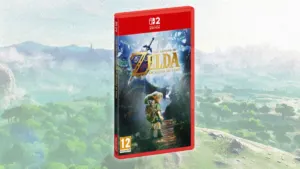
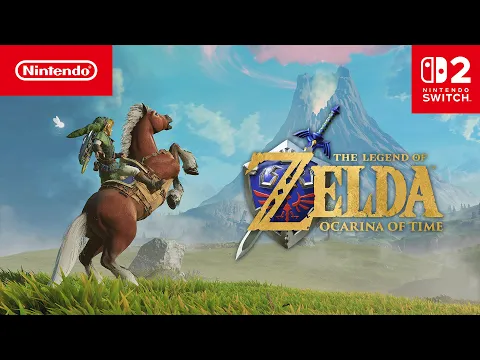
As players step back into Hyrule for the global launch of The Legend of Zelda: Ocarina of Time on Nintendo Switch 2 this Thursday, November 5, 2026, veterans of the 1998 Nintendo 64 classic have wasted no time checking one of gaming's most famous Easter eggs. Upon sneaking into the Hyrule Castle Courtyard to meet young Princess Zelda and peering through the right-hand window in first-person view, a major change is immediately apparent: the iconic wall portraits of Mario, Yoshi, Princess Peach, Bowser, and Luigi have been completely removed.
While players download the 343 MB Update 1.1.1 patch activating Zelda Notes on Switch 2, longtime series producer Eiji Aonuma and co-producer Hidemaro Fujibayashi spoke in New York alongside Nintendo's official Ask the Developer Vol. 24 interview series. Together, the two leaders explained why Nintendo EPD deliberately scrubbed cross-franchise cameos from the remake, while sparing a single piece of Bowser jewelry worn at Lon Lon Ranch.
"Why Is Yoshi There?": Ending Immersion-Breaking Cameos in Princess Zelda's Courtyard
In the original 1998 Nintendo 64 release, looking through the right window of Zelda's courtyard revealed framed portraits of Mushroom Kingdom characters, which were later swapped out for a New Super Mario Bros. level backdrop in the 2011 Nintendo 3DS remaster. In the ground-up Nintendo Switch 2 remake, the royal stonework no longer features any trace of Mario or Yoshi.
Asked why those classic nods were pulled, Eiji Aonuma explained that the heightened visual fidelity and world-building of the Switch 2 edition called for a stricter standard of immersion than the carefree spirit of the late 1990s:
"Certainly, at the time, when we put those there, I don't think anybody thought it was too big a deal. Maybe there was a more carefree or comfortable approach to that sort of thing. But looking at it now, like if a player is coming through that area, and given the overall way that we're creating this world and giving the player that form of expression, if they look up and they think, 'Why is Yoshi there?' We don't want that moment to interrupt their experience of the world in that way. So we're feeling a little bit differently about it this time."
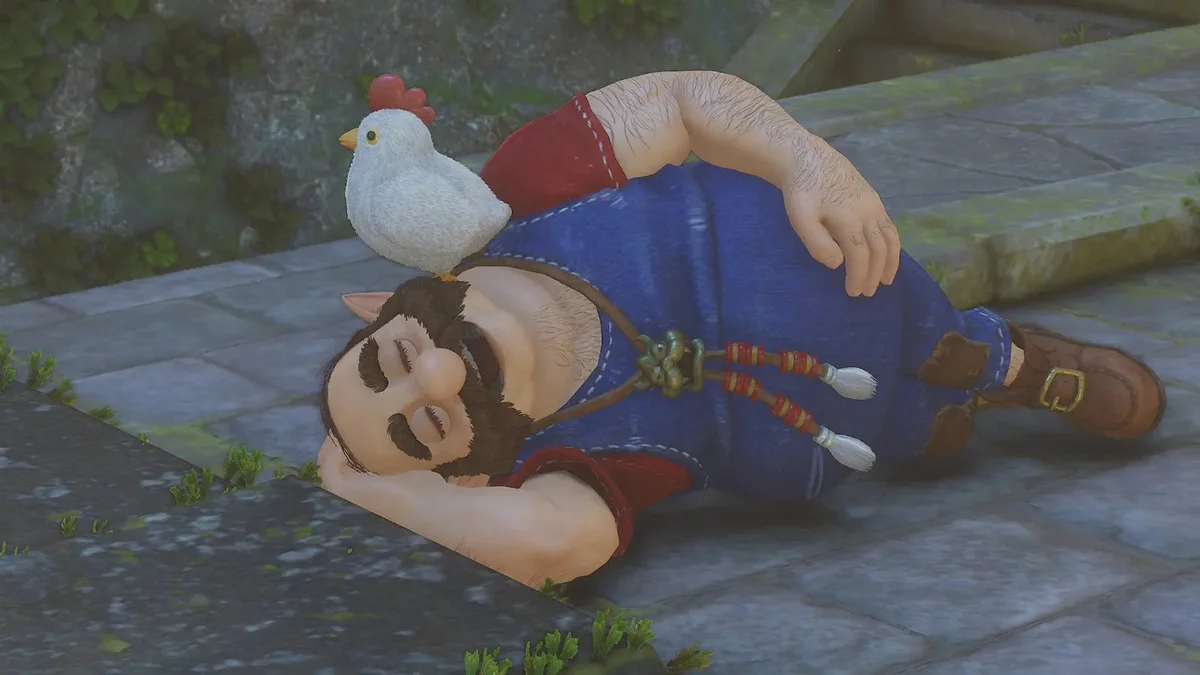
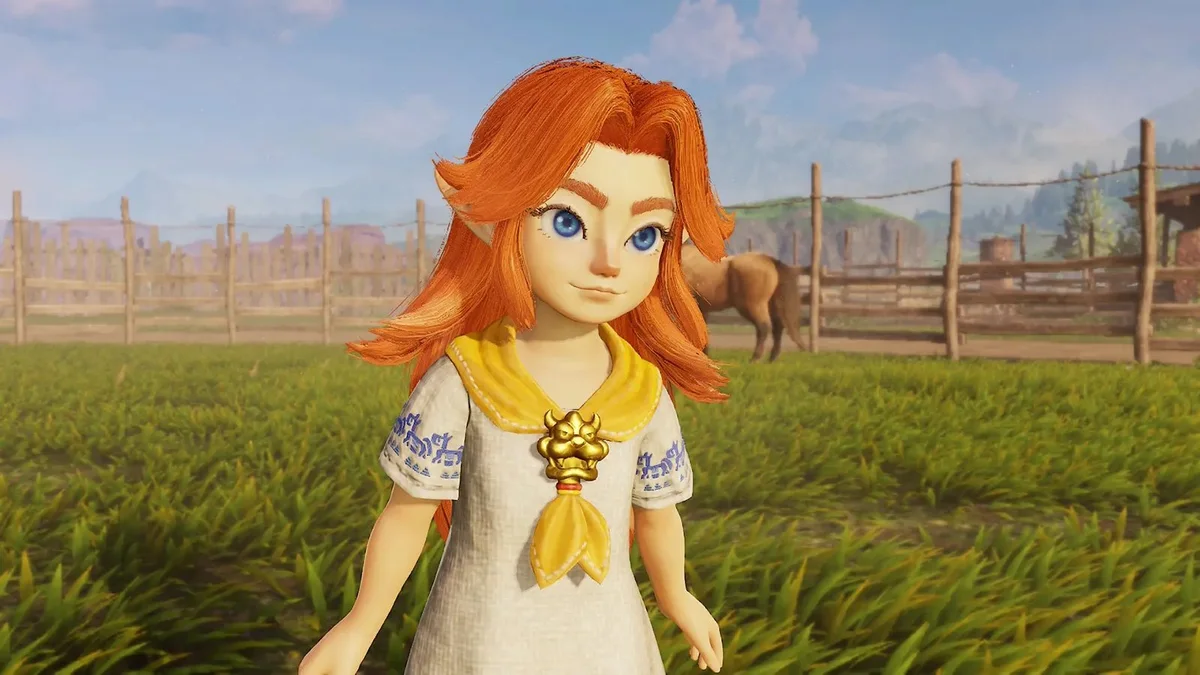
One unmistakable Super Mario cameo did survive the purge: the golden Bowser neck ornament worn by sleepy Lon Lon Ranch owner Talon and his daughter Malon. As Aonuma confirmed, the Bowser emblem remains rendered in crisp high definition because it belongs directly to the characters' wardrobe: "However, you will remember that there is one design element on Talon with Bowser on it, and that's part of the original design of the character. So we didn't change that. That stays as is."
Skyward Sword Posters Cut and No Forced Nods to the Official Zelda Timeline
That same philosophy sealed the fate of another set of Easter eggs introduced in June 2011's The Legend of Zelda: Ocarina of Time 3D. Ahead of the Wii launch of Skyward Sword later that year, the 3DS designers had tucked promotional posters and concept art of Link's skyward adventure behind crates inside the Castle Town Bazaar, inside the Lon Lon Ranch bedroom, and along the walls of the Gerudo Fortress. On Nintendo Switch 2, all of that artwork has been removed.
"I do remember at the time the designers on the 3DS version were really interested in placing Easter Eggs like that throughout the game, and the timing of the release of Skyward Sword was such that it was perfect to go ahead and include that. So I said, 'Okay, sure,'" Eiji Aonuma recalled. "But like earlier when we were talking about in the courtyard sequence with the Yoshi portrait, you don't want to interrupt the player's experience by seeing something that's unrelated to what they're currently doing in the game. So for that reason, we decided not to go that way."
Sitting right beside him, Hidemaro Fujibayashi (who directed Skyward Sword in 2011 before helming Breath of the Wild and Tears of the Kingdom) laughed off the removal of his own game's posters: "No, it's really as Mr. Aonuma said. There was an underlying concept in what we were going for, so no hard feelings there."
Similarly, Aonuma revealed that younger developers within Nintendo EPD occasionally asked if they could weave in explicit nods to the broader Zelda timeline or future entries like The Wind Waker. Each time, the producer steered them back to the core adventure: "I actually, at the time, would say, 'No, let's focus on this game. Let's make this the best version of Ocarina of Time that we can.' So, the timeline was in the back of our mind, but we didn't consider taking an approach to this game where we actually, explicitly included references like that." That dedication to pure immersion echoes the tactile care surrounding the launch, including the real 12-hole Ocarina of Time co-developed with Otsuka that plays Link's melodies through the Switch 2 microphone.
A Brand-New Fifth Bottle, Rewritten Dialogue, and Expanded Ganondorf & Ending Cutscenes
Beyond cleaning up fourth-wall-breaking cameos, the two producers shared several concrete gameplay and narrative upgrades built into the Nintendo Switch 2 remake:
- A fifth Empty Bottle added to Link's inventory: While the 1998 original capped players at four bottles for storing fairies, potions, and blue fire, the Switch 2 remake expands the total to five bottles and hands out the very first bottle significantly earlier in the quest. Eiji Aonuma admitted he had wanted to make this tweak for 28 years: "Even at the time of development of the original title, I thought, 'Oh, you know, I could do with even just one more bottle.' [...] When the new younger staff were familiarizing themselves with the old game and thinking about what they might want to change in this version, one thing that I suggested was that the player could get their first bottle earlier, and this would actually be really useful in terms of reinforcing for the player how helpful bottles were and motivating them on their quest to find the next bottle."
- Full script rewrite tailored to modern HD visuals: While keeping the story's meaning intact, Hidemaro Fujibayashi confirmed that almost every line of dialogue was rewritten to modernize 28-year-old phrasing and trim visual descriptions that were only needed on low-resolution N64 hardware. In 1998, characters had to spell out details like "that blue ocarina that is the size that you could fit on a hand"; on Switch 2, where players can clearly see the instrument in Link's palm, removing redundant exposition noticeably tightens the pacing.
- Expanded Temple of Time transition and emotional ending cutscene: Aonuma noted that the pivotal cutscene where Link transitions from child to adult was originally "very low on explanation" regarding why Ganondorf was present and how he reacted, leaving players wondering about his exact connection to the process. The sequence is now far more involved to fuel the player's motivation to confront him in the final battle. Meanwhile, Hidemaro Fujibayashi revealed that the team heavily discussed and reworked the final ending cutscene to evoke the exact emotional payoff and dramatic tempo that technical limitations held back on the Nintendo 64.
My Perspective
As much as a nostalgic part of me will miss peeking through Princess Zelda's courtyard window to spot Mario and Yoshi like I did back in 1998, Eiji Aonuma's reasoning makes complete sense controller in hand. With the gorgeous, handcrafted lighting and emotional weight that Nintendo EPD poured into this Switch 2 remake, stumbling across a random Yoshi portrait or a 2011 Skyward Sword promo poster right in the middle of a tense royal infiltration would have shattered the spell. Keeping the golden Bowser brooch on Malon and Talon is the ideal compromise: it honors the original character art without breaking the fourth wall. Frankly, I will gladly trade a couple of wall paintings for a fifth Empty Bottle in my pouch and an expanded Temple of Time awakening scene that finally gives Ganondorf the menacing presence he deserves.
Based on the outskirts of New York City, Chaya 'Chayane' spent five years studying software engineering in Montreal before returning to her home state. A Full-Stack developer and Deep Learning AI architecture researcher, she explores neural networks and algorithmic optimization while engineering data pipelines for Retrocharting and Gamescharting alongside Grimtag. A gamer for over 20 years and an avid collector of Nintendo history and The Legend of Zelda, she explored World of Warcraft's Azeroth before bringing her deep technical background to video game analysis.