5,500 Yen at Nintendo Tokyo: The Real 12-Hole Ocarina of Time Co-Developed With Otsuka Plays Link's Songs via the Mic

As the full remake of The Legend of Zelda: Ocarina of Time officially launches this November 5, 2026 on Nintendo Switch 2, Nintendo is bringing the 1998 classic's signature instrument into the real world. Official Nintendo retail locations across Japan have begun selling a traditional, fully playable Ocarina of Time musical instrument designed to trigger in-game songs through the console's built-in microphone.
Priced at 5,500 yen including tax (roughly $35 USD), the official "Ocarina of Time <Musical Instrument>" is available starting today at the four physical flagship stores in Nintendo TOKYO, Nintendo OSAKA, Nintendo KYOTO, and Nintendo FUKUOKA. Its product listing is also live on the Japanese My Nintendo Store ahead of a wider domestic rollout starting November 14, 2026, though Nintendo of America has yet to confirm a Western release window.
A True 12-Hole Instrument Co-Developed With Otsuka Musical Instrument
Far from a hollow plastic prop meant solely for a display shelf, Nintendo's replica was co-developed with Otsuka Musical Instrument (Otsuka Gakki Seisakusho). The historic Japanese instrument maker is well known among musicians for its NIGHT Ocarina lineup as well as the official My Neighbor Totoro ocarina sold at the Studio Ghibli Museum shop.
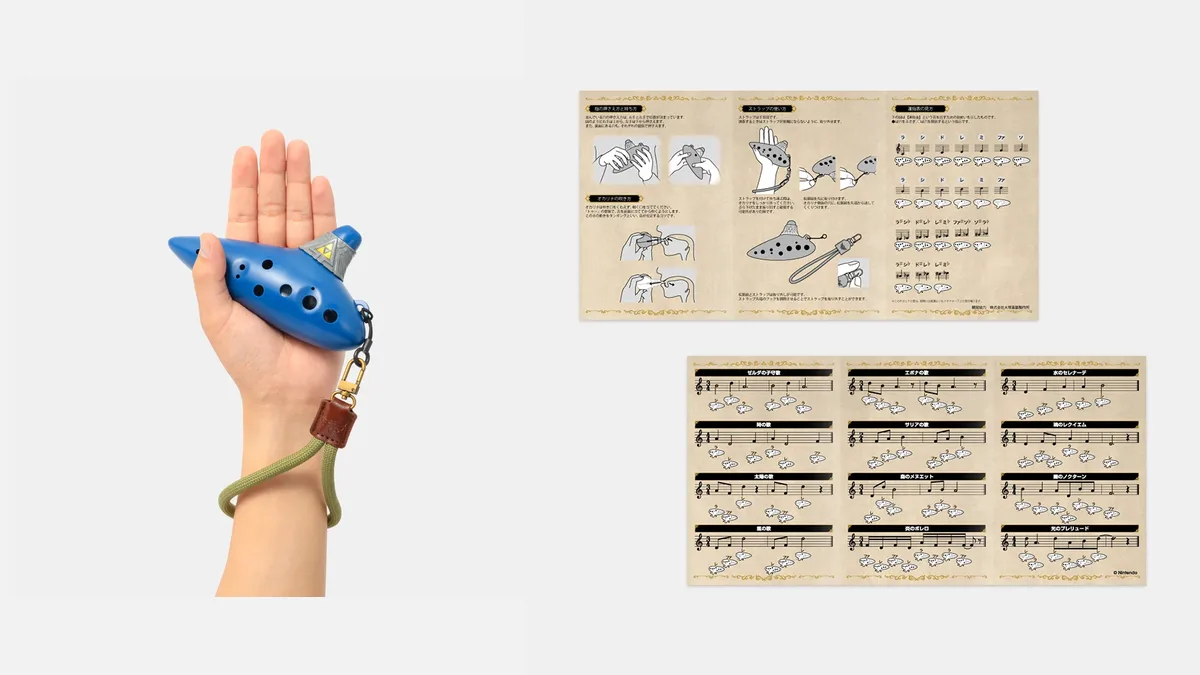
Molded in royal blue with a silver-colored mouthpiece ring bearing the golden Triforce emblem, the replica functions as a genuine 12-hole ocarina (featuring two chromatic sub-holes on the front and two thumb holes on the back). According to the official acoustic specifications, the notes played on the instrument sound one octave higher than the written sheet music.
Packaged inside a black-and-gold window box adorned with illustrations of Sheik's harp and the ocarina, the set includes a removable forest-green braided wrist strap inspired by Link's Kokiri tunic. Its antique brass-colored clasp connects to a brown leather tab embossed with the Royal Crest of Hyrule so players can carry the instrument safely.
To help newcomers play their first notes, the box comes with a parchment-style instructional foldout explaining proper hand placement and breath control through tonguing (gently articulating a "Tū" sound with the tip of the tongue behind the upper teeth to stabilize pitch). The reverse side prints full musical staves and fingering charts for all 12 iconic ocarina songs, which Nintendo also published for free alongside audio samples on a dedicated sheet music portal launched today.
How the Playable Ocarina Syncs With the Nintendo Switch 2 Microphone
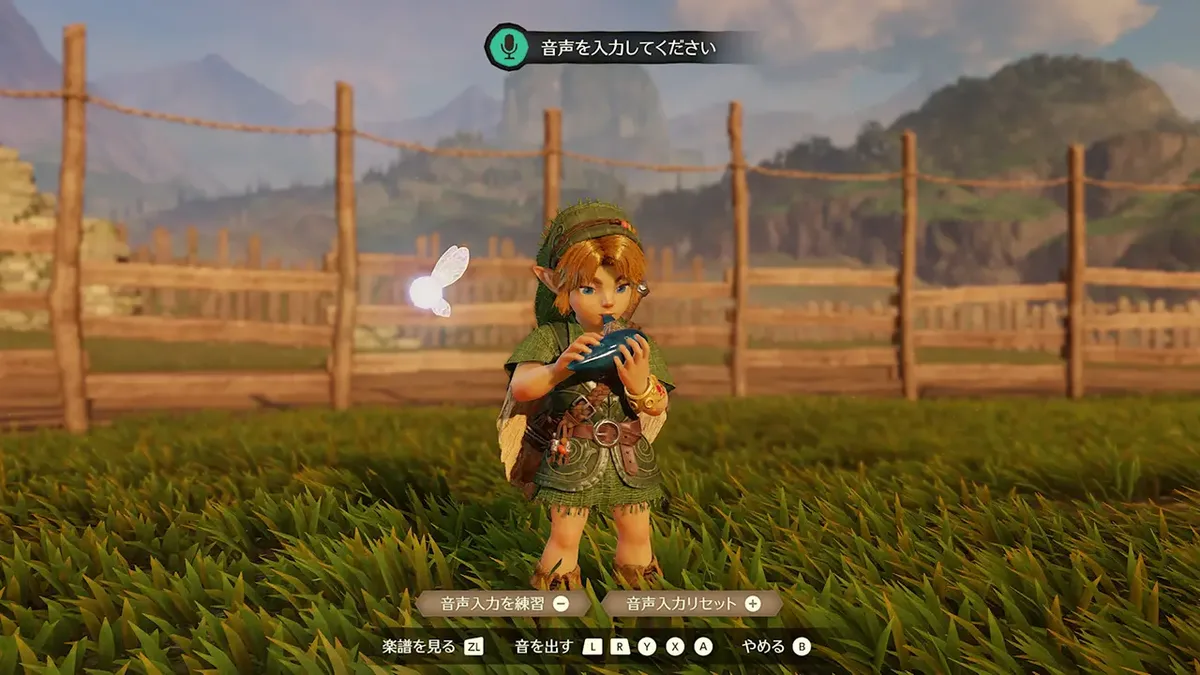
The physical instrument comes into its own when paired with the console alongside the 343 MB Version 1.1.1 day-one update and Zelda Notes companion service. As part of the new gameplay features built into the Switch 2 remake, voice and instrument recognition lets players bypass standard button inputs by humming or playing real-world notes.
According to Nintendo's official Switch 2 support documentation, players can open the in-game options menu (via the + button) and set "Ocarina Voice Input" to either the "Instrument" or "Humming" profile. When you play Zelda's Lullaby, the Song of Storms, or the Bolero of Fire toward the console, Link performs the melody in sync on screen and activates its effect, provided you have already learned that song in the story.
For reliable note detection in TV mode or Tabletop mode, Nintendo recommends sitting within 2.5 meters (about 8 feet) of the Nintendo Switch 2 with an unobstructed line of sight to the console. Pressing the - button on the ocarina performance screen also opens a dedicated Practice Mode, displaying the sheet music on screen so you can test your pitch and note duration in real time.
Headset users should keep one hardware caveat in mind before picking up the instrument. Nintendo notes that external microphones or headsets plugged into the console or the Nintendo Switch 2 Pro Controller may fail to register ocarina notes properly, requiring players to select "System Microphone" under the HOME Menu audio settings.
Two Ways to Play in Japan Alongside HORI's Electric Ocarina
Japanese fans now have two distinct official options for playing Link's melodies off the controller this November. Alongside Nintendo and Otsuka's traditional 5,500-yen acoustic instrument, peripheral maker HORI is releasing its licensed Electric Ocarina of Time priced at 7,980 yen including tax (around $52 USD).
Weighing 145 grams (excluding three AA batteries) and bundled with a display stand, HORI's electronic unit replaces traditional open finger holes with metallic push-buttons that emit pre-tuned notes toward the Switch 2 microphone. While HORI's model offers an easier shortcut for players worried about breath control, Nintendo's 12-hole collaboration with Otsuka delivers a genuine wind instrument that plays just as well with the console turned off.
My Perspective
Blowing the actual notes of Saria's Song or Zelda's Lullaby in my living room and watching Link play along on screen is the exact childhood daydream I had back on the Nintendo 64, never thinking a console would actually pull it off this cleanly. Instead of slapping a Zelda logo on a cheap hollow trinket for the series' 40th anniversary, partnering with a respected Japanese ocarina maker like Otsuka at a $35 price point makes this feel like a real musical keepsake, and I am crossing my fingers that Nintendo brings it to Western My Nintendo Stores right after the November 14 rollout.

Based on the outskirts of New York City, Chaya 'Chayane' spent five years studying software engineering in Montreal before returning to her home state. A Full-Stack developer and Deep Learning AI architecture researcher, she explores neural networks and algorithmic optimization while engineering data pipelines for Retrocharting and Gamescharting alongside Grimtag. A gamer for over 20 years and an avid collector of Nintendo history and The Legend of Zelda, she explored World of Warcraft's Azeroth before bringing her deep technical background to video game analysis.