28 Years Stuck in a Chair: How Project Animus Rebuilds Xenogears in 3D and Finally Makes Disc 2 Playable
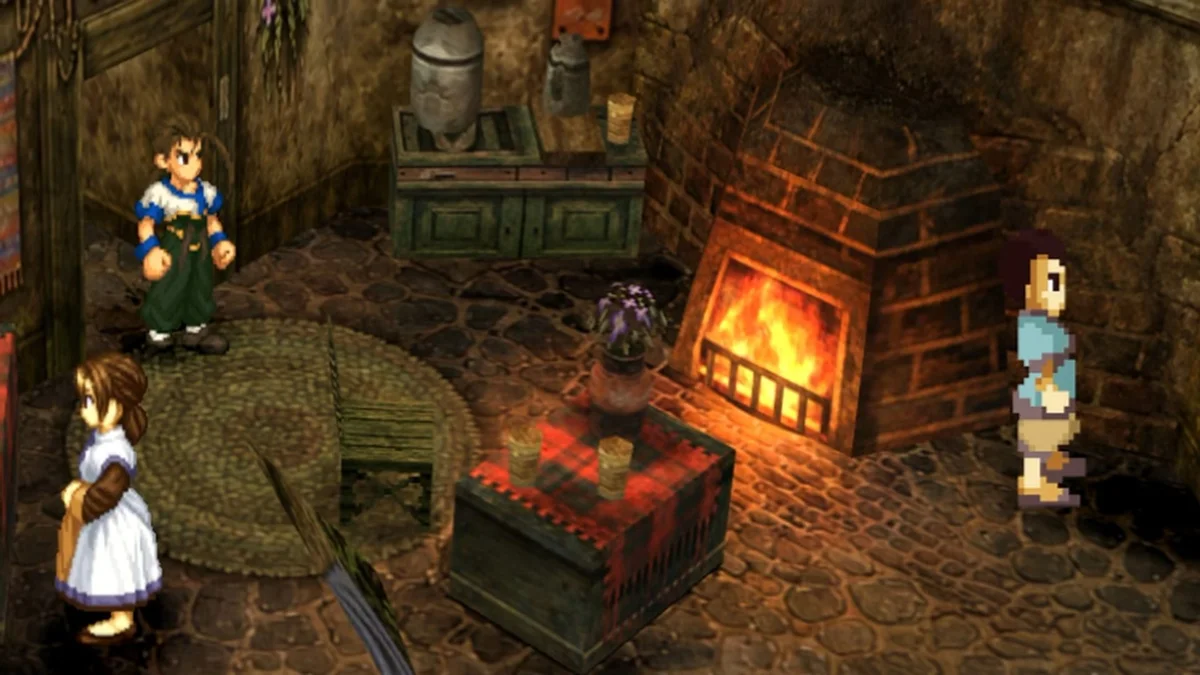
When Square Electronic Arts released Xenogears in North America in October 1998 for $49.99 on the original PlayStation, players quickly realized they were holding one of the most ambitious sci-fi RPGs ever crafted. Directed by Tetsuya Takahashi and written alongside Soraya Saga with a soaring score by Yasunori Mitsuda, it stood shoulder to shoulder with Chrono Trigger and Final Fantasy VII. Yet anyone who reached the second CD remembers hitting one of gaming history's most infamous brick walls: an unfinished Disc 2 where sprawling dungeons and world exploration were abruptly replaced by characters sitting in a chair summarizing the plot.
Twenty-eight years later, while Square Enix continues to leave the 1998 classic untouched on modern platforms, an independent developer has stepped up to finish what Squaresoft started. Titled Project Animus (a direct nod to the genetic human vessels tied to Solaris's Gazel Ministry and the Anima Relics in the game's lore), this top-to-bottom rebuild aims not only to reconstruct the entire RPG in 3D at 60 FPS, but to finally turn the narrated chapters of Disc 2 into a fully playable experience.
Getting Up From the Infamous Disc 2 Chair After 28 Years
The story behind Xenogears' second half remains legendary in PlayStation history. Faced with Squaresoft's strict two-year development deadline and a depleted budget, Tetsuya Takahashi was given a stark choice: end the game right after Solaris escapes at the close of Disc 1, or find a way to wrap up the narrative with the time remaining. Refusing to leave players on a cliffhanger that might never get a sequel, Takahashi condensed dozens of hours of planned exploration into narrative monologues. Across much of Disc 2, protagonists Fei Fong Wong and Elly Van Houten sit on a wooden chair in front of a swinging pendulum against a black void, recounting major world-shaking events through scrolling text boxes interspersed with occasional boss fights and brief dungeon segments.
That exact creative compromise is what inspired Harry, a Puerto Rican developer who has lived in Niigata, Japan for the past eight years and publishes his work as xHannyah on his official YouTube channel, to create Project Animus. Having replayed Xenogears every single year since he was nine years old, Harry explained that his ultimate motivation is reaching that notorious chair on Disc 2 and finally letting players stand up and play through the events being described.
While Disc 2 will naturally take the longest to build, the roadmap includes expanded playable areas, new optional bosses, deeper late-game content, and even an alternate ending. Crucially, the project follows one strict golden rule: nothing gets taken away. When starting a new game in Project Animus, purists and newcomers alike can mix and match every layer of the experience:
- Story Selection: Play the untouched 1998 narrative structure or select the Extended version that transforms Disc 2's chair monologues into playable chapters.
- Gameplay Rules: Stick to the original 1998 combat formulas or switch to the reworked battle system.
- Script Options: Choose between the nostalgic 1998 North American localization (famously translated almost single-handedly under intense crunch by Richard Honeywood) or a newly corrected English script checked line by line against the original Japanese text, complete with a dedicated H key to review any dialogue line skipped by accident.
Lahan Rebuilt Stone by Stone, 682 Areas Overhauled, and 60 FPS Gear Battles
Unlike pre-rendered concept trailers that only imagine what a remake might look like, the two showcase videos released so far run directly in-game. Even more impressively, every side-by-side comparison runs off the exact same save file at the exact same moment, allowing the player to toggle between the original PlayStation resolution at 30 frames per second and the modern 3D remaster on the fly.
The second showcase walks through the opening hours from Lahan Village up the mountain trail to Citan Uzuki's workshop and out onto the world map. Where the 1998 release locked certain interiors and village views to static 2D backgrounds or fixed angles, Project Animus reconstructs Lahan in full 3D by hand: a round tower built stone by stone, roofs laid tile by tile, wooden plank walls with real doors and windows, dynamic shadows, a physical rope bridge on the mountain path, and dramatic fire lighting during the nighttime Gear attack.
Because rebuilding such a massive RPG solo is a monumental undertaking, Harry has already completed a first geometric pass across all 682 arenas and locations in Xenogears to round out low-poly towers, give rock formations natural depth, and smooth out jagged 32-bit edges ahead of his area-by-area handmade pass. Key technical upgrades already running in the build include:
- 60 FPS Exploration and Gear Battles: Both on-foot movement and giant mech (Gear) battles now run at a locked 60 frames per second, doubling the 30 FPS cap of the 1998 PlayStation original.
- 320 Redrawn Fei Sprites: Every single one of Fei's 320 walking animation frames has been redrawn in his original color palette alongside a new character portrait and a revamped combat UI for both human and Gear clashes.
- Full Free Camera Control: Players can freely rotate, tilt, and zoom the camera around 3D environments and the overworld map, then snap it right back to the classic 1998 viewing angle with a single button press.
This kind of dedicated preservation echoes other recent breakthroughs from passionate JRPG fans, such as the unofficial Dragon Quest VIII PC port that merges PS2 visuals with 3DS content. While fans wait to see if Square Enix ever revisits Fei and Weltall officially, Tetsuya Takahashi's spiritual successors remain readily playable on modern hardware.
My Take
Watching a solo developer in Niigata methodically tackle all 682 locations of Xenogears and the 28-year-old scar of Disc 2 is inspiring, yet it also highlights Square Enix's baffling neglect of its own crown jewels. For nearly three decades, the publisher has been happy to sell pricey Weltall action figures and license Fei out for mobile gacha crossovers while refusing to deliver even a basic modern remaster of Tetsuya Takahashi's magnum opus. Even as long-time company veterans recently spoke out on why human creative vision matters so much when looking back at classics like Secret of Mana and Chrono Trigger, letting one of the most daring stories of the 32-bit era gather dust feels like a massive missed opportunity. While a one-person project of this scale naturally leans on modern upscaling and AI-assisted workflows for its initial pass before handmade refinement, Harry's commitment to preserving every original 1998 option alongside an expanded, playable Disc 2 is a masterclass in respecting gaming history. We have not yet had a physical unit on our desk—if the manufacturer's team would like to send over a review sample so we can put it through our full real-world testing protocol, our lab doors are wide open.

PC hardware enthusiast and competitive gamer, Arthur 'Heimdall' splits his time between France and the UK working in enterprise B2B software solutions. A business school graduate passionate about component benchmarking, he has been building, modding, and tuning PCs since childhood, optimizing every thermal degree and millisecond of display latency. An avid gamer across Assassin's Creed and sandbox titles, he forged his alliance with Grimtag and Chaya during late-night World of Warcraft raids before joining Pro-Gamer.