Next 3D Zelda: Separate Map Zones, Hand-Woven Tunic Thread, and Lessons From Ocarina of Time
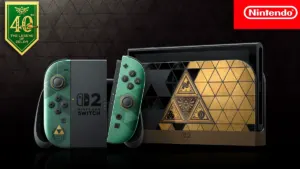
Just hours before the global launch of The Legend of Zelda: Ocarina of Time this Thursday, November 5, 2026 exclusively on Nintendo Switch 2 for $59.99, Kyoto's leadership has revealed the deeper strategic goal behind the ground-up rebuild. In the opening two chapters of Nintendo's official "Ask the Developer Vol. 24" interview series, longtime series producer Eiji Aonuma and co-producer Hidemaro Fujibayashi confirm that the project was designed not only to celebrate the franchise's 40th anniversary, but also to directly inspire and shape future 3D Legend of Zelda games.
Following the revelation of how Nintendo EPD Production Group No. 3 rebuilt Ocarina of Time's code from scratch on Switch 2, the veteran producers explained why putting their modern open-air team through 1998's foundational design rules was essential for the series' future.
Training the Breath of the Wild and Tears of the Kingdom Team to Shape the Next Zelda
Fifteen years after the Nintendo 3DS re-release that largely preserved the original presentation, the decision to build a full-scale remake on Nintendo Switch 2 stemmed from a generational observation by Eiji Aonuma. The producer noted that the vast majority of developers working alongside him at Nintendo EPD today have only experienced building modern open-air entries such as Breath of the Wild (2017) and Tears of the Kingdom (2023).
Even among the remake's core leadership, program director Hiroki Taguchi (who joined the Zelda team right after graduating to work on Breath of the Wild) and art director Aya Shida (character lead on Tears of the Kingdom) admitted they had never played the 1998 Nintendo 64 original prior to joining the project. Only first-time director HokWai Ng had experienced the original cartridge back in high school.
That generational gap prompted Aonuma to use the remake as a hands-on crucible for the studio's next mainline projects: "That led me to wonder, 'Do they truly understand just how significant The Legend of Zelda: Ocarina of Time was to the series as a whole?' [...] I started to wonder how they'd interpret The Legend of Zelda: Ocarina of Time as they go about developing future Legend of Zelda games. By learning the game structure and development style behind the original The Legend of Zelda: Ocarina of Time, and by actually rebuilding it as a full remake, it may trigger new insights that they can carry forward into future development."
Rather than handing down top-down mandates on what to alter, both Eiji Aonuma and Hidemaro Fujibayashi intentionally stepped back so the younger staff could define their own answers. Alongside training the development team, Aonuma emphasized that he wanted players accustomed to the complete, immediate freedom of Breath of the Wild to rediscover the distinct satisfaction of progressing through a carefully paced adventure and story where character growth and narrative revelations unfold step by step.
Rejecting a Seamless Open World: Separate Map Zones and the 1998 N64 Illustrator's Return
Immersed in that 1998 design philosophy, director HokWai Ng and his team made a bold structural choice that runs counter to modern open-world trends. Instead of merging Hyrule into a single continuous map like Breath of the Wild and Tears of the Kingdom, Nintendo EPD deliberately chose not to make the world seamless, preserving separate maps for different areas.
Moving from Kokiri Forest near the Great Deku Tree out into Hyrule Field retains its classic area transitions. Ng explained that these distinct boundaries give players a natural moment to reflect on their journey so far while building anticipation for the region ahead. To capture that classic sense of expedition, the team even brought back the original artist who drew the Nintendo 64 illustrations in 1998 to create a brand-new map for the Switch 2 remake.
Presenting self-contained zones on modern hardware required clever visual engineering across Hyrule Field. Art director Aya Shida noted that making distant mountains too detailed risked tricking open-world players into thinking they could climb past the map boundaries. The art team solved this by packing playable spaces with dense visual information, reducing detail in unreachable background terrain, and deliberately enlarging key landmarks like Hyrule Castle and the Kakariko windmill so players can read the world's playable layout at a glance.
That same focus on environmental clarity guided the team's dungeon overhaul, where Eiji Aonuma and HokWai Ng revamped the infamous Water Temple after 28 years with one-button Iron Boots and lattice walls.
"A Puppet-Show Feel," Hand-Woven Tunic Thread, and Koji Kondo's Rejected Final Boss Theme
When exploring how to use the Nintendo Switch 2 hardware, Hidemaro Fujibayashi pointed out why pure photorealism was never on the table. Because the 1998 Nintendo 64 version exaggerated character proportions and movements to overcome hardware limits, recreating those exact traits with photorealistic graphics today would have looked "a little creepy."
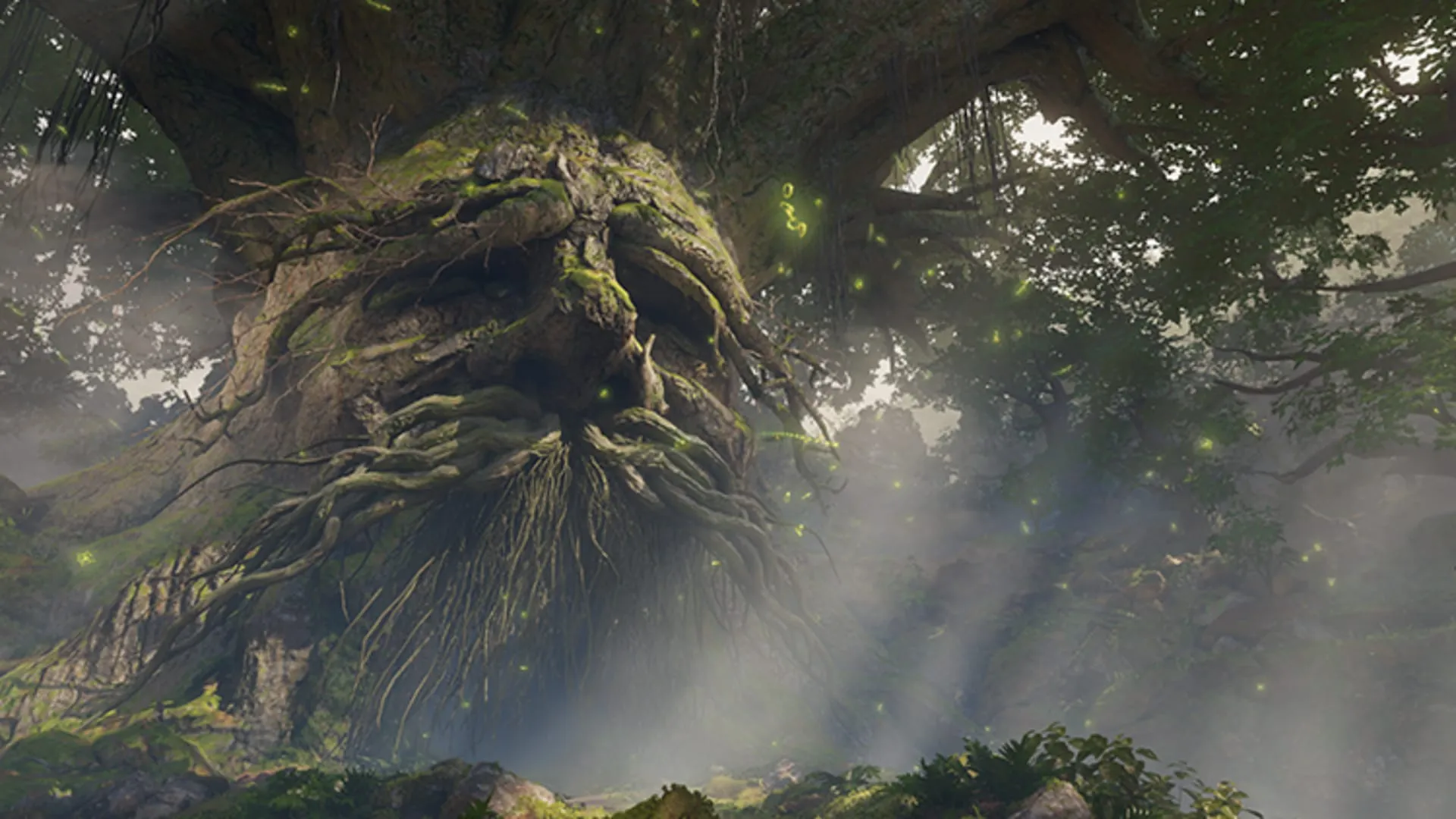
Instead, Aya Shida united the team around two guiding visual keywords: "a puppet-show feel" and "the analog feel of practical effects films." After pitching the concept to Aonuma with character sketches and the living 3D model of the Great Deku Tree, the artists went to extraordinary lengths to make the world feel tactile:
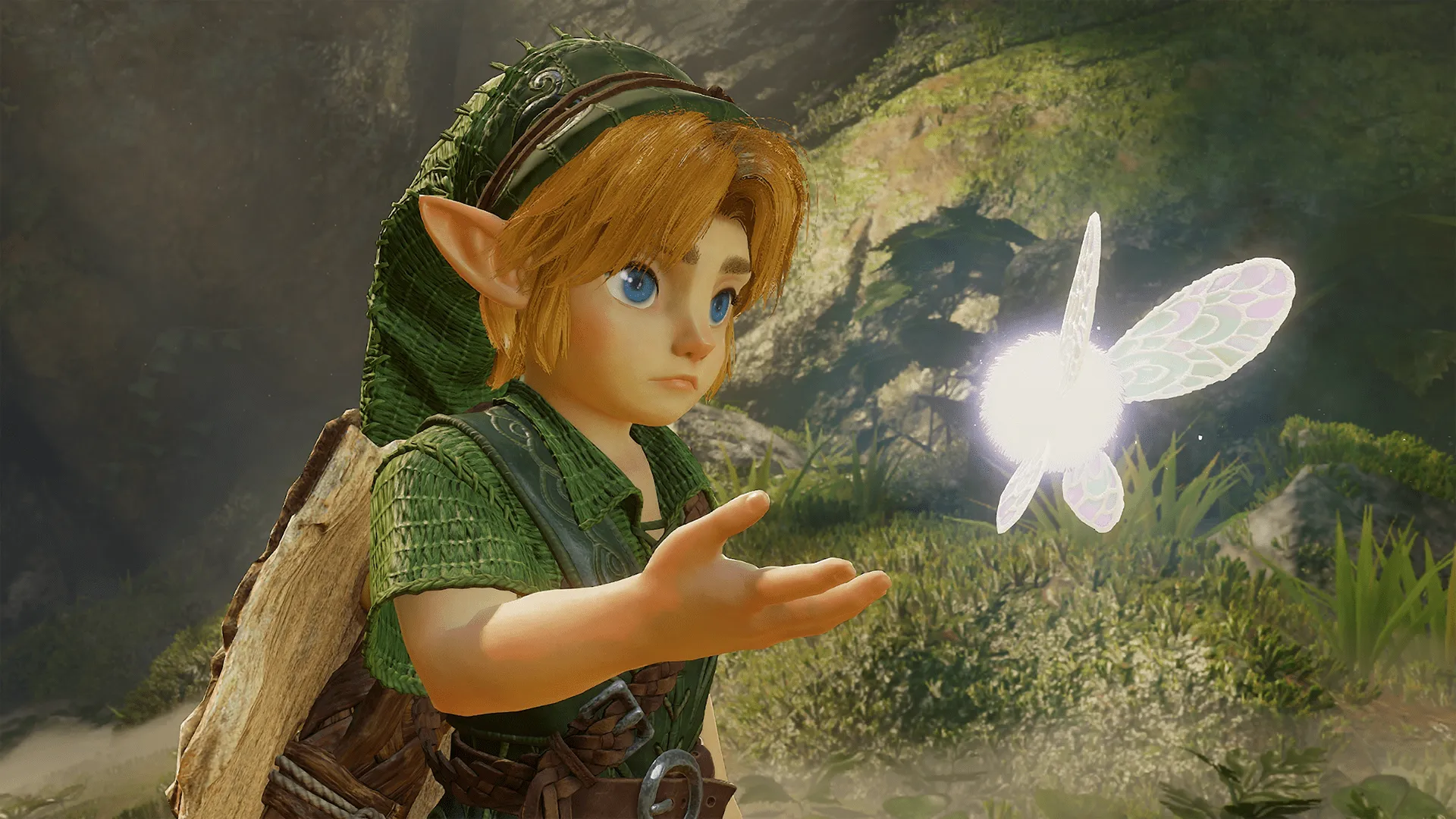
- Weaving real fabric from thread for Young Link: Shida explained that if Young Link's forest tunic looked neatly machine-woven, it wouldn't feel like clothing crafted by children living in Kokiri Forest. The art team visited museums to study historical textiles and experimented with weaving their own fabric from physical thread to capture the right texture in-game.
- How Z-targeting solved the N64's single stick: Hidemaro Fujibayashi recalled buying the sophisticated black Japanese box of Ocarina of Time on launch day in 1998 while working at another company, marveling at how Shigeru Miyamoto and Yoshiaki Koizumi invented Z-targeting so players could lock the 3D camera onto enemies using a controller that only had a single analog Control Stick.
- Koji Kondo's upbeat final boss music: Eiji Aonuma shared a behind-the-scenes memory from the frantic final days of 1998's development. After finishing the last boss battle right before the deadline, he asked composer Koji Kondo for a battle track, only to receive a "rather bright and upbeat piece." When a nervous Aonuma apologetically told him it didn't quite fit, Kondo simply replied, "Alright, I'll change it," and returned the very next day with the iconic final boss theme fans know today.
My Perspective
Hearing Eiji Aonuma openly state that he had the Tears of the Kingdom generation rebuild Ocarina of Time so those structural lessons would carry into future Zelda development is music to my ears. As much as I loved spending hundreds of hours experimenting with physics in the sky islands, I have genuinely missed the tight dramatic pacing and handcrafted progression that only a structured 3D Zelda adventure delivers controller in hand. Seeing director HokWai Ng resist the temptation to flatten Hyrule into a seamless open map proves this team understands what makes the 1998 classic tick. And when your art director is literally weaving physical thread in the studio just so Young Link's forest tunic doesn't look factory-made, you know the future of the series on Switch 2 is in extraordinary hands.
Based on the outskirts of New York City, Chaya 'Chayane' spent five years studying software engineering in Montreal before returning to her home state. A Full-Stack developer and Deep Learning AI architecture researcher, she explores neural networks and algorithmic optimization while engineering data pipelines for Retrocharting and Gamescharting alongside Grimtag. A gamer for over 20 years and an avid collector of Nintendo history and The Legend of Zelda, she explored World of Warcraft's Azeroth before bringing her deep technical background to video game analysis.