"Not Perfect Numerical Equality": How World of Warcraft: Forever Rejects Class Homogenization Ahead of Launch
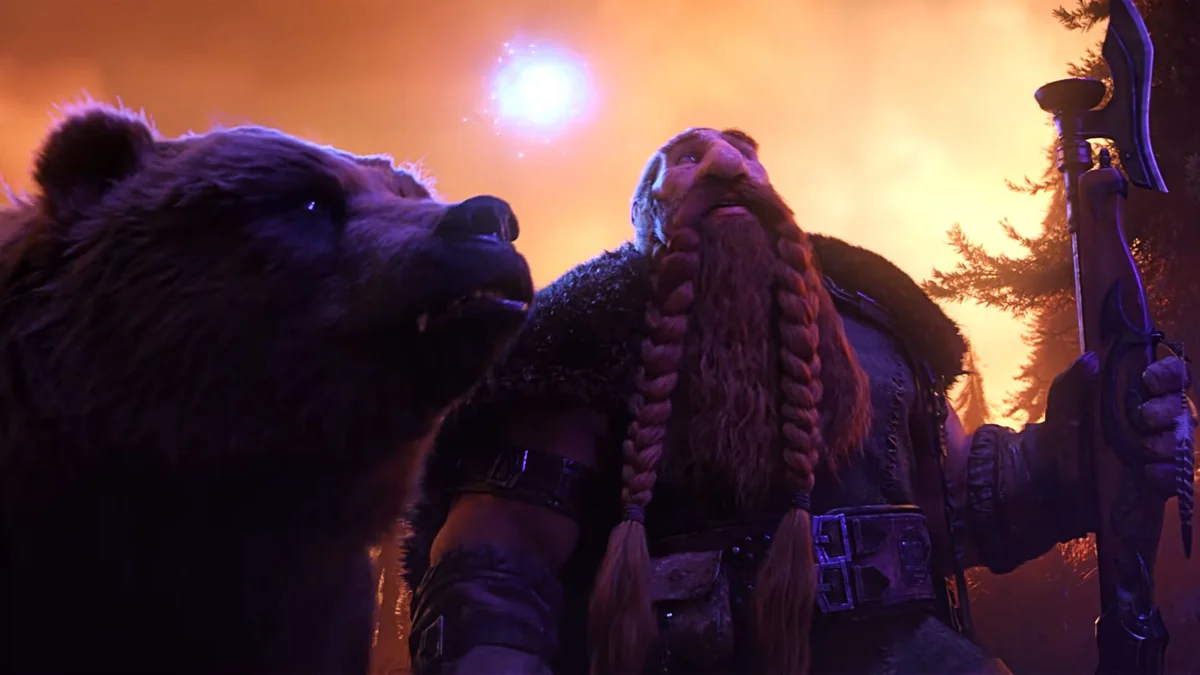
With the global servers of World of Warcraft: Forever just hours away from opening their gates, the development team at Blizzard Entertainment has stepped forward to address one of the most fiercely debated topics from the beta test: class balance. Rather than promising mathematical parity down to the last decimal on damage meters, the studio is embracing an asymmetric design philosophy where every class earns its raid spot through irreplaceable identity and group utility.
Rejecting the Pursuit of Strict Mathematical Parity
Ever since its surprise unveiling at BlizzCon 2026 back in September, this ambitious spin-off reimagining classic Azeroth progression has sparked intense discussions among veteran players. As the World of Warcraft: Forever global release time and new raid schedule draw near, the developers responded to months of beta feedback by laying out a clear vision for the future of class tuning.
In an official statement to the community, Blizzard Entertainment summarized its core pillar: "Our aim in class design is not perfect numerical equality, but rather for every class to feel valuable to the groups they join, with powerful, unforgettable moments brought on by mastering them. In Forever this is accomplished by doubling down on the strengths and differences that make each class unique, rather than overly unifying them."
This commitment marks a deliberate departure from modern MMO balancing trends. Where recent expansions often sought to flatten performance curves so that almost any five-player setup could clear high-end content with identical tools, World of Warcraft: Forever defends the value of mechanical contrast. A specialization does not need to post the exact same theoretical numbers on a target dummy if its broader toolkit can single-handedly turn the tide of a dungeon pull or boss encounter.
Steering Clear of Both Homogenization and 2004's Dead Ends
To understand why this philosophy matters so much, one only needs to look at the two extremes Azeroth has experienced over the past two decades. In the original 2004 release and the 2019 Classic revival, class asymmetry was absolute, yet frequently punishing. Hybrid specializations such as Retribution and Protection Paladins, Balance and Feral Druids, or Elemental and Enhancement Shamans suffered from severe mana starvation and strict boss debuff slot limits. Once they reached level 60, many were pressured into abandoning their preferred playstyle to heal from the backline.
Conversely, the modern "bring the player, not the class" era gradually handed out the same core answers across the roster: short-cooldown interrupts, personal immunities, raid-wide defensive cooldowns, Bloodlust equivalents, and combat resurrections. In the quest to make every specialization numerically interchangeable on combat logs, much of the distinct RPG flavor was sanded away.
Group Synergy and Mastery at the Heart of the Meta
With World of Warcraft: Forever, Blizzard is carving out a middle ground that fixes the broken mechanics of old hybrid specs without stripping away their quirks. In practice, a character's worth inside the nine brand-new dungeons or the Mount Hyjal raids will be judged just as much by situational mastery and group synergy as by raw damage output.
A Shaman dropping the exact totem needed to break a lethal fear, a Paladin saving a tank with a clutch blessing, a Warlock controlling a chaotic pack, or a Druid sustaining party resources brings tactical leverage that no spreadsheet can reduce to a single bar chart. If you are still weighing your options before server launch, our complete World of Warcraft: Forever class tier list and leveling guide breaks down how each specialization performs across PvE, PvP, and the journey to level 60.
Blizzard also emphasized that class tuning will remain an evolving process, promising ongoing updates "over the course of the months and years ahead" to ensure every specialization stays rewarding to master without falling into the trap of homogenization.
My Take: Putting the RPG Back Above the Spreadsheet
I will be honest: after spending thousands of hours in Azeroth since the original launch, this statement from Blizzard is music to my ears. For years, the obsession with third-party parse rankings and single-percent spreadsheet gaps has turned class selection into cold accounting. When every specialization has a mobility dash, an interrupt, identical cleave damage, and a personal defensive button copied from the class next door, you stop feeling like a Warlock, a Hunter, or a Paladin. You just feel like a colored bar on a damage meter.
Of course, Blizzard will have to walk a fine line so that asymmetric strengths do not become an excuse for elitist raid leaders to bench certain specializations. Still, openly stating that classes should create unforgettable moments through their differences rather than sterile numerical equality is the boldest and healthiest pledge World of Warcraft: Forever could make right before launch.

SEO consultant for over 20 years and digital entrepreneur, Charles "Grimtag" is the founder of Pro-Gamer.gg, Retrocharting.com, and Gamescharting.com. A competitive gamer, streamer, and retro game collector, he has worked in the video game industry for over 15 years, notably as a consultant for leading game price comparison platforms. Passionate about real-time performance data and gaming technology, he analyzes competitive esports, gaming hardware benchmarks, and creator workflows on Pro-Gamer.gg with an authentic player perspective.