Ocarina of Time on Switch 2: Code Rebuilt From Scratch by EPD Group 3 and a 28-Year Blind Voice Audition
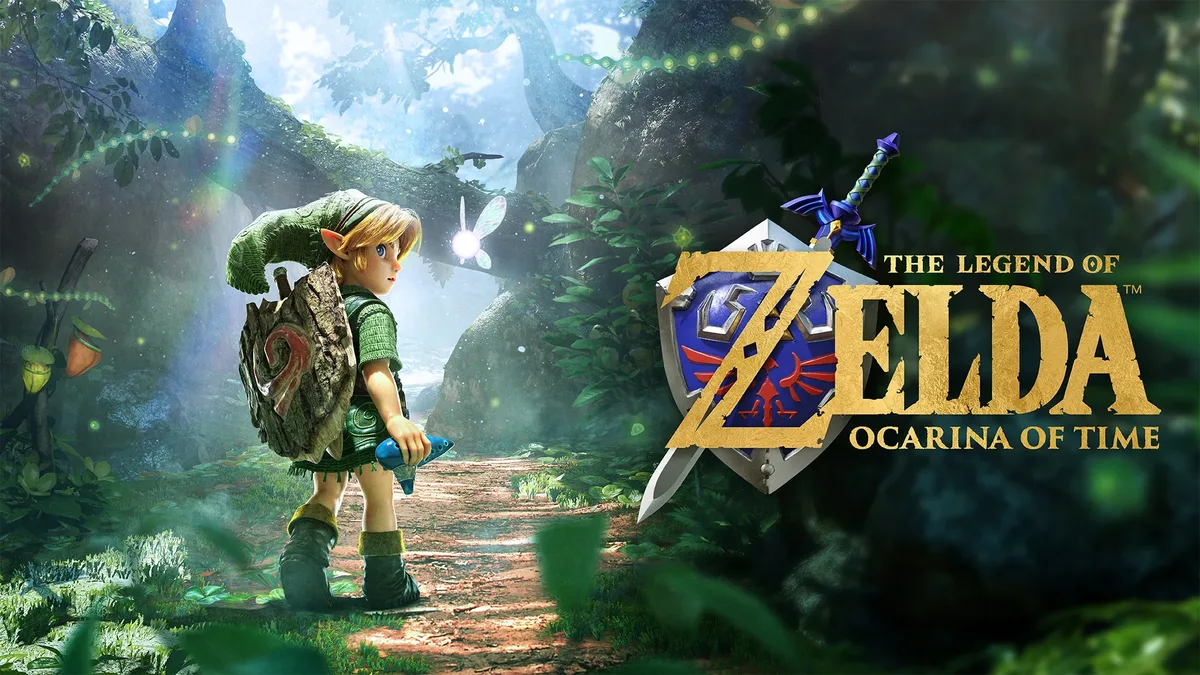
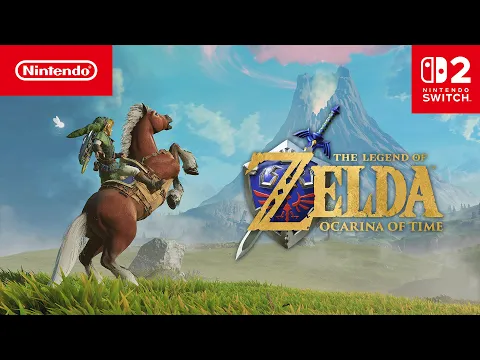
Who actually built the ground-up remake of The Legend of Zelda: Ocarina of Time launching this Thursday, November 5, 2026, on Nintendo Switch 2? While Kyoto kept the development team's identity tightly under wraps throughout the marketing campaign, the publication this Tuesday, November 3, of Part 3 and Part 4 of Nintendo's official "Ask the Developer Vol. 24" interview series finally answers the question. Far from being outsourced to an external partner studio, the entire project was crafted 100% in-house by Nintendo EPD.
Breath of the Wild and Open-Air Zelda Veterans Lead Nintendo EPD Group No. 3
Working directly alongside veteran series producers Eiji Aonuma and Hidemaro Fujibayashi, Nintendo EPD Production Group No. 3 spearheaded this full reconstruction. The core leadership team brings together key creative minds behind the franchise's modern open-air masterpieces:
- HokWai Ng (Director): Having joined Nintendo in 2006 and served as a game designer on Hyrule's latest open-air adventures, he makes his directorial debut here under a guiding motto: "Graphics may change, but the experience stays the same."
- Hiroki Taguchi (Programming Director): Recruited straight out of university to work on Breath of the Wild.
- Aya Shida (Art Director): Former character design lead on Nintendo EPD's recent Zelda entries, tasked with modernizing Hyrule's cast while preserving the unmistakable spirit of the 1998 classic.
- Masato Ohashi (Sound Director and Music Lead): Experienced composer whose credits include Echoes of Wisdom and Animal Crossing: New Horizons alongside modern 3D Zelda titles.
As players already check the global eShop release times and 24.54 GB pre-load details for Zelda: Ocarina of Time on Switch 2, learning that Nintendo's premier internal Zelda unit handled the remake explains the sheer technical ambition on display.
Zero N64 Code Ported Over and the Aonuma vs. Fujibayashi Jump Attack Debate
Chapter 3 of the roundtable reveals just how much engineering went into updating a 28-year-old foundation. Programming director Hiroki Taguchi confirmed that after nearly three decades of hardware evolution, it was impossible to simply carry over the 1998 source code and data. Instead, Nintendo EPD recreated the entire game from scratch on Switch 2, setting up an original Nintendo 64 unit right next to their development monitors to compare every single action side by side and match the exact responsiveness of the classic controls.
Replacing the original 1998 auto-jump at platform edges with a dedicated manual jump button inspired by Breath of the Wild triggered a massive level design overhaul. Art director Aya Shida noted that the team had to manually inspect and adjust the height and spacing of ledges across Hyrule so players wouldn't accidentally break dungeon progression, a challenge complicated by the fact that Adult Link and Young Link have slightly different jump distances.
That control modernization also sparked a memorable clash between Hidemaro Fujibayashi and Eiji Aonuma over Link's signature Jump Attack. The development team initially implemented the two-step Breath of the Wild method favored by Fujibayashi, requiring players to press the jump button first and then strike mid-air. However, Aonuma pushed back during playtesting, arguing that the two-button input "didn't give the same satisfaction as the original Jump Attack" triggered with a single button press while targeting. Fresh off ordering the removal of newly added fast-travel warp points in Ocarina of Time on Switch 2, Aonuma refused to compromise on muscle memory. Ultimately, the team resolved the debate by building both Jump Attack control schemes into the game simultaneously. Similarly, holding the action button now lets Link sprint across Hyrule Field, while tapping it repeatedly preserves his iconic forward rolls.
A Miraculous 28-Year Blind Voice Audition and Switch 2 Microphone Ocarina Humming
In Part 4 of the interview, Nintendo detailed the audio overhaul and the addition of full voice acting for key story cutscenes, which sit alongside Navi's preserved original "Listen!" voice clip. To cast the Japanese voices without bias toward celebrity status or past roles, the studio held blind auditions where voice actors were identified strictly by number. In an astonishing twist shared by Eiji Aonuma, the panel evaluated the anonymous recordings purely on how closely they matched players' memories and unknowingly selected the exact same voice actor who had voiced that very character on the Nintendo 64 28 years ago.
On the musical front, Masato Ohashi worked closely with original composer Koji Kondo to produce more than 150 tracks mixed for 5.1 surround sound. The soundtrack blends sweeping orchestral arrangements with faithful recreations of the original Nintendo 64 sound sources, which intentionally greet players inside Link's house in Kokiri Forest at the start of the journey. Ohashi also recorded a real ocarina in the studio, programming its acoustic resonance to shift dynamically depending on whether Link is playing inside a cavernous temple or out under the open sky.
That instrument even connects directly to the console's hardware thanks to a spontaneous request from Aonuma. Director HokWai Ng recalled that roughly a year ago, Aonuma walked into his office and declared: "Nintendo Switch 2 has a built-in mic... let's use it for voice recognition!" Once players learn a melody in the game, they can hum the tune aloud or play a real-life ocarina into the Switch 2 microphone, and Link will perform the song on screen.
My Perspective
Learning how Nintendo EPD Production Group No. 3 approached this remake makes me appreciate their craftsmanship on a whole new level. Knowing that veteran developers kept an original Nintendo 64 running beside their desks to rebuild every jump, sword swing, and forward roll from zero shows tremendous care for gaming history. I especially love the behind-the-scenes tug-of-war between Fujibayashi and Aonuma over the Jump Attack: with my fingers still instinctively reaching for the single-button 1998 input, I am thrilled Aonuma stood his ground while keeping the modern two-button option for newer players. Between the goosebump-inducing story of the original 1998 voice actor winning a blind audition 28 years later and the ability to hum the Song of Storms straight into the Switch 2 microphone, this remake strikes a wonderful balance between sacred preservation and fresh playfulness.
Based on the outskirts of New York City, Chaya 'Chayane' spent five years studying software engineering in Montreal before returning to her home state. A Full-Stack developer and Deep Learning AI architecture researcher, she explores neural networks and algorithmic optimization while engineering data pipelines for Retrocharting and Gamescharting alongside Grimtag. A gamer for over 20 years and an avid collector of Nintendo history and The Legend of Zelda, she explored World of Warcraft's Azeroth before bringing her deep technical background to video game analysis.