RTX 50 Supply Shortage Forces GPU Makers to Push Distributors Back to GeForce RTX 3060 and RTX 3050
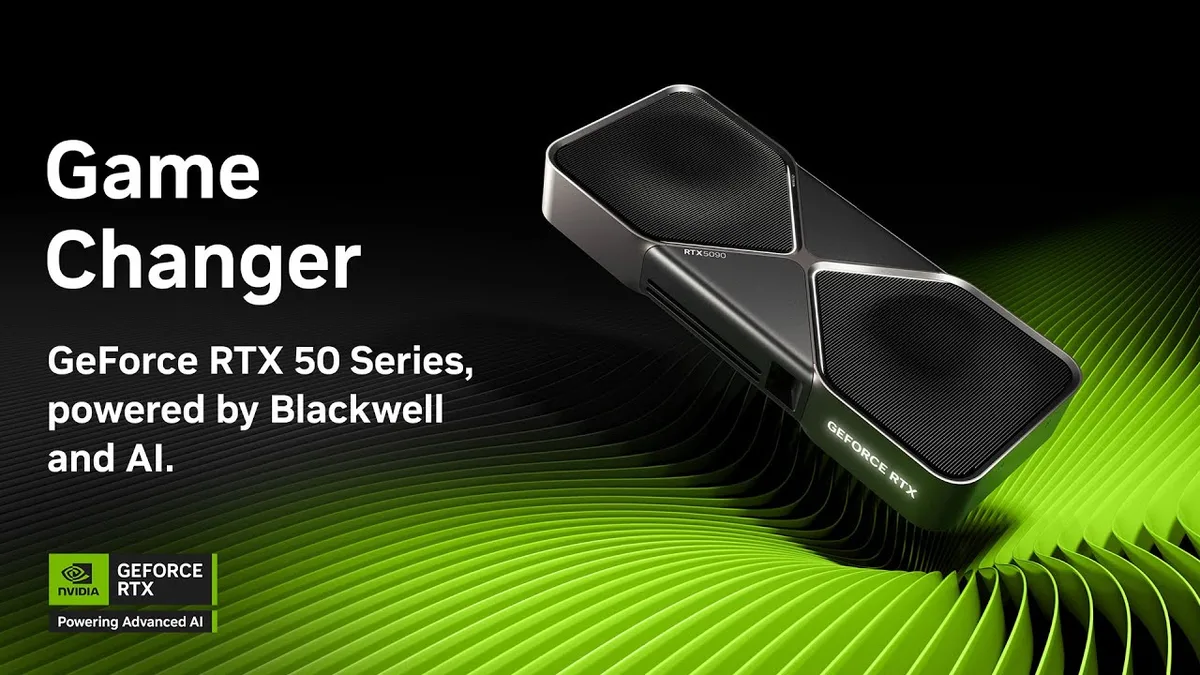
Five years after making its debut on the Ampere architecture, the GeForce RTX 30 family refuses to leave retail shelves. Facing a sharp tightening in GeForce RTX 50 Series inventory this November 2026, NVIDIA's add-in-card (AIC) board partners have reportedly issued a striking directive to their wholesale and distribution networks: shift sales focus back to the aging GeForce RTX 3060 and GeForce RTX 3050 to plug the growing supply gap.
Why GPU Makers Are Pushing Distributors Back to the GeForce RTX 3060 and RTX 3050
According to supply chain dispatches shared by industry insiders on the Chinese hardware forum Board Channels and tracked by ChannelGate, consumer Blackwell GPU availability has deteriorated noticeably heading into the late-2026 holiday quarter. Between wafer and memory reallocations toward enterprise AI accelerators and major autumn e-commerce promotions draining remaining retail stock, distributors are struggling to secure steady shipments of mainstream GeForce RTX 50 Series cards.
To prevent system integrators and retail shelves from running dry in the budget and entry-level tiers, graphics card manufacturers have instructed distributors to actively promote the GeForce RTX 3060 (both 12GB and 8GB variants) alongside the GeForce RTX 3050 (8GB and 6GB models). This channel pivot directly explains the GeForce RTX 3060 reclaiming the #1 spot in Valve's latest Steam Hardware Survey, fueled by steady deployments across Asian retail channels and internet cafés.
Samsung 8nm Silicon and GDDR6 Memory Bypass the Blackwell Supply Bottleneck
The reason board partners can still crank out shipments of graphics cards originally launched in 2021 and 2022 comes down to two physical realities: foundry lithography and VRAM modules. While current GeForce RTX 50 Series GPUs rely on heavily contested TSMC 4N wafer capacity and high-speed GDDR7 memory, the GA106 and GA107 dies powering the RTX 3060 and RTX 3050 are fabricated on Samsung's 8nm (8N) process node and paired with standard GDDR6 memory.
Because these legacy components sit on a completely separate production pipeline, AIC manufacturers can assemble and ship RTX 30 Series batches without cannibalizing a single wafer or memory chip needed for higher-margin Blackwell products. Meanwhile, DRAM makers (Samsung, SK Hynix, and Micron) continue prioritizing lucrative HBM production for AI data centers over consumer GDDR7, directly driving the 35% global surge in GPU prices over the past three months across retail markets.
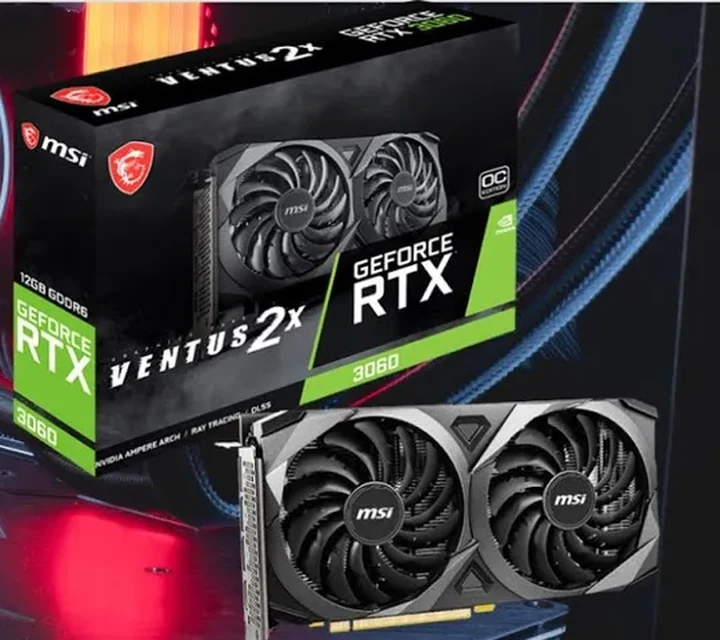
MSI GeForce RTX 3060 Ventus 2X 12G OC
- NVIDIA Ampere Architecture (Samsung 8nm)
- 3,584 CUDA Cores
- 12GB GDDR6 (192-bit)
- Dual TORX Fan 3.0 Cooler
- 170W TDP
Five-Year-Old Architecture Still Commanding Stubborn Retail Prices
For PC builders on a budget, the most frustrating twist is what this shortage has done to street pricing. Rather than sliding into deep clearance territory due to their age, both the GeForce RTX 3060 and RTX 3050 have seen wholesale and retail prices hold firm or climb higher as current-gen options dry up. Alongside select entry-level AMD Radeon models, these Ampere cards are now being used by distributors to absorb mainstream demand at inflated margins.
In North America and Europe, remaining brand-new listings for the 12GB GeForce RTX 3060 on its 192-bit memory bus, whose full baseline specifications remain listed on the official NVIDIA GeForce RTX 3060 product page, still hover around $289 to $349 through marketplace sellers (compared to $200 to $250 on the second-hand market). Meanwhile, the slot-powered RTX 3050 6GB continues to serve as a fallback option for prebuilt office upgrades and cybercafé refreshes.
My Take on This Supply Shift
Watching AIC partners instruct distributors to lean on the GeForce RTX 3060 and RTX 3050 in November 2026 sums up the current state of the PC hardware market. To be fair, the 12GB RTX 3060 is still a dependable 1080p workhorse thanks to its 192-bit bus and generous VRAM buffer, especially when paired with DLSS Super Resolution. But having to rely on five-year-old Samsung 8nm silicon as a stopgap because TSMC wafers and GDDR7 memory are locked up by enterprise AI servers is a tough pill for gamers to swallow. Until upstream memory allocation balances out, the sub-$300 GPU bracket remains stuck in a time loop.

PC hardware enthusiast and competitive gamer, Arthur 'Heimdall' splits his time between France and the UK working in enterprise B2B software solutions. A business school graduate passionate about component benchmarking, he has been building, modding, and tuning PCs since childhood, optimizing every thermal degree and millisecond of display latency. An avid gamer across Assassin's Creed and sandbox titles, he forged his alliance with Grimtag and Chaya during late-night World of Warcraft raids before joining Pro-Gamer.