$385 for 16GB of LPDDR4X Memory: Why the Raspberry Pi 5 Just Tripled Its Launch Price Against x86 Mini PCs
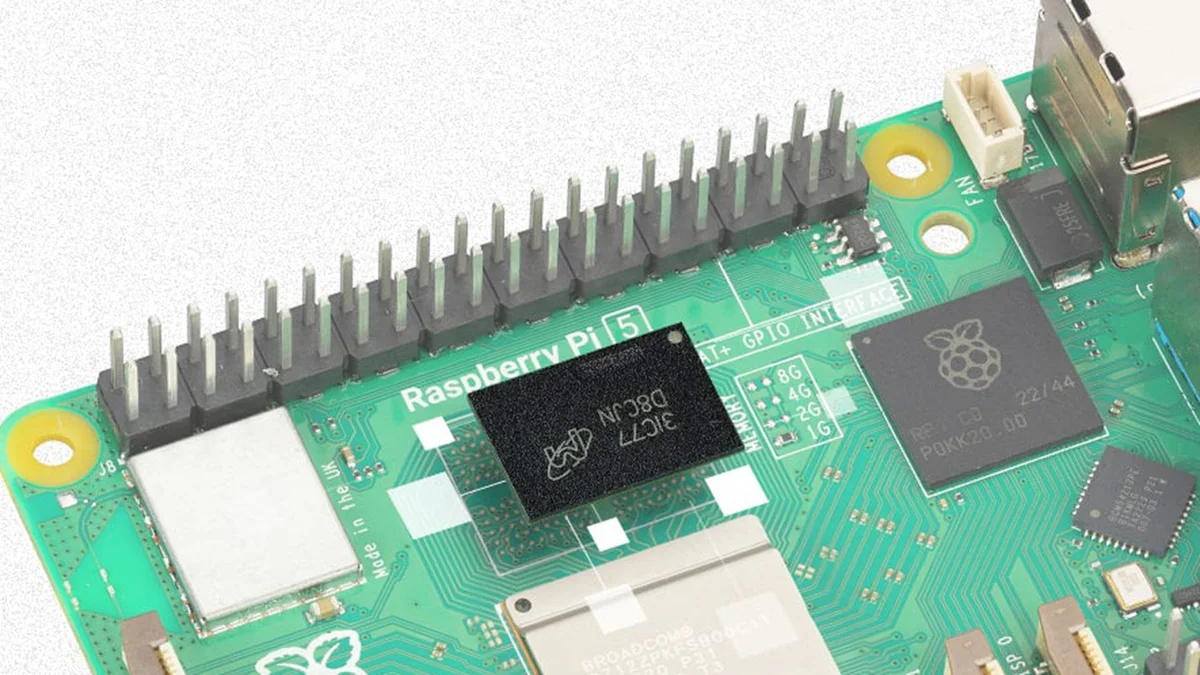
Originally introduced at $120 in January 2025 to give home-lab builders, Linux tinkerers, and self-hosted server enthusiasts plenty of breathing room, the 16GB Raspberry Pi 5 has just crossed a staggering pricing threshold. In an official supply chain and pricing update published on November 2, 2026, Raspberry Pi Ltd CEO and co-founder Eben Upton announced an immediate $80 price increase on the flagship board. Now carrying an official MSRP of $385 before taxes (up from $305 since April), the top-tier single-board computer costs more than triple its initial launch price,representing a cumulative 220.8% markup in less than two years.
Four Successive Price Hikes Driven by Severe 16GB LPDDR4X Scarcity
This latest adjustment specifically targets configurations built around high-density 16GB LPDDR4X-4267 memory packages. Alongside the standard 16GB Raspberry Pi 5 climbing to $385, all 16GB variants of the industrial Raspberry Pi Compute Module 5 (CM5) are receiving an immediate flat $40 increase, pushing their official list prices into the $375 to $415 range depending on onboard eMMC flash storage capacity and wireless connectivity options.
The only 16GB product spared during this November wave is the Raspberry Pi 500+, the all-in-one mechanical keyboard computer equipped with 16GB of RAM and a 256GB NVMe SSD. While Raspberry Pi Ltd opted to hold its price steady this time around, the 500+ had already seen its official list price climb from $200 at its September 2025 debut to $410 for the standalone unit ($430 for the Desktop Kit, with regional retail bundles reaching up to $485).
| Model / RAM Capacity | Original Launch Price | 2025 - 2026 Price Trajectory | Official MSRP (November 2026) |
|---|---|---|---|
| Raspberry Pi 5 (1GB) | $45.00 | Price held steady | $45.00 |
| Raspberry Pi 5 (2GB) | $50.00 | +$12.50 increase in October 2026 | $77.50 |
| Raspberry Pi 5 (4GB) | $60.00 | Sequential DRAM adjustments | $110.00 |
| Raspberry Pi 5 (8GB) | $80.00 | More than double launch MSRP | $175.00 - $180.00 |
| Raspberry Pi 5 (16GB) | $120.00 (Jan 2025) | $145 (Dec 25) → $205 (Feb 26) → $305 (Apr 26) | $385.00 (+$80) |
| Compute Module 5 (16GB) | Varies by eMMC | +$40.00 flat increase on Nov 2, 2026 | $375.00 - $415.00 |
According to Eben Upton, the root cause of this steep escalation lies in a severe global DRAM crunch fueled by massive AI data center rollouts,a memory squeeze so extreme that enterprise operators are now paying technicians to repair dead $16,000 server DDR5 RAM sticks under the microscope. As major memory fabricators shift wafer capacity toward high-bandwidth memory (HBM) and enterprise DDR5, Raspberry Pi Ltd faces a complete lack of qualified alternative supply sources for single-package 16GB LPDDR4X DRAM. While Upton described the shortage as "difficult but ultimately temporary" and pledged to roll back prices once memory costs normalize, the company is actively advising buyers to step down to 2GB, 4GB, or 8GB boards whenever possible.

Retro Emulation, Batocera, and Home Game Servers: Why x86 Mini PCs Crush a $385 Pi 5
From a gaming and hardware value standpoint, paying $385 for a bare Raspberry Pi 5 board makes zero sense. That $385 sticker price at Approved Resellers like CanaKit, Vilros, or Adafruit only buys the naked PCB. Once you factor in the mandatory official 27W USB-C power supply, the Active Cooler, an enclosure, an M.2 HAT+ adapter to tap into the board's single PCIe 2.0 x1 lane, and an NVMe SSD, the real-world out-the-door cost easily crosses $440 to $460.
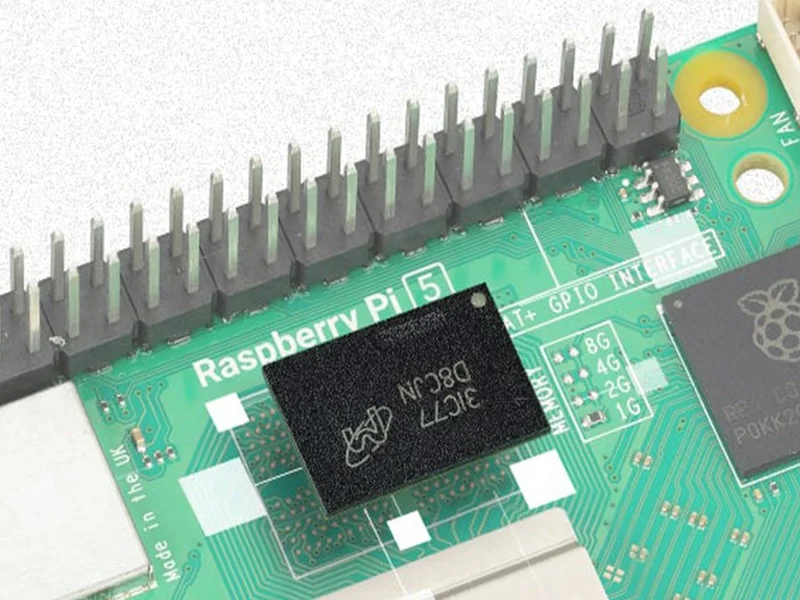
Raspberry Pi 5 (4GB / 8GB) & x86 Mini PC Alternatives
- Broadcom BCM2712 2.4GHz Quad-Core ARM Cortex-A76 SoC (16nm)
- VideoCore VII 800MHz GPU & in-house RP1 I/O controller
- Soldered LPDDR4X-4267 SDRAM (1GB up to 16GB)
- Single-lane PCIe 2.0 interface, dual 4K60 micro-HDMI & Gigabit Ethernet
For anyone building a living-room retro emulation box running Batocera, Recalbox, or RetroPie, 16GB of RAM on a Raspberry Pi 5 offers zero gaming benefit. Every capacity tier shares the exact same 16nm Broadcom BCM2712 silicon: four ARM Cortex-A76 cores clocked at 2.4GHz paired with a modest 800MHz VideoCore VII GPU. Classic consoles up through Dreamcast, N64, Saturn, PSP, and lightweight GameCube titles hit the exact same CPU and GPU ceiling on a 4GB model ($110) as they do on the $385 16GB board, while dedicated hardware accessories like Epilogue's $59.99 SN Operator USB cartridge reader pair far better with a full-fledged PC or handheld.
Meanwhile, if your goal is sixth- and seventh-generation console emulation (PS2, Xbox, Wii U, PS3) or hosting local dedicated game servers (Minecraft, Palworld, Valheim) alongside Docker containers, the x86-64 mini PC market completely outclasses the 16GB Pi 5 at a lower total cost:
- $150 to $210 Complete Systems: Turnkey mini PCs powered by Intel Processor N100 or N150 chips ship with a chassis, power adapter, active cooling, 16GB of RAM, and a 512GB SSD right in the box, complete with hardware AV1/QuickSync media transcoding and native x86 compatibility.
- $300 to $370 Ryzen Mini PCs: For less than the bare 16GB Raspberry Pi 5 PCB alone, you can buy a complete AMD Ryzen 5 or Ryzen 7 mini PC featuring Radeon 680M or 780M (RDNA 2 / RDNA 3) integrated graphics, dual-channel upgradeable SO-DIMM memory, and full-speed PCIe 4.0 x4 NVMe storage,delivering vastly superior multi-threaded CPU throughput and 3D graphics performance for Steam games and heavy emulation.
- Microcontroller Offloading: For pure GPIO hardware automation and sensor arrays that do not need 16GB of RAM, makers are increasingly stepping down to sub-$10 Raspberry Pi Pico 2 (RP2350) or ESP32 boards rather than absorbing DRAM markups.
My Take on the Spec Sheet
Paying a $265 premium over the original January 2025 launch MSRP just to get 16GB of soldered LPDDR4X memory attached to a quad-core Cortex-A76 SoC is impossible to justify for gamers, emulation builders, or home-lab enthusiasts. Until global DRAM supply chains stop funneling every available wafer into AI data centers and allow Raspberry Pi Ltd to bring 16GB pricing back down to earth, only industrial buyers locked into a specific Compute Module 5 or Pi 5 hardware footprint should swallow this $385 price tag,everyone else is vastly better served by a $200 Intel N150 box or a $340 Ryzen mini PC. We have not yet had a physical unit of this latest production batch on our desk,if the manufacturer's team would like to send over a review unit so we can put it through our full real-world testing protocol against current x86 mini PCs, our lab doors are wide open.

PC hardware enthusiast and competitive gamer, Arthur 'Heimdall' splits his time between France and the UK working in enterprise B2B software solutions. A business school graduate passionate about component benchmarking, he has been building, modding, and tuning PCs since childhood, optimizing every thermal degree and millisecond of display latency. An avid gamer across Assassin's Creed and sandbox titles, he forged his alliance with Grimtag and Chaya during late-night World of Warcraft raids before joining Pro-Gamer.