AMD RDNA 5+ GPU and Ryzen Zen 7 "Grimlock" APUs: Why the 2029 1.4nm Roadmap Prioritizes Integrated Graphics
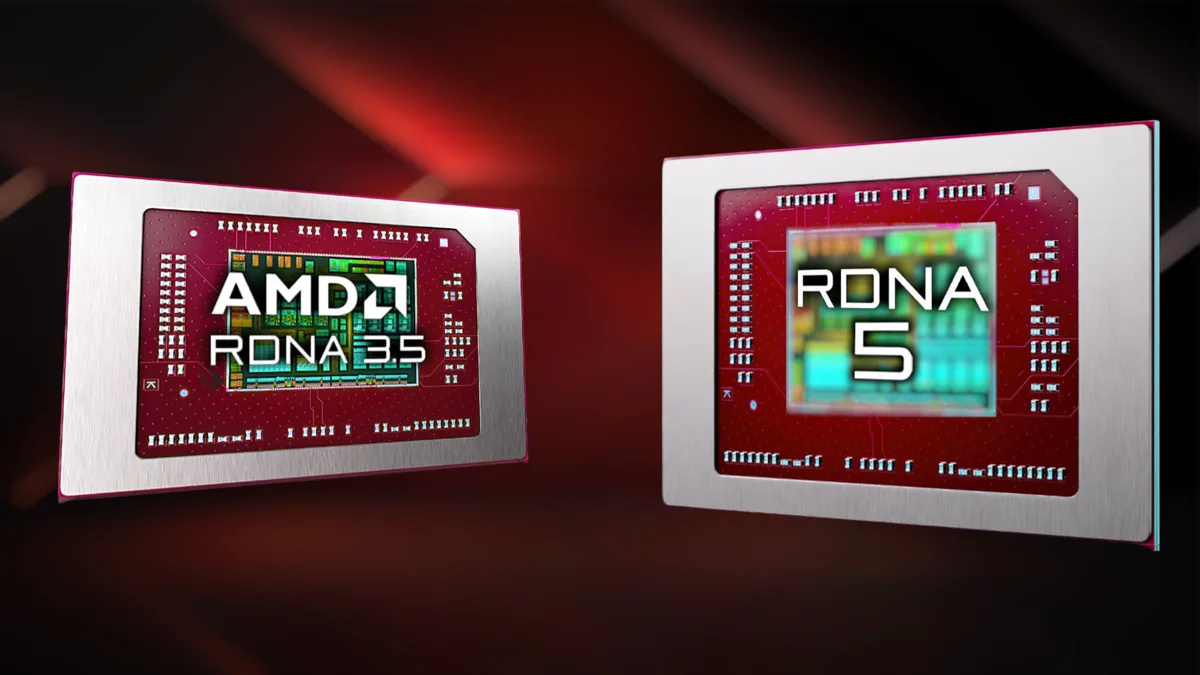
AMD's long-term silicon cadence through the end of the decade is crystallizing around a deliberate split between ground-up discrete desktop architectures and efficiency-tuned revisions built for mobile processors. According to technical roadmap disclosures shared by hardware insider Kepler_L2, Santa Clara is engineering an optimized follow-up to its upcoming RDNA 5 graphics engine, dubbed RDNA 5+, scheduled to land in 2029. Mirroring how RDNA 3.5 refined the baseline RDNA 3 design, this mid-cycle architectural upgrade is set to debut inside Ryzen Zen 7 "Grimlock" APUs.
RDNA 5+: Extending the Efficiency-First Blueprint of RDNA 3.5
Since rolling out its Strix Point and Strix Halo mobile processors, AMD's graphics engineering teams have separated their GPU development into two distinct tracks. When a clean-sheet architecture launches to power high-wattage desktop Radeon RX cards, a specialized revision follows to strip out power bottlenecks, tighten voltage-frequency curves, and maximize performance-per-watt inside thermally constrained APUs.
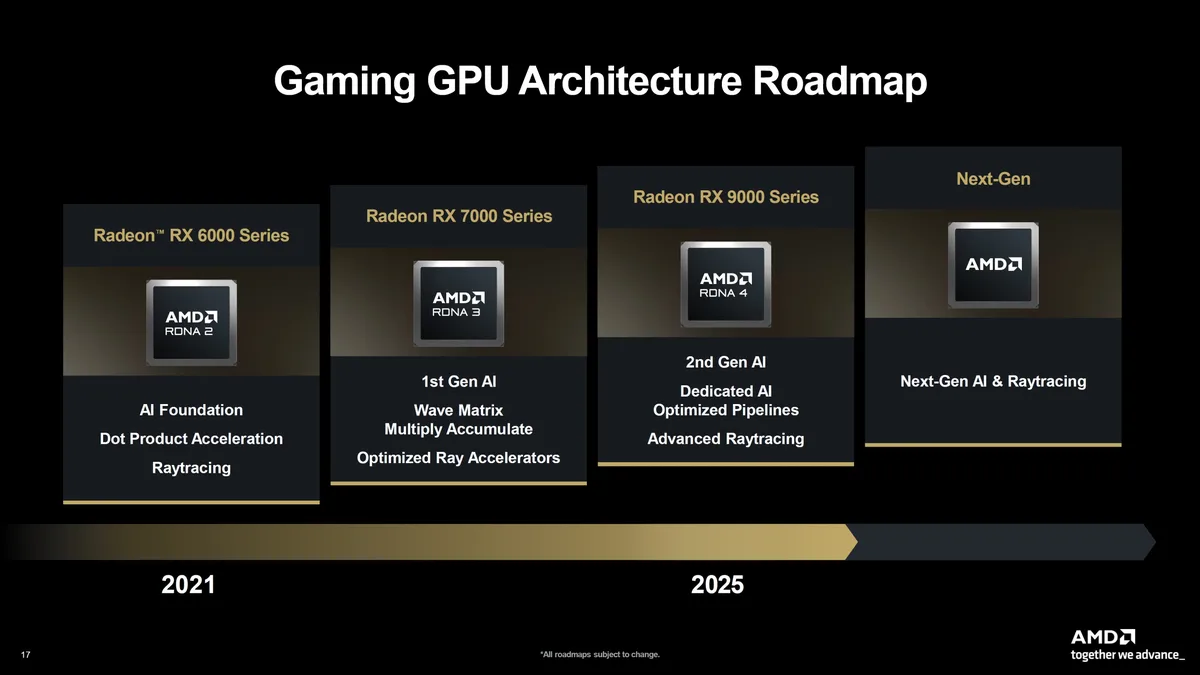
According to Kepler_L2, RDNA 5+ will serve as the second major "+/half-step" optimization in the RDNA lineage after RDNA 3.5. While baseline RDNA 5 is tasked with overhauling compute units, AI matrix pipelines, and ray-tracing accelerators, RDNA 5+ will fine-tune that foundation specifically for 15W to 120W mobile and small-form-factor envelopes. That timeline builds directly on AMD's 2027 transition, where upcoming Ryzen Zen 6 "Medusa" APUs will blend RDNA 3.5, RDNA 4m, and RDNA 5 graphics blocks across mainstream and premium tiers.
Inside Zen 7 "Grimlock" APUs: TSMC A14 Lithography, FOPLP Packaging, and LPDDR6 Memory
The 2029 landing window for RDNA 5+ aligns directly with the rollout of AMD's seventh-generation x86 core architecture, codenamed "Grimlock" (Zen 7). While desktop Grimlock Ridge processors are projected to debut first in 2028, the mobile and high-density APU families known as Grimlock Point (mainstream laptops and handheld gaming systems) and Grimlock Halo (enthusiast mobile workstations and compact gaming desktops) will follow in 2029 pairing Zen 7 cores with RDNA 5+ integrated graphics.
From a silicon manufacturing standpoint, the Grimlock platform brings three foundational hardware upgrades:
- TSMC A14 (1.4nm-class) process node: Zen 7 compute chiplets and the RDNA 5+ graphics engine are slated to leverage TSMC's 1.4-nanometer lithography, delivering substantial gains in transistor density and lower leakage power.
- FOPLP (Fan-Out Panel Level Packaging): transitioning from traditional round wafer-level packaging to rectangular panel substrates enables denser multi-die interconnections, improved thermal dissipation, and better manufacturing yields for large halo APUs.
- LPDDR6 memory support: because integrated GPUs rely entirely on system RAM for video bandwidth, adopting high-speed LPDDR6 memory will be critical to keeping high-CU RDNA 5+ engines fed at higher resolutions.
| AMD APU Generation | CPU Architecture | iGPU Architecture | Process Node & Memory | Target Window |
|---|---|---|---|---|
| Strix Point / Strix Halo | Zen 5 / Zen 5c | RDNA 3.5 (up to 40 CUs) | TSMC N4P / LPDDR5X | Available |
| Medusa Point / Medusa Halo | Zen 6 / Zen 6c | RDNA 3.5, RDNA 4m & RDNA 5 | TSMC N3P & N2P / LPDDR5X-LPDDR6 | 2027 - 2028 |
| Grimlock Point / Grimlock Halo | Zen 7 / Zen 7c | RDNA 5+ | TSMC A14 (1.4nm) + FOPLP / LPDDR6 | 2029 |
Why Desktop Discrete Radeon GPUs Will Likely Skip RDNA 5+
For desktop PC builders, the natural question is whether RDNA 5+ will also spawn a refresh of standalone Radeon RX graphics cards in 2029. Looking at the broader supply-chain timeline makes a discrete desktop rollout highly unlikely. Because of ongoing global DRAM supply constraints, AMD's baseline RDNA 5 discrete Radeon GPU lineup has shifted toward late 2027 or early 2028.
With first-wave RDNA 5 desktop graphics cards only hitting retail shelves around the turn of 2028, launching an entire discrete RDNA 5+ family in 2029 would compress the desktop product cycle to barely twelve months. Instead, RDNA 5+ is positioned strictly as an APU-centric efficiency refinement for Zen 7 "Grimlock" laptops and handhelds, while desktop gamers continue relying on Socket AM5 and 3D V-Cache processors ahead of the late-decade lithography jump.
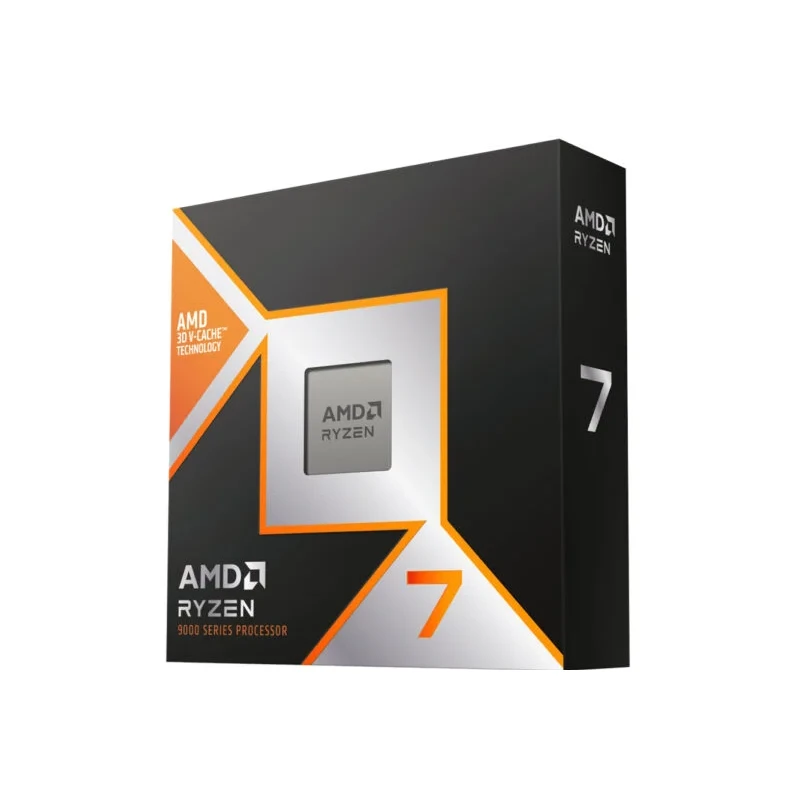
AMD Ryzen 7 9800X3D Gaming Processor (8 Cores / 16 Threads, 2nd-Gen 3D V-Cache, Socket AM5)
- Zen 5 architecture with 96MB of 2nd-Gen 3D V-Cache L3 memory
- 8 cores and 16 threads boosting up to 5.2 GHz
- Future-ready Socket AM5 platform with DDR5 and PCIe 5.0 support
- Outstanding gaming efficiency per watt (120W TDP)
Check Availability AMD Ryzen 7 9800X3D on Amazon→
My Take on the Spec Sheet
Looking closely at this 2029 roadmap, AMD's silicon strategy makes a lot of engineering sense. Dedicating half-generation revisions like RDNA 3.5 and RDNA 5+ to monolithic and chiplet APUs addresses a strict physical reality: inside thin laptops, mini-PCs, and handheld gaming rigs, every milliwatt shaved off memory controllers and shader scheduling directly translates into higher sustained clock speeds. Combined with TSMC's 1.4nm A14 lithography, FOPLP panel packaging, and the massive bandwidth uplift of LPDDR6 memory, the Zen 7 "Grimlock" lineup is poised to blur the line between integrated graphics and entry-to-midrange discrete GPUs even further. Naturally, we are evaluating these architectural projections from leaked roadmap data without physical RDNA 5 or Zen 6 silicon on our bench yet; if AMD's hardware teams want to send over their upcoming Ryzen and Radeon platforms as soon as samples are ready for full thermal and power-efficiency testing in our lab, our test bench is wide open. We have not yet had a physical unit on our desk—if the manufacturer's team would like to send over a review sample so we can put it through our full real-world testing protocol, our lab doors are wide open.

PC hardware enthusiast and competitive gamer, Arthur 'Heimdall' splits his time between France and the UK working in enterprise B2B software solutions. A business school graduate passionate about component benchmarking, he has been building, modding, and tuning PCs since childhood, optimizing every thermal degree and millisecond of display latency. An avid gamer across Assassin's Creed and sandbox titles, he forged his alliance with Grimtag and Chaya during late-night World of Warcraft raids before joining Pro-Gamer.