
30-Month Lead Times and Supply Booked Through 2030: After RAM, AI Demand Now Chokes Motherboard and GPU PCB Production
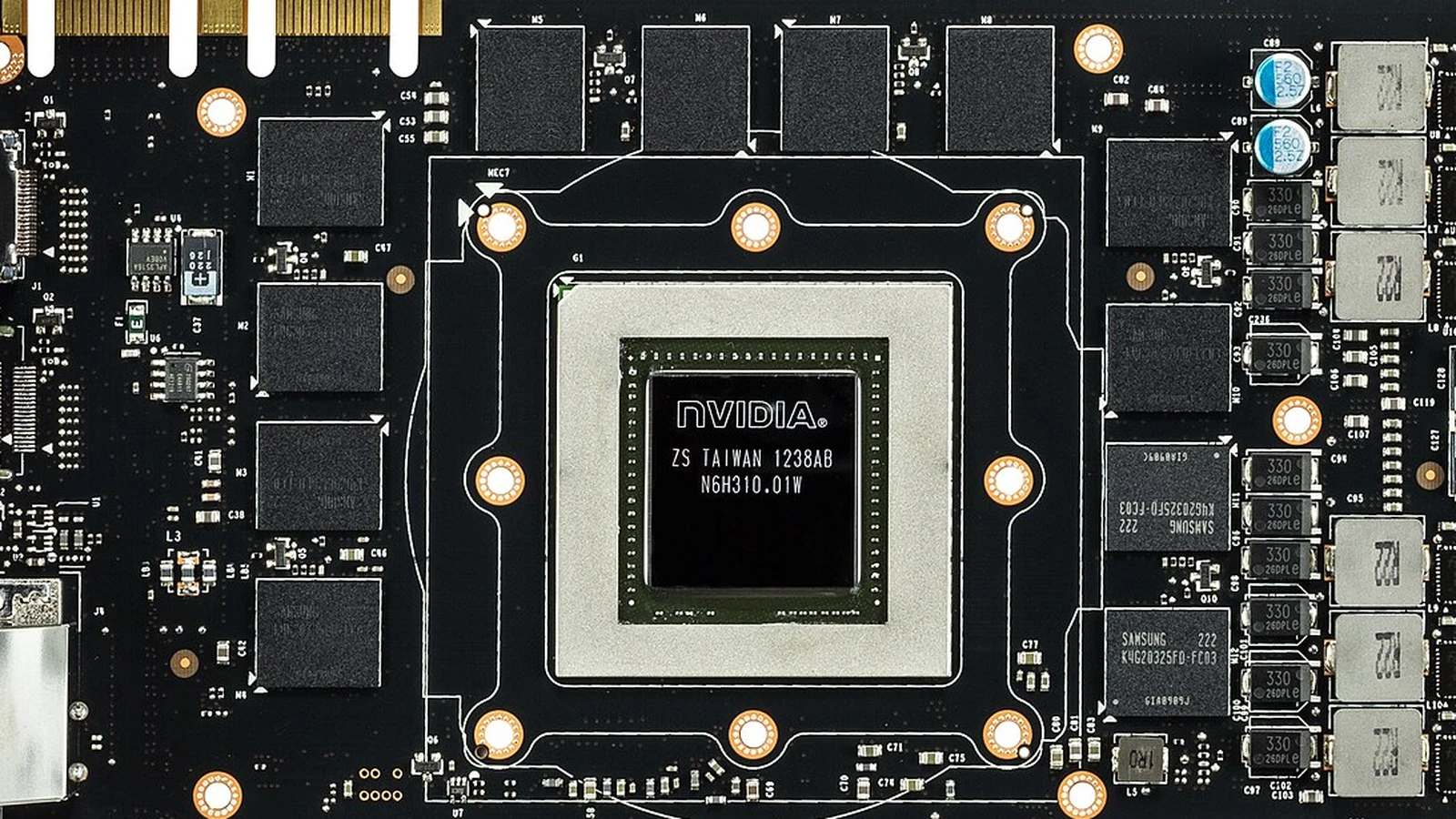
While PC gamers have spent the past year watching DDR5 system memory, GDDR7 video RAM, and TSMC wafer allocations drive component prices skyward, another foundational pillar of hardware manufacturing has quietly hit a wall. The physical backbone of every piece of electronics, namely the printed circuit board (PCB) and the integrated circuit (IC) substrate, is now grappling with a severe structural shortage where factory equipment lead times have stretched up to 30 months.
From 8-Layer Gaming Boards to 40-Layer AI Monsters: The Crowding-Out Effect
Data shared around the TPCA Show in Taipei and corroborated by a supply chain investigation from Nikkei Asia reveals the sheer scale of the imbalance. A single next-generation artificial intelligence server rack consumes 10 to 15 times more raw PCB material than a conventional enterprise server or consumer desktop PC.
The bottleneck comes down to physical board complexity. Whereas a standard ATX gaming motherboard or a high-end graphics card relies on a PCB built from 8 to 16 layers of copper trace routing, hyperscale AI accelerator carrier boards (such as those powering Blackwell and Rubin architectures) and high-speed data center switches require High-Density Interconnect (HDI) boards stacking anywhere from 32 to over 90 layers. Because cloud giants are willing to pay steep premiums to secure delivery slots, PCB fabricators have aggressively reallocated their chemical etching and laser-drilling lines toward data center orders, leaving consumer PC hardware makers fighting over leftover capacity.
T-Glass Fiberglass, HVLP Copper, and Resins Booked Through 2030
The crunch extends far deeper than board assembly lines; it starts at the raw materials pressed into Copper-Clad Laminates (CCLs), the core sheets used to build every circuit board. Speaking on the state of the supply chain, Tung Ting-yu, Chairman of Elite Material Co. (EMC), the world's leading supplier of ultra-low-loss halogen-free laminates (M8 and M9 grades), warned that high-end CCL supplies will remain structurally tight at least through 2030.
Three upstream chokepoints are currently preventing the industry from scaling output quickly:
- The Nittobo T-Glass Near-Monopoly: Low-expansion Type-T glass fiber cloth (T-Glass) is essential to prevent large chip substrates and dense multi-layer PCBs from warping under intense thermal loads. Japanese manufacturer Nittobo (Nitto Boseki) controls roughly 80% to 90% of global T-Glass production, and despite plans to triple capacity at its Fukushima facilities, demand continues to outstrip supply.
- ABF Substrate and HVLP Copper Strain: Insulating Ajinomoto Build-up Film (ABF) substrates produced by industry heavyweights like Ibiden and Unimicron face relentless demand, alongside Hyper Very Low Profile (HVLP) copper foil needed to preserve signal integrity across PCIe 5.0 and PCIe 6.0 lanes.
- 30-Month Factory Tooling Delays: As highlighted by Unimicron Technology Chairman T.J. Tseng, ordering the specialized laser drilling, plating, and lithography machinery required to outfit a new high-end PCB or IC substrate production line now carries lead times of up to 30 months, more than double historical norms.
What This Means for Motherboard and Graphics Card Pricing
For PC builders, this upstream material squeeze translates into sustained price pressure across core components. Motherboard manufacturers building AM5 and LGA1851 platforms are already absorbing repeated cost hikes on copper-clad laminates and epoxy resins, forcing brands to lock in supply contracts quarters in advance just to guarantee production runs for PCIe 5.0 boards.
At the same time, the substrate and circuit board bottleneck compounds the 35% surge in global GPU prices recorded over the past three months amid ongoing VRAM shortages. Every modern flagship graphics card requires both a high-density ABF substrate beneath its silicon die and a 12-to-16-layer HDI circuit board capable of handling over 400W of power delivery without signal degradation.
This manufacturing friction also adds crucial context to recent partner board delays, coming right as Nvidia still withholds final GeForce RTX 5080 24GB PCB design plans from AIC partners. As long as PCB tooling lead times remain stuck near two and a half years, the baseline bill of materials for consumer gaming hardware will continue to feel the gravitational pull of AI data centers.
My Take on This Supply Chain Bottleneck
For decades, PC enthusiasts treated the printed circuit board as a cheap slab of fiberglass and copper whose cost was barely a rounding error compared to a 3nm GPU die or a set of GDDR7 memory modules. That assumption held up back when graphics cards pulled 180W over PCIe 3.0 traces, but modern hardware plays by very different rules. Routing 28 Gbps memory signals and feeding 400W to 600W of power demands ultra-dense multi-layer HDI boards built from the exact same low-loss resins, HVLP copper foil, and Nittobo T-Glass that hyperscalers are buying up by the ton. When Unimicron points to 30-month wait times just to get factory machinery delivered and Elite Material sees laminate shortages stretching to 2030, I cannot see an easy off-ramp for consumer hardware costs. Even if memory spot prices eventually cool down, the physical board underneath your GPU and CPU has permanently moved into a pricier bracket. We have not yet had a physical unit on our desk,if the manufacturer's team would like to send over a review sample so we can put it through our full real-world testing protocol, our lab doors are wide open.

PC hardware enthusiast and competitive gamer, Arthur 'Heimdall' splits his time between France and the UK working in enterprise B2B software solutions. A business school graduate passionate about component benchmarking, he has been building, modding, and tuning PCs since childhood, optimizing every thermal degree and millisecond of display latency. An avid gamer across Assassin's Creed and sandbox titles, he forged his alliance with Grimtag and Chaya during late-night World of Warcraft raids before joining Pro-Gamer.