After 24 Years With Zero Layoffs, Schell Games Cuts 49 More Jobs and Loses 40% of Its VR Workforce
For nearly a quarter of a century, Pittsburgh-based independent developer Schell Games stood as one of the gaming industry's rarest success stories. Founded in 2002 by renowned game designer and Carnegie Mellon professor Jesse Schell, the studio navigated twenty-four years of console transitions and market shifts without ever conducting a single layoff. That historic streak has now been shattered twice in the span of sixty days: the company has confirmed a second wave of reductions, cutting 49 more jobs across the board and reducing its remaining workforce by roughly 40%.
Two Rounds of Cuts in Sixty Days for a Studio Built on Stability
The first crack in the studio's 24-year record appeared in August 2026, when Schell Games let go of approximately 14 employees (around 10% of its staff at the time) for internal rebalancing. Back then, leadership hoped that a modest adjustment would be enough to weather the slowdown in external contracts and platform funding as the team pivoted away from large, headset-exclusive productions.
By late October and early November 2026, it became clear that a much deeper restructuring was required to keep the independent studio afloat. With 49 additional departures affecting every department, official studio Schell Games has lost roughly half of its headcount in just two months. In an official statement addressing the layoffs, the company acknowledged the human toll of the decision: "While this will enable us to stay stable moving forward, it is incredibly painful as we are losing some fantastic talent."
The cuts carry particular weight given Jesse Schell's long-standing public stance against the industry's boom-and-bust hiring cycles. Speaking around the company's 20th anniversary, the author of The Art of Game Design: A Book of Lenses famously argued that layoffs are ultimately a management choice, noting that his studio preferred to "put cash at risk" rather than put people's livelihoods on the line. Seeing one of the industry's most vocal defenders of job security forced into back-to-back reductions shows just how severe the current funding crunch has become for mid-sized studios.
Pivoting Away From Heavy Reliance on Headset-Only VR
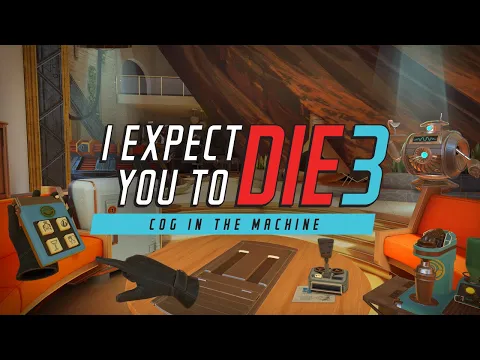
Over the past decade, Schell Games built an enviable reputation as one of virtual reality's most reliable hitmakers. Its spy-themed puzzle trilogy I Expect You To Die, the synthwave sword-fighting roguelite Until You Fall, and the tense horror puzzle game Silent Slayer: Vault of the Vampire became staple recommendations across Meta Quest, PlayStation VR, and SteamVR.
Yet the economics of standalone VR have shifted dramatically. As hardware makers scaled back upfront development subsidies and shifted platform discovery toward free-to-play social hubs, premium single-player VR studios found themselves squeezed. Schell Games had already begun adapting to this reality by evolving Among Us VR into Among Us 3D, bridging headset players and flat-screen PC users into unified lobbies alongside Innersloth.
Even with a diversified portfolio and critical acclaim, maintaining a hundred-plus-person studio in Pennsylvania proved unsustainable on VR software royalties and work-for-hire contracts alone. Moving forward, the leaner team plans to focus on smaller-scale projects and VR-adjacent experiences as developers across the sector recalibrate their pipelines ahead of the 2027 video game release calendar.
My Take: VR Remains a Gimmick, and the Real Revolution Belongs to Augmented Reality
I have a very blunt view on this topic, and seeing a studio as disciplined as Schell Games lose 40% of its workforce after 24 layoff-free years only reinforces it: to me, virtual reality is a gimmick with no real long-term future. It is heartbreaking for the developers affected, but it proves once again that betting the house on headset-only VR is a commercial dead end.
I have been convinced of this for 25 years now, ever since we first got to test those early VR headsets that immediately gave you dizziness and a strong urge to throw up within minutes. Even as the lenses and screens improved, pure VR is still nowhere near being the future in my book. Everything needs to come from augmented reality: AR is what will allow you to isolate yourself when needed while staying connected to the real world. Whether in video gaming or in everyday life at large, the true revolution is augmented reality, not strapping a closed plastic box to your face.

SEO consultant for over 20 years and digital entrepreneur, Charles "Grimtag" is the founder of Pro-Gamer.gg, Retrocharting.com, and Gamescharting.com. A competitive gamer, streamer, and retro game collector, he has worked in the video game industry for over 15 years, notably as a consultant for leading game price comparison platforms. Passionate about real-time performance data and gaming technology, he analyzes competitive esports, gaming hardware benchmarks, and creator workflows on Pro-Gamer.gg with an authentic player perspective.